Overview
Gout is a common form of arthritis that can affect anyone. It's known for sudden attacks of intense pain, swelling, redness and tenderness in one or more joints. The big toe is the joint most affected.
An attack of gout may happen suddenly, often in the middle of the night. The big toe might feel like it's burning. The affected joint is hot, swollen and so tender that the weight of the bedsheet on it may feel like too much pressure.
Gout symptoms may come and go. The redness may be harder to see on Black or brown skin. In people with long-term or poorly managed gout, a buildup of uric acid crystals may form firm, painless lumps under the skin. The lumps are called tophi (TOE-fie). But there are ways to manage symptoms and prevent attacks.
Products & Services
Symptoms
Gout
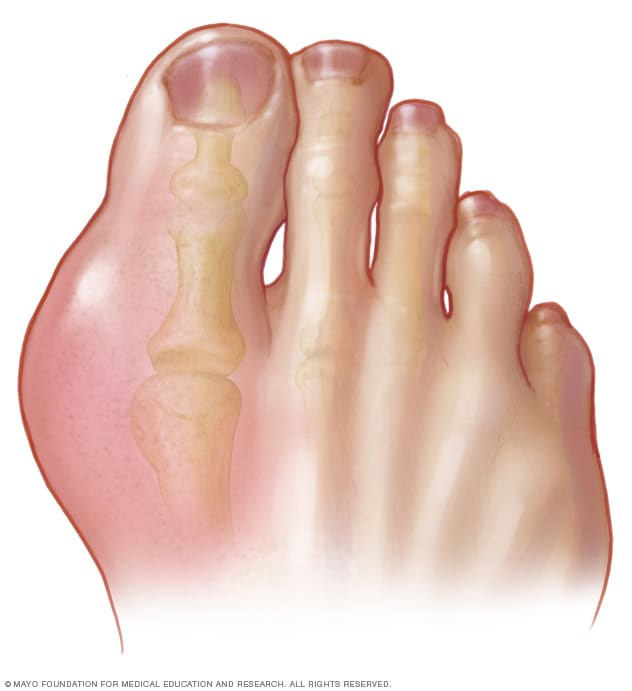
Gout
Gout causes bad pain and swelling around one or more joints. Gout most often affects the joint at the base of the big toe.
The symptoms of gout almost always happen suddenly, often at night. They include:
- Intense joint pain. Gout most often affects the big toe. But it can happen in any joint, including the ankles, knees, elbows, wrists and fingers. The pain is likely to be the worst within the first 8 to 12 hours after it starts.
- Discomfort that lasts. After the worst pain eases, some joint discomfort may last from a few days to a few weeks.
- Irritation, swelling and redness. The affected joint or joints become swollen, tender, warm and red. Redness may be harder to see on Black or brown skin.
- Limited range of motion. As gout goes on, moving the affected joints may be hard.
When to see a doctor
If you have sudden, intense pain in a joint, call your healthcare professional. Gout that isn't treated or that comes back can lead to worse pain and joint damage. Seek medical care right away if you have a fever and a joint is hot and inflamed. These symptoms may mean you have an infection.
Causes
The cause of gout is the buildup of uric acid in the blood. High levels of uric acid, also called hyperuricemia, can cause sharp uric acid crystals to form in the joints. This sets off an attack of pain and swelling. The body makes uric acid when it breaks down substances in the body called purines.
Purines also are in certain foods. These include red meat and organ meats, such as liver. Purine-rich seafood includes anchovies, sardines, mussels, scallops, trout and tuna. Alcoholic beverages, mainly beer, and drinks sweetened with a type of sugar called fructose can raise levels of uric acid.
Most often, uric acid passes through the kidneys into the urine. But sometimes either the body makes too much uric acid or the kidneys get rid of too little uric acid.
Risk factors
Having a high level of uric acid in the body raises the risk of gout. But some people who have high levels of uric acid never get a gout attack.
Factors that raise the uric acid level in the body include:
- Diet. Eating a diet rich in red meat and shellfish and drinking beverages sweetened with fructose raises levels of uric acid, in turn raising the risk of gout. Drinking alcohol, mainly beer, also raises the risk of gout.
- Weight. If you are overweight or have obesity, your body makes more uric acid. And your kidneys have a harder time getting rid of uric acid.
- Medical conditions. Certain conditions raise the risk of gout. These include high blood pressure that isn't treated and long-term conditions such as diabetes, obesity, metabolic syndrome, and heart and kidney diseases.
- Certain medicines. Low-dose aspirin and some medicines that manage high blood pressure can raise uric acid levels. These include thiazide diuretics, angiotensin-converting enzyme inhibitors, also called ACE inhibitors, and beta blockers. Other medicines that may raise uric acid levels are medicines to prevent organ rejection in people who have had an organ transplant.
- Family history of gout. If other members of your family have had gout, you're more likely to get the condition.
- Sex assigned at birth. People assigned male at birth are more likely than people assigned female at birth to have high uric acid levels. Once people go through menopause, their uric acid levels approach those of people assigned male at birth.
- Older age. People assigned male at birth are more likely to get gout from age 30 to 50. People assigned female at birth are more likely to get gout after age 60.
- Recent surgery or injury. Either of these can sometimes bring on a gout attack.
Complications
People with gout can get worse conditions, such as:
- Gout that comes back, called recurrent gout. Some people who get gout may never have gout symptoms again. Others may have gout several times each year. Medicines may help prevent gout attacks in people with recurrent gout. If not treated, gout can damage a joint.
- Advanced gout. Gout that isn't treated may cause urate crystals to form under the skin in lumps called tophi. Tophi can happen in several areas, such as the fingers, hands, feet, elbows or Achilles tendons, which are the tendons along the backs of the ankles. Tophi don't often hurt. But they can get swollen and tender during gout attacks.
- Kidney stones. Urate crystals may collect in the urinary tracts of people with gout, causing kidney stones. Medicines can help lower the risk of kidney stones.