Overview
A dislocated shoulder is an injury in which the upper arm bone pops out of the cup-shaped socket that's part of the shoulder blade. The shoulder is the body's most flexible joint, which makes it more likely to dislocate.
If you suspect a dislocated shoulder, seek medical attention right away. Most people regain full use of their shoulder within a few weeks. Once a shoulder dislocates, it is easier for it to happen again.
Products & Services
Symptoms
Shoulder dislocation
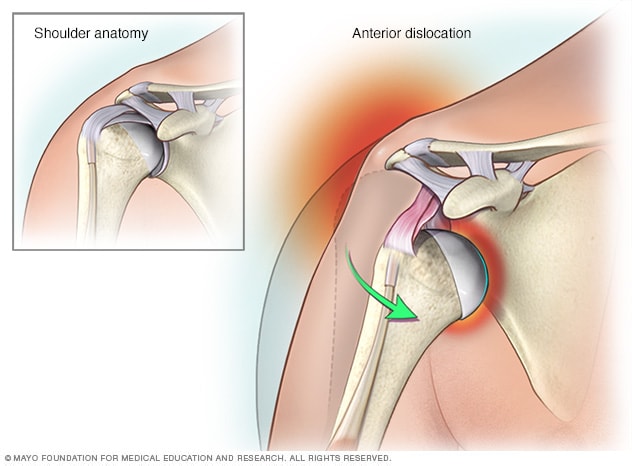
Shoulder dislocation
The shoulder joint is the most frequently dislocated joint of the body. Because it moves in several directions, the shoulder can dislocate forward, backward or downward. The most common variety is a forward dislocation, also called an anterior dislocation.
Symptoms of a dislocated shoulder may include:
- A shoulder that looks out of place or has a strange shape.
- Swelling or bruising in the shoulder area.
- Intense pain.
- Trouble moving the shoulder.
Shoulder dislocation also may cause numbness, weakness or tingling in the neck, shoulder or arm. The muscles in the shoulder may spasm, which can make the pain worse.
When to see a doctor
If you think your shoulder is dislocated, get medical help right away. Go to the emergency room or urgent care.
While you wait for care:
- Don't try to move your shoulder or pop it back in place. Trying to fix it yourself can damage nerves, blood vessels or soft tissue around the joint.
- Keep your shoulder still. Use a sling, towel or even your other arm to gently support your shoulder in the position it's in. Try not to move it.
- Apply ice. If you can, place a cold pack or a bag of ice wrapped in a cloth on your shoulder. This may help with swelling and pain.
Causes
The shoulder joint is the most frequently dislocated joint of the body. Because it moves in many directions, the shoulder can pop out of place forward, backward or downward. A dislocation can be complete or partial.
Most dislocations happen when the joint moves out of place toward the front. When this happens, the ligaments that connect the bones may stretch or tear, which can make the injury more serious.
It takes a strong force, such as a sudden blow to the shoulder, to pull the bones out of place. Extreme twisting of the shoulder joint can pop the ball of the upper arm bone out of the shoulder socket. In a partial dislocation, the upper arm bone is partially in and partially out of the shoulder socket.
Causes of a dislocated shoulder include:
- Sports injuries. Shoulder dislocation is a common injury in contact sports, such as football and hockey. It's also common in sports that might involve falls, such as downhill skiing, gymnastics and volleyball.
- Trauma not related to sports. A hard blow to the shoulder, such as during a motor vehicle accident, can cause dislocation.
- Falls. Landing awkwardly after a fall, such as from a ladder or after tripping on a loose rug, can dislocate a shoulder.
Risk factors
Anyone can dislocate a shoulder. However, dislocated shoulders occur most often in people in their teens and 20s, particularly athletes involved in contact sports.
Dislocating your shoulder makes it more likely that it may become dislocated again.
Complications
Complications of a dislocated shoulder may include:
- Tearing of the muscles, ligaments and tendons that support the shoulder joint.
- Damage to nearby nerves or blood vessels.
- A higher risk of the shoulder dislocating again, especially if the injury was severe.
Stretched or torn ligaments may require surgery to repair them. Damaged tendons in the shoulder or damaged nerves or blood vessels around the shoulder may require surgery to repair them.
Prevention
To help prevent a dislocated shoulder:
- Take care to avoid falls and shoulder injuries.
- Wear protective gear when playing contact sports.
- Exercise regularly to maintain strength and flexibility in joints and muscles.
Having a dislocated shoulder joint can increase the risk of future shoulder dislocations. To help avoid a recurrence, keep doing the strength and stability exercises prescribed for the injury.