Bicuspid aortic valve Diagnosis and treatment
Diagnosis
A bicuspid aortic valve may be found when tests are done for another health concern. The healthcare professional may hear a heart murmur when listening to the heart.
An echocardiogram can confirm a diagnosis of bicuspid aortic valve. This test uses sound waves to create videos of the beating heart. It shows how blood moves through the heart chambers, the heart valves and the aorta.
If you have a bicuspid aortic valve, you usually have a CT scan to check for changes in the aorta's size.
Treatment
If you have a bicuspid aortic valve, you are usually sent to a doctor trained in congenital heart disease. This type of doctor is called a congenital cardiologist.
Anyone with a bicuspid aortic valve needs regular health checkups and imaging tests. Echocardiograms can check for a narrowed or leaking aortic valve. The test also looks for changes in the size of the aorta.
Treatment for a bicuspid aortic valve depends on how severe the heart valve disease is. It may include medicines or a procedure or surgery to fix or replace the valve.
Medications
There are no medicines to repair a bicuspid aortic valve. But medicines may be used to treat symptoms caused by heart valve disease. For example, your healthcare professional may recommend blood pressure medicine.
Surgeries or other procedures
Surgery may be needed if a bicuspid aortic valve is causing:
- Aortic valve stenosis.
- Aortic valve regurgitation.
- An enlarged aorta.
Surgery is done to repair or replace the aortic valve. The type of surgery done depends on the specific heart valve condition and your symptoms.
-
Aortic valve replacement. The surgeon removes the damaged valve. It's replaced with a mechanical valve or a valve made from cow, pig or human heart tissue. The tissue valve is called a biological tissue valve. Sometimes, the aortic valve is replaced with the person's own lung valve. The lung valve is replaced with a lung tissue valve from a deceased donor. This more complicated surgery is called the Ross procedure.
Biological tissue valves break down over time. They may eventually need to be replaced. If you have a mechanical valve, you need to take blood thinners for life to prevent blood clots. Together, you and your healthcare team can talk about the benefits and risks of each valve type.
-
Aortic root and ascending aorta surgery. Surgeons remove the enlarged section of the aorta located near the heart. It's replaced with a synthetic tube, called a graft, which is sewn into place. Sometimes, only the enlarged part of the aorta is removed. The aortic valve remains. The aortic valve also can be replaced or repaired during this surgery.
-
Balloon valvuloplasty. This procedure can treat aortic valve stenosis in infants and children. In adults, the aortic valve tends to narrow again after the procedure. So it's usually only done if you're too ill for surgery or you're waiting for a valve replacement.
This heart valve treatment uses a thin, flexible tube called a catheter. The catheter has a balloon on the tip. The surgeon inserts the catheter into an artery in the arm or groin. Then the catheter is guided to the aortic valve. Once in place, the balloon inflates, making the valve opening bigger. The balloon is deflated. The catheter and balloon are removed.
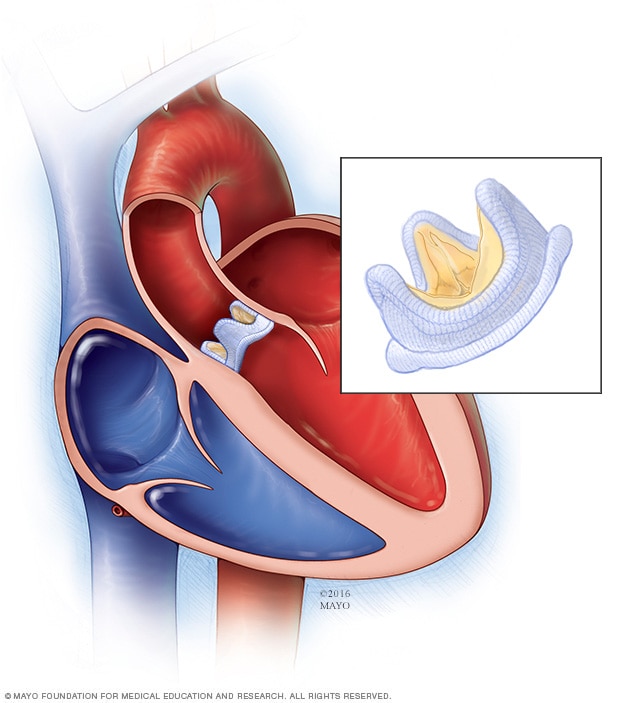
Biological valve replacement
In a biological valve replacement, a valve made from cow, pig or human heart tissue replaces the damaged heart valve.
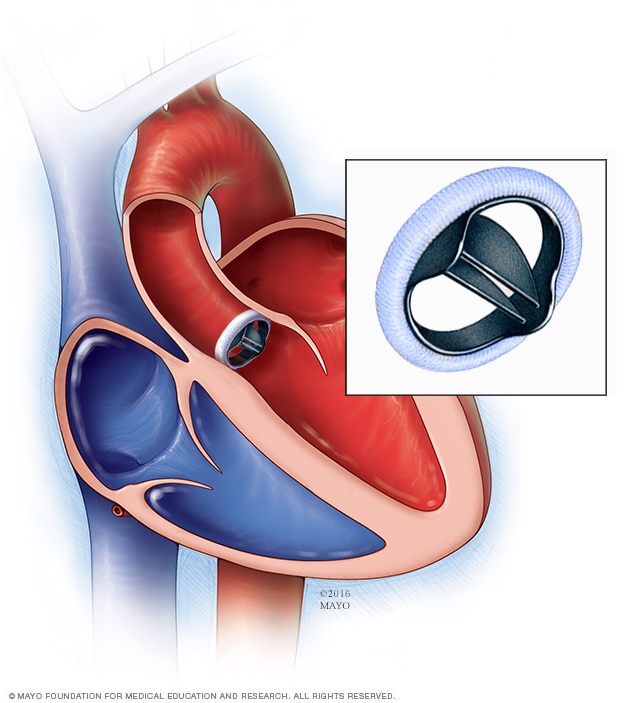
Mechanical valve replacement
In mechanical valve replacement, a mechanical valve replaces the damaged valve.
Self-care
Anyone born with a bicuspid aortic valve needs health checkups for life. A doctor trained in heart diseases, called a cardiologist, should examine you for changes in your condition.
People with a bicuspid aortic valve are more likely to get an infection of the inner lining of the heart's chambers and valves. This infection is called infective endocarditis. Proper dental care can help lower your risk.
A bicuspid aortic valve can be passed down in families, meaning it's inherited. Parents, children and siblings of someone with a bicuspid aortic valve should have an echocardiogram to check for the condition.
CON-20359710
Mayo Clinic does not endorse companies or products. Advertising revenue supports our not-for-profit mission.
Advertising & Sponsorship
Mayo Clinic Press
Check out these best-sellers and special offers on books and newsletters from Mayo Clinic Press.
