Polyendocrine metabolic ovarian syndrome (PMOS) Symptoms and causes
Overview
Polyendocrine metabolic ovarian syndrome (PMOS) is a hormone health issue that starts to show signs in women of childbearing age. Polyendocrine metabolic ovarian syndrome used to be called polycystic ovary syndrome (PCOS).
If you have PMOS, you may not have periods very often. Or you may have periods that last many days. You also may have male-pattern hair growth, called hirsutism, which happens when you have too much of a group of hormones called androgens in your body. PMOS is driven by the effects of androgen and changes in how your body uses a hormone called insulin, which controls blood sugar.
With PMOS, you may have many small sacs of fluid grow along the outer edge of the ovary. These are called cysts. Inside the small, fluid-filled cysts are immature eggs. These are called follicles. These follicles are unable to regularly release eggs.
The exact cause of PMOS is not known, but genetic and lifestyle factors may play a part. Early diagnosis and treatment along with weight management may lower the risk of long-term health issues, such as type 2 diabetes and heart disease.
Symptoms
Symptoms of polyendocrine metabolic syndrome (PMOS), often start around the time of the first menstrual period. Sometimes symptoms develop later after you have had periods for a while.
The symptoms of PMOS vary and can change over time. Some women with PMOS may have very severe symptoms, while others have mild symptoms or no symptoms at all. A diagnosis of PMOS is made when you have at least two of these symptoms:
- Irregular periods. PMOS can cause your periods to be less predictable. You may skip periods or have periods that are very far apart. For example, you might have fewer than eight periods a year. And they may be more than 35 days apart. On the other hand, you may have periods that are heavy, last for many days or come more often than usual. You also may stop having periods or have trouble getting pregnant.
- Too much androgen effect. High levels or high activity of the hormones called androgens can cause extra hair on the face and body hair, often in places men typically grow hair. This is called hirsutism. It often shows up on the chin, sideburn area, chest, upper thighs or back. Sometimes, male-pattern hair loss on the head or severe acne can happen, too.
- Polycystic ovaries. Your ovaries might be slightly bigger than usual. You also might have many small, fluid-filled sacs around the edge of your ovaries. These sacs are called follicles and they hold immature eggs. But because the ovaries don't work the way they should, the eggs often don't get released. Large ovarian cysts are not a sign of PMOS.
PMOS symptoms are usually more serious in people with obesity.
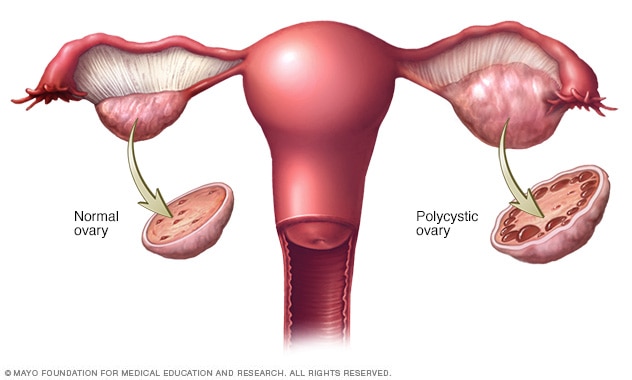
Polycystic ovary
A polycystic ovary has many small sacs of fluid that grow on the ovary. The sacs of fluid, called follicles, may not regularly release eggs.
When to see a doctor
See your healthcare professional if you're worried about your periods, if you're having trouble getting pregnant or if you have symptoms of too much androgen. These might include new hair growth on your face and body, acne, and male-pattern hair loss.
Causes
The exact cause of polyendocrine metabolic ovarian syndrome (PMOS) isn't known. Most experts think there are many things that might play a role, including:
-
Insulin resistance. In PMOS, your body may not respond well to insulin. Insulin is a hormone made in the pancreas. It allows cells to use sugar, your body's main source of energy. If cells don't respond to insulin the way they typically would, blood sugar levels go up. Your body then makes more insulin to try to bring blood sugar levels down.
One symptom of insulin resistance is dark, velvety patches of skin on the lower part of the neck, armpits, groin or under the breasts. Feeling hungrier than usual and weight gain may be other symptoms.
- Genes. Some research shows that certain genes might be linked to PMOS. Having a family history of PMOS may mean you're more likely to have it.
- Too much androgen activity. With PMOS, your body may make too much of the androgen hormones, which are at higher levels in men. You also may have normal androgen hormone levels but the hormones are more active. This can cause male-pattern hair growth (hirsutism) and some kinds of acne. As a result, ovulation may not always happen. This means that eggs don't develop regularly and aren't released from the follicles where they develop.
Risk factors
Certain factors may increase the risk of PMOS, such as having family members who have PMOS. Being overweight or having obesity may put you at risk of PMOS. Insulin resistance and too much androgen activity also may contribute to the risk of PMOS.
Women’s health topics – straight to your inbox
Complications
Complications of polyendocrine metabolic ovarian syndrome (PMOS) can include:
- Infertility. PMOS can make it harder to get pregnant. However, pregnancy is still possible and does happen for many women with the PMOS. If you don't wish to become pregnant, use pregnancy prevention methods such as birth control.
- Pregnancy complications. You might have a higher chance of getting diabetes during pregnancy, which is called gestational diabetes. You also may be more likely to have high blood pressure during pregnancy, miscarriage or early birth.
- Metabolic dysfunction-associated steatotic liver disease (previously called nonalcoholic fatty liver disease). This happens when fat builds up in your liver, which is a risk factor for cardiovascular disease.
- Metabolic syndrome. Metabolic syndrome is a group of health issues that often happen together. Metabolic syndrome can include high blood pressure, high fasting blood sugar, and unhealthy cholesterol or fats in your blood. These fats are called triglycerides. Having these can significantly increase your risk of heart disease and blood vessel issues.
- Type 2 diabetes or prediabetes. PMOS may cause you to have a greater chance of high blood sugar.
- Sleep apnea. This happens when you stop breathing for short periods of time while sleeping.
- Mental health issues. Depression, anxiety and eating disorders can happen with PMOS.
- Uterine and ovarian cancer. Some women with PMOS develop a condition that causes the uterus lining to become too thick. This increases the risk of cancer in the lining of the uterus, called endometrial cancer. Endometrial cancer is a type of uterine cancer. The risk of ovarian cancer also is higher in people with PMOS.
Obesity is common in people with PMOS and can make complications worse.
CON-20314571
Mayo Clinic does not endorse companies or products. Advertising revenue supports our not-for-profit mission.
Advertising & Sponsorship
Mayo Clinic Press
Check out these best-sellers and special offers on books and newsletters from Mayo Clinic Press.
