Jan. 20, 2026
Overactive bladder (OAB) is a chronic, limiting condition for millions of people. Increasingly, neuromodulation has emerged as a durable, device-based option to reduce the need for long-term pharmacotherapy and its associated potential side effects. As these technologies evolve, Urology at Mayo Clinic in Rochester, Minnesota, led by Brian J. Linder, M.D., as the site principal investigator, has played a role in advancing the evidence base by completing enrollment in two recent novel clinical trials.
Implantable tibial nerve stimulation devices
Conventional management of OAB has long included behavioral interventions, pelvic floor physical therapy, medications or procedures, including bladder Botox injections, percutaneous tibial nerve stimulation (PTNS) and sacral neuromodulation. While PTNS is effective for many, adherence remains a major limitation for initiation or continuation — weekly office treatment over 12 sessions followed by ongoing maintenance often proves to be burdensome. New implantable devices seek to overcome this.
 Implantable tibial neuromodulation (iTNM)
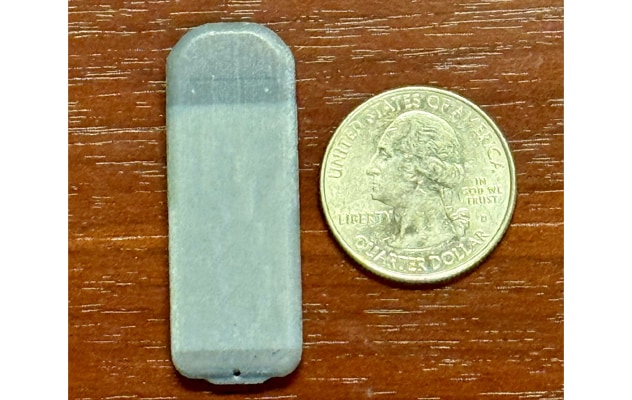
Smaller than a quarter, the iTNM device is implanted near the ankle using a small incision to deliver scheduled tibial nerve stimulation.
During a minimally invasive, single-stage outpatient procedure under local anesthesia, a small implant is placed through a short incision near the ankle. The device, known as an implantable tibial neuromodulation (iTNM) device, delivers scheduled tibial nerve stimulation without the need for repeated in-clinic therapy. Dr. Linder was an investigator in the pivotal TITAN 2 study, which evaluated this next-generation therapy. The positive findings facilitated Food and Drug Administration approval of an iTNM devicein September 2025, with results presented at the 2025 American Urogynecologic Society (AUGS) meeting.
In TITAN 2, 188 adults with urgency incontinence underwent device placement. The primary endpoint — greater than 50% reduction in urgency leakage episodes at six months — was achieved by 59% of patients. At 12 months, participants experienced a mean reduction of 2.7 leakage episodes a day. Device-related adverse events were predominantly mild to moderate, with one severe event (C. difficile infection) that occurred and was fully resolved. The commercially available device is rechargeable, with a projected battery life of 10 to 15 years.
These findings suggest that iTNM may offer a meaningful improvement in symptoms while substantially reducing the treatment burden compared with traditional PTNS. Furthermore, implantable tibial devices may represent a compelling, less invasive alternative to sacral neuromodulation, especially for patients who are reluctant to undergo the procedure.
New era sacral neuromodulation: Objective sensing and closed-loop stimulation
The next frontier may not only be alternative stimulation sites but also smarter stimulation. The investigational PEER 2 study, of which Dr. Linder is the site principal investigator, explores this concept by integrating real-time physiological sensing into sacral neuromodulation systems.
Traditional sacral neuromodulation (SNM) programming depends on patient-reported sensation, known as the sensory threshold, or observed motor response. In contrast, the PEER 2 feasibility study recorded objective sacral evoked responses (SERs) — electrical signals quantifying neural activation — from the stimulation lead for 90 implant procedures. Data presented at the 2025 AUGS meeting showed a strong correlation between lead-measured sacral evoked response thresholds (SERTs) and patient-reported sensory thresholds, as evidenced in the journal Urogynecology. Notably, in repeated testing, SERTs demonstrated far greater consistency than sensory thresholds: In one subset, 48% of repeat SERT measures were identical, compared with only 17% of repeat sensory thresholds.
This suggests that SER-based programming may provide a reliable, reproducible objective biomarker of sacral nerve activation. In turn, this could enable more-standardized programming across patients and potentially set the stage for closed-loop SNM, in which stimulation adapts dynamically to the physiological state of the bladder. Here, the future may mirror other neuromodulation fields where sensing and stimulation enable feedback-driven therapy.
With novel therapies and stimulation parameters, there is significant potential for advancing neuromodulation therapies for overactive bladder. Implantable tibial neuromodulation offers a practical, less invasive alternative to traditional sacral stimulation. Meanwhile, innovations in sacral lead sensing and closed-loop neuromodulation, as seen in the PEER 2 program, offer the promise of more-responsive, patient-tailored bladder care. Together, these developments underscore the expanding possibilities for patients with OAB and highlight Urology's ongoing role in advancing science and improving patient care.
For more information
Smith A, et al. Physician time impact on decision-making in limited English proficient patients. Urogynecology. 2025;31(suppl):S1.
Refer a patient to Mayo Clinic.