Sjogren disease Symptoms and causes
Overview
Sjogren (SHOW-grin) disease is an ongoing, called chronic, condition of the immune system. It used to be called Sjogren syndrome. The two most common symptoms are dry eyes and a dry mouth.
In autoimmune conditions, the body attacks its own tissues by mistake. Sjogren disease most often affects the glands that make moisture in the eyes and mouth. This causes fewer tears and less saliva. The condition may happen with other immune system conditions, most often rheumatoid arthritis and lupus.
Sjogren disease can happen at any age. But most people are older than 40 at the time of diagnosis. The condition is much more common in people assigned female at birth. Treatment focuses on easing symptoms.
Symptoms
The two main symptoms of Sjogren disease are:
- Dry eyes. The eyes might burn or itch. They might feel as if they have sand in them.
- Dry mouth. The mouth might feel as if it's full of cotton. This may make it hard to swallow or speak.
Some people with Sjogren disease also have one or more of the following:
- Joint pain, swelling and stiffness.
- Swelling of the glands that make saliva. This mainly affects the glands and in front of the ears.
- Skin rashes or dry skin.
- Dry vagina.
- Dry cough.
- Tiredness.
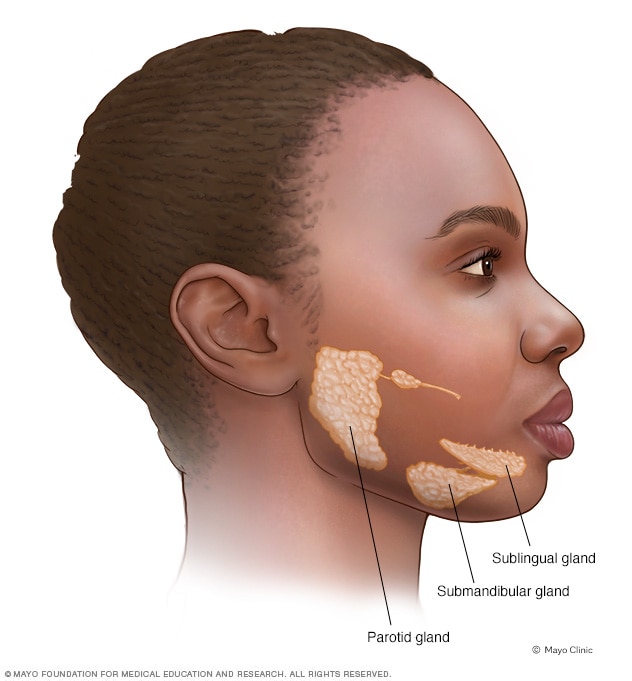
Salivary glands
There are three pairs of major salivary glands. These glands are the parotid, sublingual and submandibular glands. Each gland has its own tube, called a duct, leading from the gland to the mouth.
Causes
Experts don't know what causes the immune system to attack the body in Sjogren disease. Certain genes put people at higher risk of the condition. But it seems that an infection with a certain virus or strain of bacteria may bring it on.
Risk factors
Sjogren disease most often happens in people with one or more known risk factors, including:
- Age. Sjogren disease is mainly diagnosed in people older than 40.
- Sex. People assigned female at birth are much more likely to have Sjogren disease.
- Rheumatic disease. It's common for people who have Sjogren disease also to have a rheumatic disease, such as rheumatoid arthritis or lupus.
From Mayo Clinic to your inbox
Sign up for free and stay up to date on research advancements, health tips, current health topics, and expertise on managing health. Click here for an email preview.
Complications
The most common complications of Sjogren disease involve the eyes and the mouth. These complications include:
- Dental cavities. Saliva helps protect the teeth from the germs that cause cavities. So a dry mouth is more likely to get cavities.
- Yeast infections. People with Sjogren disease are much more likely to get oral thrush, a yeast infection in the mouth.
- Vision issues. Dry eyes can lead to being sensitive to light and having blurred vision. Dry eyes also can damage the dome-shaped outer layer of the eye, called the cornea.
Less common complications might affect:
- Lungs, kidneys or liver. Swelling and irritation, called inflammation, can cause pneumonia, bronchitis or other issues in the lungs. Inflammation can keep the kidneys from working as they should and can cause the liver conditions hepatitis and cirrhosis.
- Lymph nodes. A small number of people with Sjogren disease get cancer of the lymph nodes. These are small, bean-shaped glands that help fight infection. The cancer is called lymphoma.
- Nerves. Numbness, tingling and burning in the hands and feet might happen. This is called peripheral neuropathy.
CON-20310628
Mayo Clinic does not endorse companies or products. Advertising revenue supports our not-for-profit mission.
Advertising & Sponsorship
Mayo Clinic Press
Check out these best-sellers and special offers on books and newsletters from Mayo Clinic Press.
