Indigestion Symptoms and causes
Overview
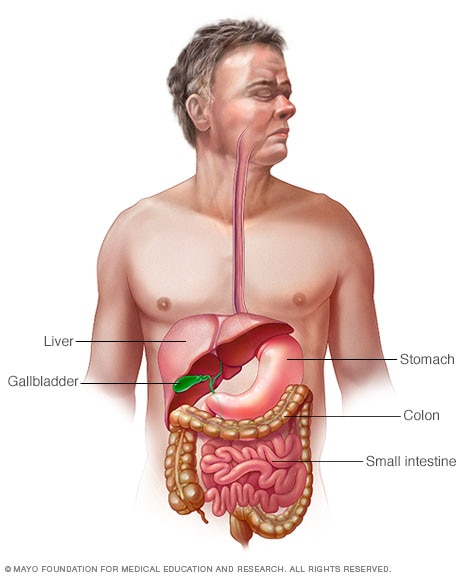
Digestive system
The major organs in the digestive system are the liver, stomach, gallbladder, small intestine and colon.
Indigestion is discomfort or pain in the belly. Symptoms may include a burning pain, feeling full while eating or feeling full long after eating. Indigestion symptoms may happen once in a while or often.
Indigestion may be caused by a digestive system condition. But often, there is no clear underlying cause. Frequent or long-lasting indigestion often can be treated with changes in diet and lifestyle, mental health therapy, and medicines.
Indigestion also is called upset stomach or dyspepsia.
Symptoms
Symptoms of indigestion may include:
- Early fullness during a meal or not being able to finish a typical meal.
- Uncomfortable fullness that lasts longer than it should after a meal.
- Mild to severe pain in the upper abdomen, which is the area between the bottom of your breastbone and your belly button.
- Burning sensation in the upper abdomen.
- Bloating that feels like swelling or tightness in the upper abdomen.
- Feeling the need to vomit or vomiting.
- Burping or burping up food.
Sometimes people with indigestion also experience heartburn. Heartburn is a pain or burning feeling in the center of your chest during or after eating. The pain or burning feeling may radiate into your neck or back.
When to see a doctor
Mild indigestion usually is nothing to worry about. Talk with your healthcare professional if symptoms of indigestion last more than two weeks.
Get care as soon as possible if you have indigestion and these symptoms:
- Severe or constant belly pain.
- Unintended weight loss or loss of appetite.
- Repeated vomiting or vomiting with blood.
- Black, tarry stools.
- Trouble with swallowing.
- Fatigue or weakness.
- A yellowing of the skin or eyes, also called jaundice.
Get emergency care if you have indigestion-like symptoms that may be symptoms of a heart attack:
- Shortness of breath, sweating, or chest pain radiating to the jaw, neck or arm.
- Chest pain when you're active or stressed.
Causes
Indigestion usually has no clear underlying medical condition as a cause. Long-lasting or frequent indigestion with no clear underlying medical cause is called functional indigestion.
Many factors may contribute to or worsen functional indigestion. These include:
- Overeating or eating too quickly.
- Fatty, greasy or spicy foods.
- Caffeine, alcohol or carbonated beverages.
- Acidic foods, such as tomatoes and oranges.
- Anxiety, depression or trauma.
- Smoking.
- Certain antibiotics and pain relievers.
H. pylori bacteria can cause ulcers in the stomach or small intestine. H. pylori may contribute to indigestion even if it has not caused an ulcer.
Underlying causes
Several conditions can cause indigestion. Underlying causes vary among different age groups.
- Children
- H. pylori infection.
- Other infections of the digestive system.
- Conditions affecting how much food the stomach can hold or how it empties.
- Stress.
- Young adults
- H. pylori infection.
- Gastroesophageal reflux disease, also called GERD, when stomach acid regularly flows back up into the esophagus.
- Diet.
- Stress.
- Adults ages 40 to 60
- H. pylori infection.
- Ulcers of the stomach or small intestine.
- GERD.
- Pain medicines, such as aspirin, ibuprofen (Advil, Motrin IB, others) and naproxen sodium (Aleve).
- Adults over 60
- Ulcers of the stomach or small intestine.
- GERD.
- Stomach cancer.
- Pain medicines, such as aspirin, ibuprofen (Advil, Motrin IB, others) and naproxen sodium (Aleve).
Risk factors
Several factors can make it more likely for you to have symptoms even though they don't always cause indigestion:
- Eating too fast, overeating, or eating spicy, fatty, acidic or greasy foods.
- Too many alcoholic, caffeinated or carbonated drinks.
- Depression, anxiety or trauma.
- Smoking or using other tobacco products.
- Pregnancy-related hormones and pressure on the digestive system during pregnancy.
- Carrying extra weight, particularly around the belly.
From Mayo Clinic to your inbox
Sign up for free and stay up to date on research advancements, health tips, current health topics, and expertise on managing health. Click here for an email preview.
Complications
Although indigestion doesn't usually have serious complications, it can affect your quality of life. You may eat less. You also might miss work or school because of your symptoms.
CON-20166945
Mayo Clinic does not endorse companies or products. Advertising revenue supports our not-for-profit mission.
Advertising & Sponsorship
Mayo Clinic Press
Check out these best-sellers and special offers on books and newsletters from Mayo Clinic Press.
