Overview
Female urinary system
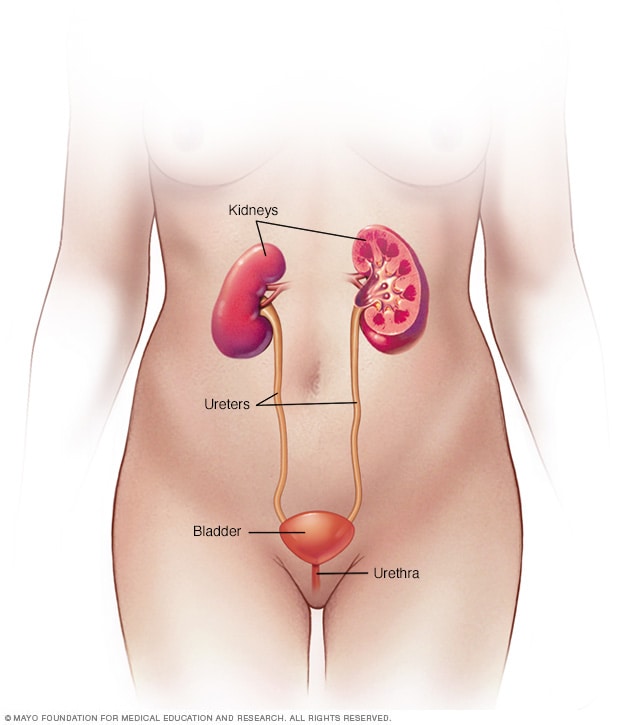
Female urinary system
The urinary system includes the kidneys, ureters, bladder and urethra. The urinary system removes waste from the body through urine. The kidneys sit toward the back of the upper abdomen. They filter waste and fluid from the blood and make urine. Urine moves from the kidneys to the bladder through narrow tubes called the ureters. The bladder stores urine until it's time to urinate. Urine leaves the body through a small tube called the urethra.
Male urinary system
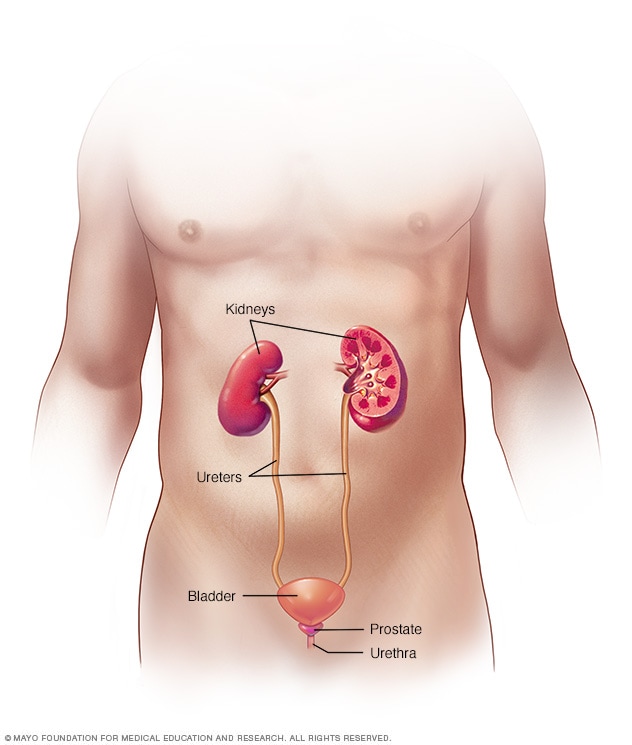
Male urinary system
The urinary system includes the kidneys, ureters, bladder and urethra. The urinary system removes waste from the body through urine. The kidneys sit toward the back of the upper abdomen. They filter waste and fluid from the blood and make urine. Urine moves from the kidneys through narrow tubes to the bladder. These tubes are called the ureters. The bladder stores urine until it's time to urinate. Urine leaves the body through a small tube called the urethra.
A kidney infection is a type of urinary tract infection, also called a UTI. A kidney infection may begin in the tube that carries urine from the body, called the urethra. Or it may begin in the bladder. The infection can travel to one or both kidneys. The medical term for a kidney infection is pyelonephritis.
A kidney infection needs prompt medical treatment. If not treated, an infection can cause lasting damage to the kidneys. Or the bacteria can spread to the bloodstream and cause a dangerous infection of the blood.
Treating a kidney infection typically includes antibiotics. Antibiotics may be given in the hospital if the infection is severe.
Products & Services
Symptoms
Symptoms of a kidney infection include:
- Fever.
- Chills.
- A burning feeling or pain when urinating.
- Having to urinate often.
- A strong, lasting urge to urinate.
- Back, side or groin pain.
- Nausea and vomiting.
- Pus or blood in the urine.
- Urine that smells bad or is cloudy.
- Belly pain.
When to see a doctor
Make an appointment with your healthcare professional right away if you have symptoms of a kidney infection. And if you're being treated for a UTI for more than 2 to 3 days but you're still having symptoms, let your healthcare professional know.
A severe kidney infection can lead to dangerous complications. They include blood poisoning, damage to the body's tissues and, in severe cases, death.
Seek medical care right away if you have a fever, chills, severe pain, bloody urine, or nausea and vomiting. These are signs of a severe infection.
Causes
The most common cause of kidney infections is bacteria entering the urinary tract through the urethra. Once inside, the bacteria can multiply and move up to the kidneys.
Bacteria from an infection in another part of the body also can spread through the bloodstream to the kidneys. And a kidney infection can happen if the flow of urine through the urinary tract is blocked. For example, a kidney stone may block the path of urine and an infection may form. But not all kidney stones cause infections.
Risk factors
Things that increase the risk of a kidney infection include:
- Being assigned female at birth. The urethra is shorter in women than in men. That makes it easier for bacteria to travel from outside the body to the bladder. The urethra also is close to the vagina and anus. That also makes it easier for bacteria to enter the bladder. Once in the bladder, an infection can spread to the kidneys. And people who are pregnant are at even higher risk of kidney infection.
- Having a urinary tract blockage. Anything that slows the flow of urine can raise the risk of a kidney infection. So can anything that makes it harder to fully empty the bladder. These include a kidney stone, a narrowed urethra or an enlarged prostate gland.
- Having a weakened immune system. Medical conditions such as diabetes and HIV can weaken the immune system. Certain medicines also can lower immunity. These include medicines taken after an organ transplant to help prevent rejection.
- Having damage to nerves around the bladder. Nerve or spinal cord damage can block the feeling of a bladder infection. That can make it hard to know when an infection travels to a kidney.
- Using a urinary catheter. Urinary catheters are tubes used to drain urine from the bladder through the urethra. They also may drain urine directly from the kidneys through an incision in the skin. Catheters are sometimes used after a surgical procedure or diagnostic test. They're also used when people have difficulties getting out of bed or have difficulties emptying their bladders for other reasons.
- Having urinary tract stents. Urinary stents are small tubes that are surgically placed in the ureters to help keep them open. These stents may get infected.
- Having a condition that causes urine to flow the wrong way. In vesicoureteral reflux, small amounts of urine flow from the bladder back into the tubes that connect the bladder and kidneys. People with this condition are at higher risk of kidney infections when they're kids. And they are at higher risk as adults.
Complications
If not treated, a kidney infection may lead to serious complications. These include:
- Kidney scarring. This can lead to chronic kidney disease, high blood pressure and kidney failure.
- Blood poisoning. A kidney infection can cause bacteria to spread through the bloodstream. A bloodstream infection is a serious complication of a kidney infection. It may require antibiotics given through a vein in the hospital.
- Pregnancy complications. A kidney infection that occurs during pregnancy can increase the risk of having a baby with a low birth weight.
Prevention
You can take steps to prevent urinary tract infections. Doing so may lessen your risk of kidney infection.
- Drink fluids, especially water. Fluids help remove bacteria from the body when you urinate.
- Urinate as soon as you need to. Don't wait to urinate when you feel the urge.
- Empty your bladder after sexual activity. Urinating as soon as possible after sex helps clear bacteria from the urethra. This lowers the risk of infection.
- Wipe carefully. Wipe from front to back after urinating and after a bowel movement. This helps prevent bacteria from spreading to the urethra.
- Avoid using products in the genital area. Deodorant sprays or other products in the genital area can be irritating.