
Thoracic aortic aneurysm care at Mayo Clinic
Your Mayo Clinic care team
Mayo Clinic doctors trained in blood vessel conditions (vascular specialists), blood vessel surgery (vascular surgeons), heart and blood vessel surgery (cardiovascular surgeons), chest surgery (thoracic surgeons), heart and blood vessel conditions (cardiologists), imaging (radiologists), and other healthcare professionals have experience evaluating and treating thoracic aortic aneurysms and other types of aortic aneurysms.
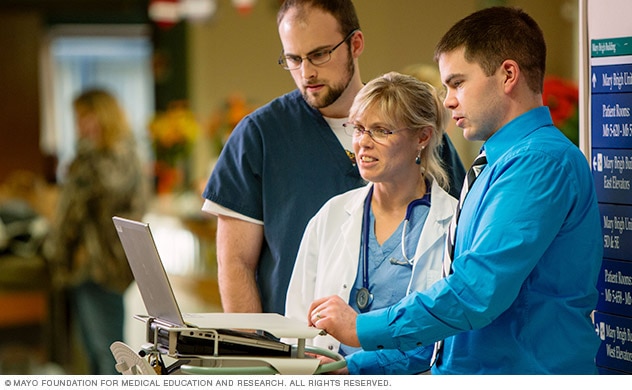
A team at Mayo Clinic
A team of healthcare professionals work together at Mayo Clinic.
Collaborative approach
Mayo Clinic healthcare professionals work together as a team. This collaborative approach means your healthcare team can often evaluate you and develop a treatment plan within 2 to 3 days.
Your Mayo Clinic health professionals create a lifelong, personalized care plan specific to your condition and medical needs. At Mayo Clinic, you don't just get one opinion — you get the knowledge and experience of each specialist on the multidisciplinary team.
For example, if an aneurysm is caused by a genetic condition such as Marfan syndrome, Mayo Clinic cardiologists work with other healthcare professionals such as spine and eye doctors.
Advanced diagnosis and treatment
At Mayo Clinic, experienced healthcare professionals evaluate and interpret test results. Mayo Clinic has state-of-the-art laboratory and imaging facilities. Healthcare professionals at Mayo use advanced technology to accurately diagnose thoracic and abdominal aortic aneurysms and determine the type of surgery needed, if any.
Tests to diagnose aortic aneurysms may include echocardiography, computerized tomography angiography, magnetic resonance angiography and others. Genetic testing may be recommended if you have a family history of aneurysms or aneurysm rupture.
Expertise and rankings
Mayo Clinic's experienced cardiovascular surgeons and other healthcare professionals evaluate and treat adults and children with thoracic aortic aneurysms. Each year, more than 4,500 people with thoracic aortic aneurysm are seen at Mayo Clinic.
Mayo Clinic's thoracic surgeons are experienced in thoracic aortic aneurysm repair.
- Surgeons treat thoracic aortic aneurysms using endovascular surgery, open-chest surgery, aortic root surgery and other treatments. Mayo doctors have experience performing surgery to treat a thoracic aortic aneurysm located anywhere in the thoracic aorta.
- People with Marfan syndrome and related conditions may be treated by healthcare professionals in the Marfan Syndrome and Thoracic Aorta Clinic.
- Children with heart conditions may be treated by doctors trained in children's heart conditions (pediatric cardiologists) at Mayo Clinic's campus in Minnesota.
- Each Mayo Clinic location offers a vascular center staffed by trained healthcare professionals who have experience treating vascular diseases. Vascular centers include the Gonda Vascular Center at Mayo Clinic's campus in Minnesota and vascular centers at Mayo Clinic's campuses in Arizona and Florida.