Spinal stenosis Symptoms and causes
Overview
Spinal stenosis happens when the space inside the spine is too small. This can put pressure on the spinal cord and nerves in the spine. Spinal stenosis happens most often in the lower back and in the neck.
Some people with spinal stenosis have no symptoms. Others may have pain, tingling, numbness and muscle weakness. Symptoms may get worse over time.
Spinal stenosis becomes more common with age. The condition often is linked to wear-and-tear damage in the spine due to arthritis. Medicines and physical therapy may help ease symptoms of spinal stenosis. People who have serious spinal stenosis may need surgery.
Surgery can make more space inside the spine. That can ease the symptoms caused by pressure on the spinal cord or nerves. But surgery can't cure arthritis, so arthritis pain in the spine may last even after surgery.
Symptoms
In many people, spinal stenosis doesn't cause any symptoms. When symptoms do happen, they typically start slowly, and they can get worse over time. Symptoms depend on which part of the spine is affected by spinal stenosis.
In the lower back
Spinal stenosis in the lower back can cause pain or cramping in one or both legs. This typically happens when standing for a long time or walking. Symptoms get better when bending forward or sitting. Spinal stenosis in the lower back also may cause back pain. Rarely, spinal stenosis in the lower back may cause bladder or bowel changes.
In the neck
Spinal stenosis in the neck can cause:
- Numbness.
- Tingling or weakness in an arm, hand, leg or foot.
- Trouble with walking and balance.
- Trouble with fine motor skills, such as writing, tying shoelaces, or using a knife and fork.
- Neck pain.
- Bladder or bowel changes.
Causes
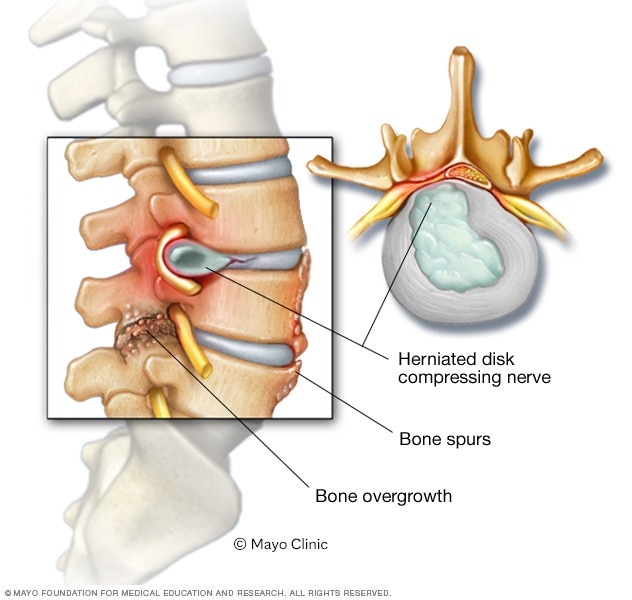
Herniated disk and bone spurs on spine
As the spine ages, bone spurs or herniated disks are more likely to form. These conditions can shrink the amount of space available for the spinal cord and nerves in the spine.
The spine is made of spinal bones stacked in a column from the skull to the tailbone. They protect the spinal cord and nerves. The spinal cord runs through an opening in the middle of the spine called the spinal canal.
Some people are born with a small spinal canal. But most spinal stenosis happens when something shrinks the amount of open space within the spine. Causes of spinal stenosis include:
- Bone spurs. Wear-and-tear damage from arthritis can cause extra bone to grow on the spine. This makes bone spurs that can push into the spinal canal.
- Herniated disks. Disks are soft cushions that act as shock absorbers between the spinal bones. If part of the disk's soft inner material leaks out, it can press on the spinal cord or nerves.
- Thick ligaments. The strong cords that help hold the bones of the spine together can become stiff and thick over time. Thick ligaments can push into the spinal canal.
- Spinal injuries. Car accidents and other trauma can cause spinal bones to break or move out of place. Swelling of nearby tissue right after back surgery also can put pressure on the spinal cord or nerves.
- Tumors. Rarely, tumors can form inside the spinal canal.
Risk factors
Age is the main risk factor for spinal stenosis. Most people who have spinal stenosis are older than 50. Younger people might be at higher risk of spinal stenosis if they develop arthritis at an early age or if they have other conditions that affect the spine.
From Mayo Clinic to your inbox
Sign up for free and stay up to date on research advancements, health tips, current health topics, and expertise on managing health. Click here for an email preview.

CON-20308104
Mayo Clinic does not endorse companies or products. Advertising revenue supports our not-for-profit mission.
Advertising & Sponsorship
Mayo Clinic Press
Check out these best-sellers and special offers on books and newsletters from Mayo Clinic Press.
