Mittelschmerz Diagnosis and treatment
Diagnosis
To diagnose mittelschmerz, a healthcare professional may ask you questions about your symptoms and especially about your medical history. Be ready to answer questions about your periods.
You also may have a physical exam, including a pelvic exam. This is to check for another cause for the pain.
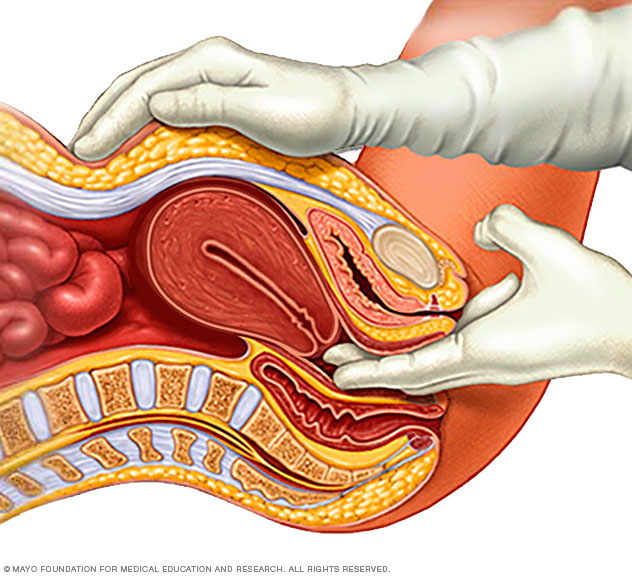
Pelvic exam
During a pelvic exam, a healthcare professional puts two gloved fingers inside the vagina. Pressing down on the belly at the same time, the healthcare professional can check the uterus, ovaries and other pelvic organs.
Treatment
Possible treatments for mittelschmerz include:
- Pain relievers. To lessen discomfort from mittelschmerz, try a pain reliever that you can buy without a prescription. For example, you may use acetaminophen (Tylenol, others), ibuprofen (Advil, Motrin IB, others) or naproxen sodium (Aleve).
- Birth control pills. If you have a lot of pain from mittelschmerz and it happens regularly each month, ask your healthcare professional about taking birth control pills. Some types of birth control pills suppress ovulation, which may ease pain due to ovulation.
Self-care
Certain home remedies may help ease discomfort from mittelschmerz that lasts more than a few minutes. Because heat increases blood flow, relaxes tense muscles and eases cramping, you might want to
- Soak in a warm bath.
- Place a heating pad where the pain is and hold it in place for a short time.
Preparing for your appointment
You probably won't need to see a healthcare professional for mittelschmerz. But if your pain really bothers you, make an appointment with your healthcare professional to get checked out and learn about treatment options.
What you can do
You may want to write a list that includes:
- Detailed descriptions of your symptoms.
- The dates when your last two periods began.
- Information about medical conditions you've had.
- Information about the medical conditions of your parents or siblings.
- All the medicines and dietary supplements you take.
- Questions to ask your healthcare team.
For mittelschmerz, some basic questions to ask include:
- What's likely causing my symptoms?
- Are there other possible causes for my symptoms?
- Are my symptoms likely to change over time?
- Do I need any tests?
- What treatments or home remedies might help?
- Where can I find more information?
Don't hesitate to ask other questions that you think of during your appointment.
What to expect from your doctor
Your healthcare team is likely to ask you questions, such as:
- How many days apart are your menstrual periods, and how long do they last?
- How would you describe your symptoms?
- Where is your pain?
- How long have you had this pain? Is it constant or does it go away after a few minutes or hours?
- On a scale of 1 to 10, how bad is your pain?
- How long before or after your period does the pain occur?
- Do you have other symptoms, such as nausea, vomiting, diarrhea, back pain, dizziness or headache?
CON-20375111
Mayo Clinic does not endorse companies or products. Advertising revenue supports our not-for-profit mission.
Advertising & Sponsorship
Mayo Clinic Press
Check out these best-sellers and special offers on books and newsletters from Mayo Clinic Press.
