Overview
Meralgia paresthetica
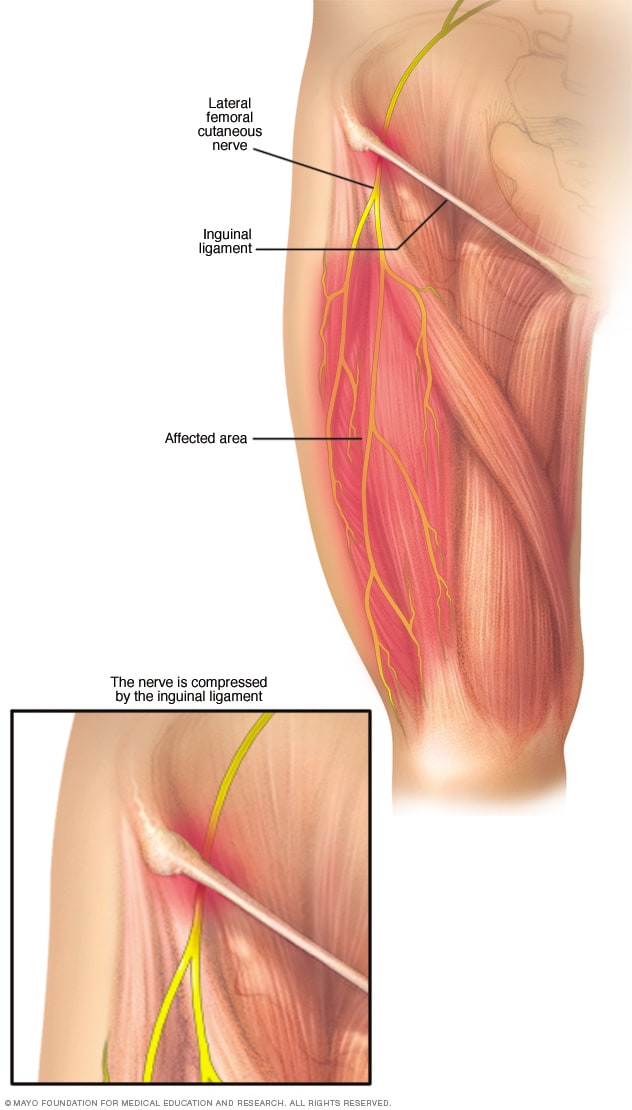
Meralgia paresthetica
Meralgia paresthetica is a condition caused by compression of the lateral femoral cutaneous nerve. This nerve supplies feeling to the skin on the upper leg. Symptoms can include tingling, numbness and burning pain in the outer part of the thigh.
Meralgia paresthetica is a condition that causes tingling, numbness and burning pain in the outer thigh. It happens when the nerve that gives feeling to the skin on the upper leg is compressed. This is the lateral femoral cutaneous nerve.
Meralgia paresthetica also is known as lateral femoral cutaneous nerve entrapment.
Tight clothing, obesity or weight gain, and pregnancy are common causes of meralgia paresthetica. It also can be due to an injury or a disease, such as diabetes.
Conservative measures, such as wearing loose clothing, often lessen meralgia paresthetica symptoms. In severe cases, treatment may include medicines to ease discomfort. Rarely, surgery may be needed.
Symptoms
Symptoms of meralgia paresthetica affect the outer part of the thigh, called the lateral thigh. Symptoms may include:
- Tingling and numbness.
- Burning pain.
- Decreased feeling.
- Increased sensitivity and pain even to a light touch.
These symptoms often occur on one side of the body. They might get worse after walking or standing.
When to see your doctor
See a healthcare professional if you have symptoms of meralgia paresthetica.
Causes
Meralgia paresthetica occurs when there is pressure on the lateral femoral cutaneous nerve. This is the nerve that supplies feeling to the skin of the outer thigh. The nerve only affects how the leg feels. It doesn't affect how the leg muscles work.
In most people, this nerve passes through the groin to the upper thigh without trouble. But in meralgia paresthetica, it becomes trapped. Often the nerve is trapped under the inguinal ligament. This is a ligament that runs along the groin from the belly to the upper thigh.
Conditions that raise pressure on the groin can compress the lateral femoral cutaneous nerve, including:
- Tight clothing, such as belts, corsets and tight pants.
- Obesity or weight gain.
- Wearing a heavy tool belt.
- Pregnancy.
- Fluid buildup in the belly.
- Scar tissue near the inguinal ligament due to injury or past surgery.
Nerve injury also can cause meralgia paresthetica. For example, the nerve can be injured due to diabetes, trauma after surgery or seat belt injury after a motor vehicle accident.
Risk factors
The following might raise the risk of meralgia paresthetica:
- Extra weight. Being overweight can raise the pressure on the lateral femoral cutaneous nerve.
- Pregnancy. A growing belly puts added pressure on the groin area where the lateral femoral cutaneous nerve passes.
- Diabetes. Diabetes-related nerve injury can lead to meralgia paresthetica.
- Age. People between the ages of 30 and 60 are at higher risk.
Prevention
Although there's no sure way to prevent meralgia paresthetica, you can take steps to help reduce your risk. For instance:
- Opt for looser fitting pants and other clothing.
- Limit what you carry in your pockets and on your belt, especially heavy items.
- Keep a healthy weight, or lose weight if you're overweight.
- Try to have correct posture.