Hairy cell leukemia Diagnosis and treatment
Diagnosis
To diagnose hairy cell leukemia, a healthcare professional might start with a physical exam and ask you about your symptoms. Other tests might include blood tests, a CT scan and a procedure to remove some bone marrow for testing.
Physical exam
Your healthcare professional may feel your liver and spleen to see if they're too big. The spleen is an oval-shaped organ on the left side of the upper belly. The liver is a large organ on the right side of the upper belly. Hairy cell leukemia can cause the spleen and liver to get bigger. If this happens, you might feel a fullness in your belly. You might have pain or discomfort when you eat.

Enlarged spleen
The spleen is a small organ typically about the size of your fist. But a number of conditions, including liver disease and some cancers, can cause your spleen to enlarge.
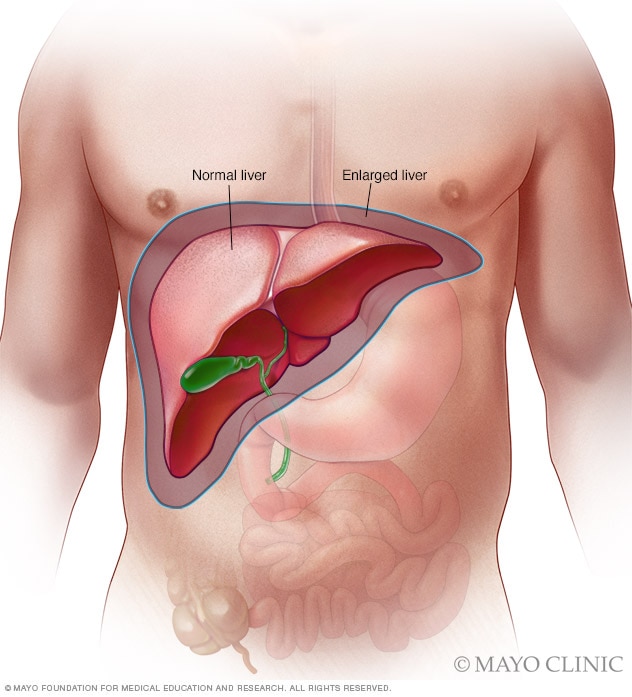
Enlarged liver
An enlarged liver can have many possible causes.
Blood tests
You may have a blood test to measure the levels of blood cells in your blood. This test is called a complete blood count (CBC) with differential.
You have three main types of blood cells in your blood. They include red blood cells, white blood cells and platelets. In hairy cell leukemia, a CBC test may show that levels of all these cells are low.
Another type of blood test might involve looking at a sample of your blood under the microscope. This test can find hairy cell leukemia cells. This test is called a peripheral blood smear.
Bone marrow aspiration and biopsy
Bone marrow aspiration and biopsy are procedures that involve collecting cells from the bone marrow. The cells are sent for testing.
Healthcare professionals use this test to look for hairy cell leukemia cells in the bone marrow.
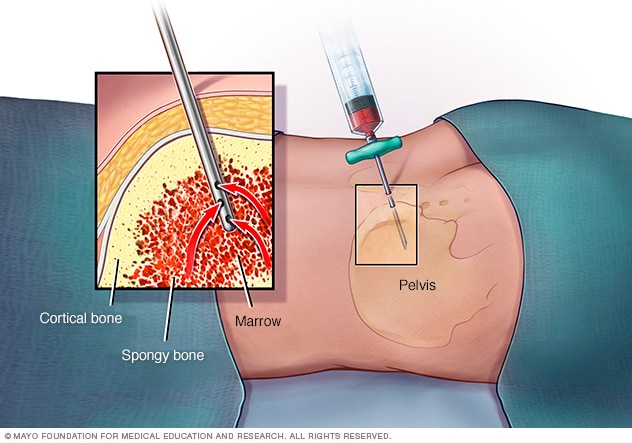
Bone marrow exam
In a bone marrow aspiration, a healthcare professional uses a thin needle to remove a small amount of liquid bone marrow. It is usually taken from a spot in the back of the hip bone, also called the pelvis. A bone marrow biopsy is often done at the same time. This second procedure removes a small piece of bone tissue and the enclosed marrow.
Lab tests to study the leukemia cells
Hairy cell leukemia cells collected from your blood and bone marrow go to a lab for tests. These tests look at the changes in the cells' DNA. This helps your healthcare professional understand your prognosis and what treatments are best for you.
CT scan
A CT scan shows detailed images of the inside of your body. Your healthcare professional may order a CT scan to look for swelling in your spleen and your lymph nodes.
Treatment
Hairy cell leukemia treatments can control the disease and help you go about your life as usual. But treatments most often can't cure the cancer. Instead, treatments for hairy cell leukemia help control symptoms and prevent complications. People with hairy cell leukemia can live with the condition for many years.
Treatment might not need to start right away
Treatment for hairy cell leukemia doesn't always need to start right away. This cancer may get worse slowly over time. You might choose to wait to have treatment if the cancer starts to cause symptoms.
If you don't have treatment, you may have regular appointments with your healthcare professional. You might have blood tests to see if hairy cell leukemia is getting worse.
You might decide to have treatment if you start to get hairy cell leukemia symptoms. Most people with hairy cell leukemia need treatment after a time.
Chemotherapy
Chemotherapy treats cancer with strong medicines. It's often the first treatment for hairy cell leukemia. Most people get a complete or partial remission after chemotherapy for hairy cell leukemia. Remission means you have no signs of cancer.
You get chemotherapy for hairy cell leukemia as a shot. Or you get it through a vein, called an infusion.
If your hairy cell leukemia comes back or if some cancer remains after treatment, your healthcare professional might suggest that you repeat chemotherapy with the same medicines or try another medicine.
Targeted therapy
Targeted therapy for cancer is a treatment that uses medicines that attack specific chemicals in the cancer cells. By blocking these chemicals, targeted treatments can cause cancer cells to die.
Targeted therapy sometimes is a first treatment for hairy cell leukemia. You can get targeted therapy with chemotherapy. More often, targeted therapy is a treatment for cancer that comes back after chemotherapy.
Your healthcare professional has your cancer cells tested to see whether targeted therapy is likely to work for you.
Alternative medicine
No alternative medicines treat hairy cell leukemia. But alternative medicine might help in other ways. It may help you cope with the stress of a cancer diagnosis and the treatment side effects.
Talk to your healthcare professional about your choices, such as:
- Art therapy.
- Exercise.
- Meditation.
- Music therapy.
- Relaxation exercises.
- Spirituality.
Coping and support
A cancer diagnosis can overwhelm you. Here are some ideas that might help you cope.
Learn enough to make decisions about your care
Find out more about hairy cell leukemia and cancer treatments. This can help you feel better about making choices about your treatment. Ask your healthcare professional to suggest good sources of information to get you started.
Find a good listener
Finding someone who is willing to listen to you talk about your hopes and fears can be helpful as you manage a cancer diagnosis. This could be a friend or family member. A counselor, medical social worker or clergy member also may offer helpful guidance and care.
Ask your healthcare team about support groups in your area or contact Blood Cancer United or the Hairy Cell Leukemia Foundation. Find support online through Mayo Clinic Connect, which is a community where you can connect with others for support, practical information and answers to everyday questions.
Take care of yourself
You can't control hairy cell leukemia, but you can manage other aspects of your health.
Eat a balanced diet with plenty of fruits and vegetables. Exercise regularly. Get enough sleep so that you wake up feeling refreshed. Find healthy ways to cope with the stresses in your life.
Preparing for your appointment
Start by seeing a healthcare professional if you have symptoms that worry you. For hairy cell leukemia, your healthcare professional might send you to a doctor who specializes in conditions of the blood and bone marrow. This doctor is called a hematologist.
Here's some information to help you get ready for your appointment.
What you can do
When you make the appointment, ask if there's anything you need to do before the appointment. For instance, you might need to change your diet. If you can, take a family member or friend to the appointment to help you remember the information your healthcare team gives you.
Make a list of:
- Your symptoms and when they began. Include any that don't seem linked to the reason for your appointment.
- Key personal information, including major stresses or recent life changes.
- All medicines, vitamins and supplements you take, including dosages.
- Questions to ask your healthcare professional.
For hairy cell leukemia, some basic questions might be:
- What tests do I need?
- Will I need treatment for my hairy cell leukemia?
- Without treatment, will my leukemia get worse?
- What treatments are there?
- How will cancer treatment affect my life?
- I have other health conditions. How can I manage them together?
- Are there brochures or other printed information that I can have? What websites do you suggest?
What to expect from your doctor
Your healthcare professional is likely to ask you questions, such as:
- Do your symptoms stay with you or come and go?
- How bad are your symptoms?
- What, if anything, makes your symptoms better?
- What, if anything, makes your symptoms worse?
CON-20372939
Mayo Clinic does not endorse companies or products. Advertising revenue supports our not-for-profit mission.
Advertising & Sponsorship
Mayo Clinic Press
Check out these best-sellers and special offers on books and newsletters from Mayo Clinic Press.
