Overview
Flatfeet
Flatfeet
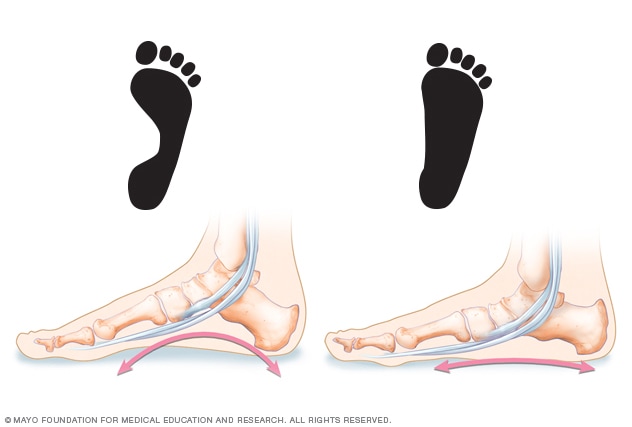
In typical feet, the arch leaves a footprint similar to the one shown on the left. In someone with flatfeet, the arch typically produces a footprint such as the one shown on the right.
Flatfeet is a common condition in which the arches on the inside of the feet flatten when weight is put on them. This condition also is known as progressive collapsing foot deformity. When people with flatfeet stand up, the feet tend to point outward, and the arch of the foot falls and may touch the floor.
Flatfeet can occur when the arches do not develop during childhood. It also can develop later in life after an injury or from the wear-and-tear stresses of age.
Flatfeet usually is painless. If you do not have pain, no treatment is necessary. However, if flatfeet causes pain and limits activities, an evaluation from a specialist may be warranted.
Products & Services
Symptoms
Most people have no symptoms associated with flatfeet. But some people with flatfeet experience foot pain, particularly in the arch area or along the inside of the foot and ankle. Swelling may occur along the inside of the ankle.
Pain may worsen with activity. The foot may feel weak when attempting to push off or stand on the toes. Pain may be worse when wearing footwear with little support such as sandals or when walking barefoot.
When to see a doctor
Talk to your healthcare professional if you or your child has foot pain, particularly if it is limiting what you want to do.
Causes
Flatfeet is not unusual in infants and toddlers, because the foot's arch has not yet developed. Most people's arches develop throughout childhood, but some people never develop arches. People without arches may or may not have symptoms.
Some children have flexible flatfeet, often called flexible flatfoot, in which the arch is visible when the child is sitting or standing on tiptoes but disappears when the child stands. Most children outgrow flexible flatfeet.
People who have arches in childhood can develop flatfeet later in life. Arches can collapse abruptly after an injury or gradually over years of wear and tear. The ligaments, which are tough bands of tissue that connect bones, can become loose over time. Loose ligaments can lead to increased stress on the tendons, which connect muscle to bone. One of the tendons that runs along the inside of the ankle, the posterior tibialis tendon, helps support the arch and can weaken or tear over time.
Risk factors
Factors that can increase the risk of flatfeet include:
- Obesity.
- Injury to the foot or ankle.
- Rheumatoid arthritis.
- Aging.
- Diabetes.
- Family history of flatfeet.
- Genetic conditions.