Diagnosis
A diagnosis of hydrocephalus is usually based on:
- Your symptoms.
- A general physical exam.
- A neurological exam.
- Brain imaging tests.
Neurological exam for hydrocephalus
The type of neurological exam depends on age. A healthcare professional may ask questions and use simple tests to check muscle strength, movement, balance, and senses such as touch or vision.
Brain imaging for hydrocephalus
Imaging tests can help diagnose hydrocephalus and also may find what's causing symptoms. Common tests include:
- Ultrasound. This is often the first test for babies because it's simple and low risk. The device is placed on the soft spot, also called the fontanelle, on top of the baby's head. Ultrasound also may detect hydrocephalus before birth during a routine prenatal scan.
- MRI. This test uses radio waves and a magnetic field to create detailed images of the brain. It's painless but noisy and requires lying still. MRI can show enlarged ventricles and help find the cause of hydrocephalus or related symptoms. Some children might need medicine to help them feel calm, known as mild sedation, but some hospitals use a faster MRI that usually doesn't require it. This is the test of choice for adults with hydrocephalus.
- CT scan. This imaging test uses special X-ray technology to create cross-sectional views of the brain. It's fast and painless, but it involves a small amount of radiation. CT scans show less detail than MRI, so they're usually used in emergency situations.
More Information
Treatment
There are two main surgical treatments for hydrocephalus.
Shunt for hydrocephalus
Shunt system
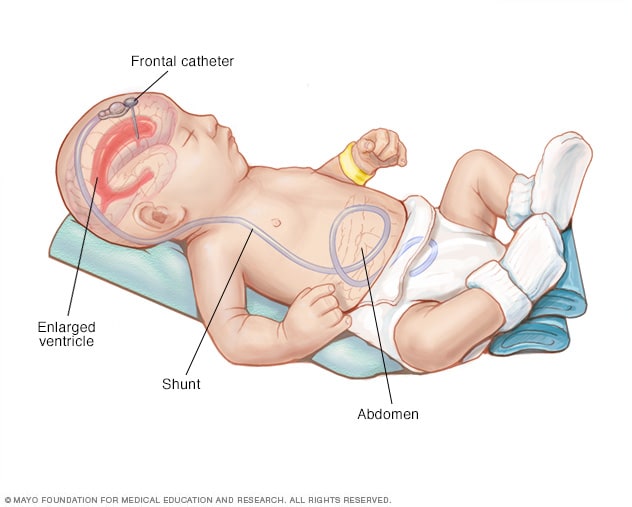
Shunt system
A shunt drains excess cerebrospinal fluid from the brain to another part of the body, such as the belly or chest, where it can be more easily absorbed.
The most common hydrocephalus treatment is a shunt — a flexible tube with a one-way valve. The valve helps drain extra fluid from the brain at the right speed and in the right direction.
One end of the tube is placed in a ventricle inside the brain. The rest of the tubing is threaded under the skin, usually down to the belly or sometimes to the chest. This allows the fluid to drain and be absorbed by the body.
Most people with hydrocephalus need their shunt for life. Regular checkups are important to make sure it's working well.
Endoscopic third ventriculostomy
Some people may have a surgery called endoscopic third ventriculostomy (EVT) for hydrocephalus. In this procedure, a surgeon uses a small camera to look inside the brain and makes a tiny hole at the bottom of one of the ventricles. This opening lets the extra fluid flow out of the brain, helping to relieve pressure.
Complications of surgery
Both shunting and ETV surgical procedures for hydrocephalus can result in complications. Shunt systems can stop draining cerebrospinal fluid. Or shunt systems may poorly regulate drainage because of mechanical problems, a blockage or infections. Complications of EVT surgery include bleeding and infections.
Problems after surgery need quick medical care. Sometimes another surgery or other treatment may be needed. Call your healthcare professional right away if you have a fever or any symptoms of hydrocephalus.
Other treatments
Some people with hydrocephalus, particularly children, might need supportive therapies. The need for these therapies depends on the long-term complications of hydrocephalus.
Children's care teams might include:
- Pediatrician or physiatrist, who oversees the treatment plan and medical care.
- Pediatric neurologist, who specializes in diagnosing and treating neurological conditions in children.
- Occupational therapist, who specializes in therapy to develop everyday skills.
- Developmental therapist, who specializes in therapy to help your child develop age-appropriate behaviors, social skills and interpersonal skills.
- Mental health professional, such as a psychologist or psychiatrist.
- Social worker, who helps the family get needed services and plan for transitions in care.
Children who are in school may need special education. Special education teachers address learning disabilities, determine educational needs and help find needed resources.
Adults with more serious complications might need the services of occupational therapists or social workers. Or they may need to see specialists in dementia care or other medical specialists.
In adults with normal-pressure hydrocephalus that doesn't cause symptoms, treatment may not be needed. Only monitoring may be needed in these instances, as it may take many years to develop any symptoms.
More Information
Clinical trials
Explore Mayo Clinic studies testing new treatments, interventions and tests as a means to prevent, detect, treat or manage this condition.
Coping and support
With the help of therapies and educational services, many people with hydrocephalus live with few limitations.
If you have a child with hydrocephalus, there are many resources available to provide emotional and medical support. Children with developmental disabilities might be eligible for government-sponsored healthcare and other support services. Check with your state or county social services agency.
Hospitals and organizations serving people with disabilities are good resources for emotional and practical support. Members of your healthcare team also can help. Ask for help connecting with other families who are living with hydrocephalus.
Adults living with hydrocephalus might find valuable information from organizations dedicated to hydrocephalus education and support, such as the Hydrocephalus Association.
Preparing for your appointment
The timing of diagnosing a child with hydrocephalus can depend on the symptoms are and when they appeared. It also may depend on whether there were risk factors for hydrocephalus during pregnancy or delivery. Sometimes hydrocephalus can be diagnosed at birth or before birth.
Well-baby visits
It's important to take your child to all regularly scheduled well-baby visits. Healthcare professionals monitor your child's development in key areas, including:
- Head size, rate of head growth and overall body growth.
- Muscle strength and tone.
- Coordination.
- Posture.
- Age-appropriate motor skills.
- Sensory abilities such as vision, hearing and touch.
Questions you should be prepared to answer during regular checkups might include:
- What concerns do you have about your child's growth or development?
- How well does your child eat?
- How does your child respond to touch?
- Is your child reaching certain milestones in development, such as rolling over, pushing up, sitting up, crawling, walking or speaking?
Preparing for other healthcare visits
You'll likely start by seeing your child's healthcare professional or your healthcare professional. You may then be referred to a doctor who specializes in brain and nervous system conditions, known as a neurologist.
Be prepared to answer the following questions about your symptoms or your child's symptoms:
- What symptoms have you noticed? When did they begin?
- Have these symptoms changed over time?
- Do these symptoms include nausea or vomiting?
- Have you or your child had any vision issues?
- Have you or your child had a headache or fever?
- Have you noticed personality changes, including increased irritability?
- Has your child's school performance changed?
- Have you noticed new issues with movement or coordination?
- Is your child having trouble sleeping or lacking in energy?
- Has your infant had seizures?
- Has your infant had difficulty with eating or breathing?
- In older children and adults, have symptoms included loss of bladder control and urinating often?
- Have you or your child had a recent head injury?
- Have you or your child recently begun a new medicine?