Nail fungus Symptoms and causes
Overview
Nail fungus is a common infection of the nail. It begins as a white or yellow-brown spot under the tip of your fingernail or toenail. As the fungal infection goes deeper, the nail may discolor, thicken and crumble at the edge. Nail fungus can affect several nails.
If your condition is mild and not bothering you, you may not need treatment. If your nail fungus is painful and has caused thickened nails, self-care steps and medications may help. But even if treatment is successful, nail fungus often comes back.
Nail fungus is also called onychomycosis (on-ih-koh-my-KOH-sis). When fungus infects the areas between your toes and the skin of your feet, it's called athlete's foot (tinea pedis).
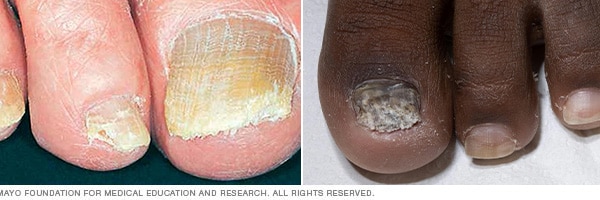
Nail fungus
Nail fungus can cause the nail to become thick, ragged and discolored. An infected nail may separate from the nail bed.
Symptoms
Symptoms of nail fungus include a nail or nails that are:
- Thickened
- Discolored
- Brittle, crumbly or ragged
- Misshapen
- Separated from the nail bed
- Smelly
Nail fungus can affect fingernails, but it's more common in toenails.
When to see a doctor
You may want to see a health care provider if self-care steps haven't helped and the nail becomes increasingly discolored, thickened or misshapen. Also talk with your health care provider if you have:
- Diabetes and think you're developing nail fungus
- Bleeding around the nails
- Swelling or pain around the nails
- Difficulty walking
Causes
Nail fungus is caused by various fungal organisms (fungi). The most common is a type called dermatophyte. Yeast, bacteria and molds also can cause nail infections. The discoloration from a bacterial infection tends to be green or black.
Fungal infection of the foot (athlete's foot) can spread to the nail, and a fungal infection of the nail can spread to the foot. You can also get the infection from contact with spaces where fungi can thrive, such as the floor tile in a gym shower or inside dark, sweaty, moist shoes.
Risk factors
Factors that can increase your risk of developing nail fungus include:
- Older age
- Wearing shoes that make your feet sweat heavily
- Having had athlete's foot in the past
- Walking barefoot in damp public areas, such as swimming pools, gyms and shower rooms
- Having a minor skin or nail injury
- Having a skin condition that affects the nails, such as psoriasis
- Having diabetes, blood flow problems or a weakened immune system
From Mayo Clinic to your inbox
Sign up for free and stay up to date on research advancements, health tips, current health topics, and expertise on managing health. Click here for an email preview.
Complications
A severe case of nail fungus can be painful and may cause permanent damage to your nails. And it may lead to other serious infections that spread beyond your feet if you have a suppressed immune system due to medication, diabetes or other conditions.
Prevention
The following habits can help prevent nail fungus or reinfections and athlete's foot, which can lead to nail fungus:
- Keep your nails clean and dry. Wash your hands and feet regularly. Wash your hands after touching an infected nail. Dry well, apply an antifungal foot powder and moisturize your nails. Consider applying a nail hardener, which might help strengthen nails and cuticles.
- Keep your nails trimmed. Cut nails straight across, smooth the edges with a file and file down thickened areas. Disinfect your nail clippers after each use. Letting your nails grow long creates more places for the fungus to grow.
- Wear absorbent socks or change your socks throughout the day.
- Choose shoes made of materials that breathe.
- Discard old shoes or treat them with disinfectants or antifungal powders.
- Wear footwear in pool areas and locker rooms.
- Choose a nail salon that uses sterilized manicure tools for each customer. Or disinfect tools you use for home pedicures.
- Give up nail polish and artificial nails.
- If you have athlete's foot, treat it with an antifungal product.
CON-20311563
Mayo Clinic does not endorse companies or products. Advertising revenue supports our not-for-profit mission.
Advertising & Sponsorship
Mayo Clinic Press
Check out these best-sellers and special offers on books and newsletters from Mayo Clinic Press.
