Optic glioma care at Mayo Clinic
Mayo Clinic specialists have experience caring for people with many types of glioma, including optic glioma, which requires a specialized approach because of its location and effects on vision.
Your Mayo Clinic care team
At Mayo Clinic, specialists within the Brain Tumor Program work together to provide comprehensive care for people with optic glioma. Your care team might include neuro-oncologists, neurologists, ophthalmologists or neuro-ophthalmologists, neurosurgeons, oncologists, radiation oncologists, pathologists, and radiologists. This means that you're not getting just one opinion. You benefit from the knowledge and experience of each specialist.
Close collaboration enables the team to have your test results available quickly and to coordinate scheduling your appointments. Evaluation and treatment that might take months elsewhere can typically be done in only a matter of days at Mayo Clinic.
Advanced diagnosis and treatment
Accurate diagnosis is critical for providing appropriate treatment for each person. Once a treatment path is chosen, it can be difficult to change course. This is why accurate diagnosis and careful planning are important. With tumor experts focused on optic glioma care, Mayo Clinic doctors can make accurate diagnoses and recommend appropriate treatments from the start.
Doctors at Mayo Clinic have access to advanced imaging technology, including specialized MRI techniques, to help diagnose optic gliomas and guide monitoring or treatment decisions. This includes advanced types of MRI, such as functional MRI, perfusion MRI and magnetic resonance spectroscopy.
Mayo Clinic doctors care for many people referred by local clinics that aren't equipped to treat them. For example, Mayo Clinic doctors have experience treating optic glioma in children and performing MRIs on people with implanted devices, such as pacemakers.
Surgery is used selectively for optic glioma. Mayo Clinic neurosurgeons may perform procedures to relieve pressure, manage complications or obtain tissue for diagnosis when needed, while carefully protecting vision and surrounding brain structures.
When radiation therapy is needed, Mayo Clinic offers advanced techniques designed to limit exposure in healthy brain tissue. Radiation is used carefully for optic glioma, particularly in children and adults with NF1.
When radiation therapy is appropriate, Mayo Clinic offers advanced techniques designed to limit exposure in healthy brain tissue. These may include:
Mayo Clinic doctors provide access to chemotherapy and newer targeted therapies when appropriate, with experience caring for children and adults who require long-term monitoring.
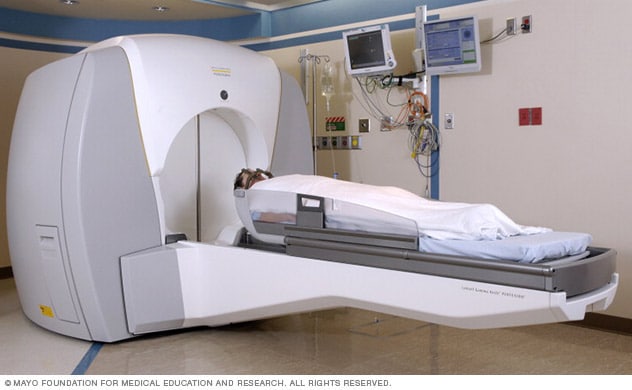 Stereotactic radiosurgery system at Mayo Clinic
Nationally recognized expertise
The Mayo Clinic Comprehensive Cancer Center meets the strict standards for a National Cancer Institute-designated comprehensive cancer center. These standards recognize scientific excellence and a multispecialty approach focused on cancer prevention, diagnosis and treatment.
Mayo Clinic participates in the Alliance for Clinical Trials in Oncology. This organization brings together scientists throughout the U.S. and Canada. They work together to conduct clinical trials and reduce the impact of cancer.
Expertise and rankings
Mayo Clinic doctors are widely respected for their expertise and experience in caring for people with brain tumors.
- Experience caring for many people with brain tumors. The Brain Tumor Program brings together many specialists to provide comprehensive care for people with brain tumors.
- Skilled neurosurgeons who perform many procedures every year. If surgery is the most appropriate treatment, you want to be in the hands of experienced surgeons who perform these operations frequently. They use the latest technological advances available to them for treating optic glioma.
- Leadership in brain tumor research. With the goal of seeking new knowledge and improving the reliability, comfort and cost of care, Mayo Clinic doctors continually study new diagnostic and treatment options through clinical trials. At Mayo Clinic, scientists and medical researchers are investigating the causes of gliomas and other brain tumors and are aggressively developing new treatments.
Mayo Clinic in Rochester, Minnesota, Mayo Clinic in Jacksonville, Florida, and Mayo Clinic in Phoenix/Scottsdale, Arizona., rank among the Best Hospitals for neurology and neurosurgery and for cancer in the U.S. News & World Report rankings. Mayo Clinic Children's in Rochester is ranked the No. 1 hospital in Minnesota and the five-state region of Iowa, Minnesota, North Dakota, South Dakota and Wisconsin, according to U.S. News & World Report's 2025–2026 "Best Children's Hospitals" rankings. With the emphasis on collaborative care, specialists interact very closely with their colleagues across all sites.
Learn more about Mayo Clinic's neurology and neurosurgery departments' expertise and rankings.