الورم الأرومي النخاعي الأعراض والأسباب
نظرة عامة
الورم الأرومي النخاعي ورم دماغي سرطاني —يُسمى أيضًا ورمًا خبيثًا— يبدأ في الجزء الخلفي والسفلي من الدماغ.
يُسمى هذا الجزء من الدماغ المخيخ. ويساعد المخيخ في التحكم في التوازن والحركة والتناسق الحركي.
الورم الأرومي النخاعي هو أكثر أنواع الأورام الدماغية السرطانية شيوعًا لدى الأطفال، لكن يمكن أن يصاب به البالغون أيضًا.
يتكوّن الورم الأرومي النخاعي عندما تحدث تغيّرات في الحمض النووي لخلايا المخيخ. وتؤدي هذه التغيّرات إلى نمو الخلايا وتكاثرها بسرعة. ويمكن أن يضغط الورم على الأجزاء القريبة من الدماغ، وقد يعيق تدفق السائل الدماغي النخاعي. وقد يؤدي ذلك إلى تراكم الضغط داخل الدماغ.
يمكن أن ينتشر الورم الأرومي النخاعي —يُعرف ذلك أيضًا بالانتقال— إلى أجزاء أخرى من الدماغ والحبل النخاعي عبر السائل الدماغي النخاعي. ونادرًا ما ينتشر خارج الجهاز العصبي المركزي.
توجد أربعة أنواع رئيسية —تُسمى أيضًا المجموعات الجزيئية— من الورم الأرومي النخاعي. وتُحدد هذه المجموعات بناءً على الخصائص الوراثية للورم. والمجموعات الأربعة هي: مجموعة الأورام التي تنشأ نتيجة للإشارات غير الطبيعية للمسار WNT، ومجموعة الأورام التي تنشأ نتيجة للإشارات غير الطبيعية للمسار SHH (بما في ذلك جين TP53 المتحوّل وجين TP53 من النمط الشائع)، والمجموعة 3، والمجموعة 4.
ويُشار أحيانًا إلى أورام المجموعة 3 والمجموعة 4 معًا بوصفهما أورامًا لا تنتمي للأورام التي تنشأ نتيجة لإشارات المسار WNT أو المسار SHH، رغم أنهما مجموعتان منفصلتان. وتساعد معرفة نوع الورم في توجيه العلاج.
قد يكون تلقي تشخيص الإصابة بهذا المرض أمرًا مربكًا. وقد يكون من المفيد معرفة أنه مع العلاج يعيش العديد من الأطفال المصابين بالورم الأرومي النخاعي لفترة كبيرة بعد خمس سنوات بعد التشخيص.
تختلف حالة كل طفل عن الآخر. ويعتمد التوقع المستقبلي على عدة عوامل، بما في ذلك العمر، ونوع الورم، وما إذا كان السرطان قد انتشر، ومقدار الورم الذي يُمكن إزالته بأمان.
أنواع الورم الأرومي النخاعي
يعتمد نوع الورم الأرومي النخاعي على شكل خلايا الورم تحت المجهر، وعلى الفحوصات المخبرية التي تبحث عن التغيّرات في جينات الورم. ويساعد نوع الورم الأرومي النخاعي في توجيه العلاج، وقد يؤثر في البقاء على قيد الحياة.
وتُصنّف جميع الأورام الأرومية النخاعية على أنها أورام من الدرجة الرابعة. وتصف الأنواع الفرعية المذكورة أدناه السمات الجزيئية للورم، وليس درجته.
الأنواع الجزيئية
يمكن تصنيف معظم الأورام الأرومية النخاعية إلى أربعة أنواع رئيسية بناءً على التغيّرات في الجينات. وتشمل هذه الأنواع:
- مجموعة الأورام التي تنشأ نتيجة للإشارات غير الطبيعية للمسار WNT (wingless/integrated). يُشير الاختصار WNT إلى اسم مسار إشارات خلايا مرتبط بتطور الدماغ. وتكون أورام مجموعة الأورام التي تنشأ نتيجة للإشارات غير الطبيعية للمسار WNT هي واحدة من أقل أنواع الورم الأرومي النخاعي شيوعًا. وغالبًا يستجيب جيدًا جدًا للعلاج، ويرتبط بأفضل معدلات البقاء على قيد الحياة. ويظهر غالبًا لدى الأطفال الأكبر سنًا والمراهقين.
- مجموعة الأورام التي تنشأ نتيجة للإشارات غير الطبيعية للمسار SHH (سونيك هيدجهوغ). سونيك هيدجهوغ هو اسم مسار إشارات لنمو الخلايا يشارك في تطور الدماغ. يمكن أن يحدث هذا النوع لدى الرُضَّع والأطفال والبالغين. وتختلف معدلات البقاء حسب السمات الجينية الأخرى للورم. بعض أورام SHH —تُعرف باسم مجموعة الأورام التي تنشأ نتيجة للإشارات غير الطبيعية للمسار SHH التي تحتوي على جين TP53 من النمط الشائع— تكون أقل عدوانية. في حين أن أنواعًا أخرى —تُعرف باسم مجموعة الأورام التي تنشأ نتيجة للإشارات غير الطبيعية للمسار SHH التي تحتوي على جين TP53 متحوّل— قد يكون من الصعب علاجها.
- المجموعة الثالثة. تشيع الإصابة بالورم الأرومي النخاعي من المجموعة الثالثة بدرجة أكبر بين الأطفال الصغار. وهذه الأورام أنواع جزيئية لا تندرج ضمن أورام المجموعة SHH أو أورام المجموعة WNT. وينمو هذا الورم عادةً وينتشر بسرعة أكبر من الأنواع الأخرى. كما يمكن أن يكون من الصعب علاجه، وغالبًا يقلل معدلات البقاء على قيد الحياة مقارنة بأورام WNT.
- المجموعة الرابعة. الورم الأرومي النخاعي من المجموعة الرابعة هو النوع الأكثر شيوعًا. وهذه الأورام أنواع جزيئية لا تندرج ضمن أورام المجموعة SHH أو أورام المجموعة WNT. ويمكن أن يصاب به الأطفال والبالغون. ويختلف سلوكه، فبعض الأورام تستجيب جيدًا للعلاج، في حين أن أورامًا أخرى قد تنتشر عند التشخيص.
يبدأ الترقيم عند المجموعتين الثالثة والرابعة لأن المجموعتين الأولى والثانية تمت تسميتهما إما مجموعة الأورام التي تنشأ نتيجة للإشارات غير الطبيعية للمسار WNT، أو مجموعة الأورام التي تنشأ نتيجة للإشارات غير الطبيعية للمسار SHH، بناءً على أنماط جينية محددة.
أنواع مظاهر الخلايا
يمكن أيضًا وصف الورم الأرومي النخاعي بناءً على شكل الخلايا تحت المجهر، رغم أن السمات الجينية والجزيئية تُستخدم بصورة متزايدة في التشخيص وفهم النتائج. وتتضمن:
- التقليدي.
- المتصلّب الليفي أو العُقَدي.
- كبير الخلايا أو الكشمي.
كما تساعد هذه السمات اختصاصي الرعاية الصحية في فهم طريقة التطور المحتمل للورم.
ما الفرق بين الورم الأرومي النخاعي وأورام الدماغ الأخرى؟
يختلف الورم الأرومي النخاعي عن العديد من أنواع أورام الدماغ الأخرى. تختلف هذه الأورام من حيث مكان نشأتها، ومن يُصاب بها، وكيفية علاجها.
فيما يلي الاختلاف بين تلك الأنواع:
• الورم الأرومي النخاعي مقابل الورم الدبقي. الورم الأرومي النخاعي ليس ورمًا دبقيًا. تتكوّن الأورام الدبقية من خلايا داعمة في الدماغ تُعرف بالخلايا الدبقية. أما الورم الأرومي النخاعي فيتكوّن من خلايا عصبية نامية في المخيخ.
• الورم الأرومي النخاعي مقابلالورم الأرومي الدبقي. الورم الأرومي الدبقي هو ورم دماغي عدواني يصيب عادةً البالغين ويبدأ في الأجزاء العلوية من الدماغ. أما الورم الأرومي النخاعي فهو أكثر شيوعًا لدى الأطفال، وغالبًا يستجيب للعلاج بشكل أفضل.
• الورم الأرومي النخاعي مقابل الورم البطاني. تنشأ الأورام البطانية في الخلايا التي تبطن الفراغات المملوءة بالسوائل في الدماغ والحبل النخاعي. أما الورم الأرومي النخاعي فينمو عادةً في المخيخ، ومن المرجح بدرجة أكبر أن ينتشر عبر السائل الدماغي النخاعي.
الأعراض
تحدث أعراض الورم الأرومي النخاعي عندما ينمو الورم ويضغط على أجزاء من الدماغ. كما يمكن أن يمنع الورم التدفق الطبيعي للسائل الدماغي النخاعي، ما قد يؤدي إلى تراكم الضغط داخل الرأس.
وقد تشمل مؤشرات الورم الأرومي النخاعي وأعراضه الشائعة ما يلي:
- الدوخة.
- ازدواج الرؤية أو تغيرات أخرى بها.
- صداع يزداد سوءًا عادةً في الصباح.
- الغثيان أو القيء.
- ضعف التناسق الحركي.
- الإرهاق.
- صعوبة الاتزان أو المشي غير الثابت.
صداع وقيء يحدثان عادةً بسبب تراكم الضغط داخل الجمجمة.
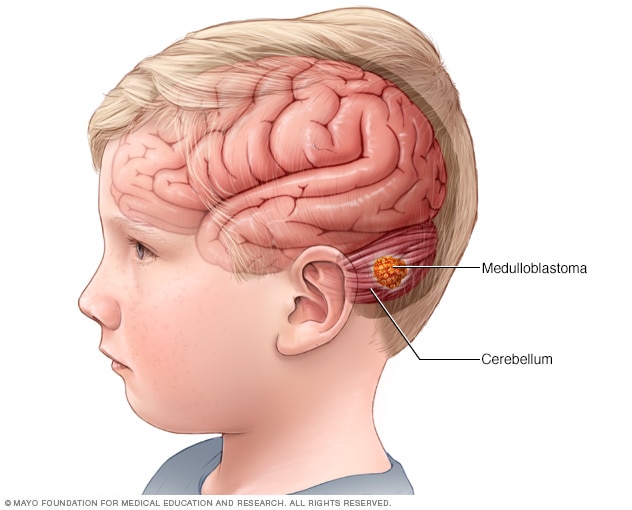
الورم الأرومي النخاعي
الورم الأرومي النخاعي أحد أنواع سرطان الدماغ، يبدأ في جزء من الدماغ يسمى المخيخ. الورم الأرومي النخاعي أكثر أنواع أورام الدماغ السرطانية شيوعًا لدى الأطفال.
الأعراض لدى الأطفال والرُضّع
قد تظهر الأعراض لدى الأطفال الصغار على مدى عدة أسابيع. وقد يواجه الأطفال صعوبة في المشي، أو يبدو عليهم عدم الاتزان، أو يفقدون التوازن. أما الرُضّع فقد يلاحظ لديهم زيادة في حجم الرأس، أو نعاس غير طبيعي، أو صعوبة في التغذية.
الأعراض لدى الأطفال والبالغين
تتشابه أعراض الورم الأرومي النخاعي عمومًا بين البالغين والأطفال، لأن الورم ينشأ عادةً في نفس الجزء من الدماغ. وقد يُصاب كلاهما بالصداع وصعوبات في التوازن والغثيان.
هل يمكن الشعور بوجود ورم أرومي نخاعي؟
ينمو الورم الأرومي النخاعي عميقًا داخل الدماغ. وعادةً لا يُسبب كتلة أو تورّمًا يمكن الشعور به من خارج الرأس.
متى ينبغي زيارة الطبيب
احجز موعدًا طبيًا لزيارة اختصاصي الرعاية الصحية إذا كنت تشعر أنت أو طفلك بأعراض تثير القلق، وخاصةً الصداع المستمر، أو القيء المتكرر، أو ظهور مشكلات جديدة في التوازن أو الرؤية.
الأسباب
لا يزال السبب وراء الإصابة بالورم الأرومي النخاعي غير معروف. ويبدأ هذا السرطان على هيئة نمو للخلايا في الجزء الخلفي السفلي من الدماغ، يُسمى المخيخ.
يحتوي الحمض النووي على التعليمات التي تُخبر الخلايا كيف تنمو وتعمل. وفي الخلايا السليمة، يتحكم الحمض النووي في سرعة نمو الخلايا وتوقيت موتها. لكن في الخلايا السرطانية، تعطي تغيّرات الحمض النووي تعليمات مختلفة. إذ توجِّه تلك التغييرات الخلايا السرطانية إلى النمو والتكاثر بسرعة. وقد تبقى الخلايا السرطانية حيّة في حين تموت الخلايا السليمة، ما يؤدي إلى زيادة عدد الخلايا وتكوّن ورم
قد ينمو ويضغط على البنى القريبة في الدماغ. كما يمكن أن تنتقل خلايا الورم الأرومي النخاعي إلى أجزاء أخرى من الدماغ والحبل النخاعي عبر السائل الدماغي النخاعي.
عوامل الخطورة
عوامل الخطر هي عناصر قد تزيد احتمال الإصابة بالورم الأرومي النخاعي. ولا توجد لدى معظم المصابين بالورم الأرومي النخاعي عوامل خطر معروفة.
- صِغر السن. يمكن أن تحدث هذه الأورام في أي سن، لكنها غالبًا تصيب الأطفال.
- المتلازمات الموروثة. تكون أغلب حالات الورم الأرومي النخاعي غير وراثية. ومع ذلك، يحدث الورم بمعدل أكبر لدى المصابين ببعض الحالات الوراثية النادرة التي تزيد خطر الإصابة بالسرطان. ويشمل ذلك فقر الدم لفانكوني، ومتلازمة غورلين، ومتلازمة لي-فروميني، ومتلازمة روبنشتاين-تايبي، ومتلازمة توركو.
ولا توجد عوامل خطر معروفة مرتبطة بنمط الحياة أو العوامل البيئية بالنسبة إلى الورم الأرومي النخاعي.
CON-20117910
لا تؤيد مايو كلينك أي شركات أو منتجات تظهر في الإعلانات. تُستخدَم عائدات الإعلانات لدعم أنشطتنا غير الربحية.
