Most people can keep working during pregnancy. But you may need to make some changes. To help you stay healthy and productive on the job, use these tips to ease common pregnancy symptoms. And be aware of tasks to avoid during pregnancy.
Calming nausea and vomiting
It's called morning sickness, but nausea and vomiting can happen at any time of day during pregnancy. To ease nausea at work:
- Stay away from triggers. Whether it's the smell of foods in the break room or other odors or tastes, try to avoid things that seem to cause nausea.
- Snack often. Eating crackers or other bland foods may help lessen nausea. Keep a supply at work for easy snacking. Ginger ale made with real ginger or ginger tea might help too.
- Take vitamin B-6. Vitamin B-6 is safe during pregnancy, and it's available without a prescription. Taking it may help ease nausea. Adding the sleep medicine doxylamine (Unisom) at bedtime also might help. But don't take that medicine during the day because it can cause sleepiness.
- Ask about prescription medicines. Serious nausea and vomiting during pregnancy can lead to weight loss. If that happens to you, talk with your healthcare professional about prescription medicines or other treatment that may help.
Handling tiredness
When your body is working hard to support a pregnancy, you may get tired more easily. Finding time to rest during the workday can be tough. It might help to:
- Take short breaks often. Getting up and moving around for a few minutes may give you a boost. Spending a few minutes with lights off, eyes shut and feet up also may help you feel less tired.
- Drink lots of fluids. Keep a water bottle near you and sip throughout the day. Drink earlier in the day rather than near bedtime to cut down on nighttime bathroom trips.
- Exercise. Physical activity can raise energy levels. That's especially true for people who sit at a desk all day. Take a walk or go for a swim after work. Or join a prenatal fitness class. But before you start a new fitness routine, talk with your healthcare professional first.
- Go to bed early. Aim for at least eight hours of sleep every night. Resting on your side can help keep blood flowing well to the developing baby. It also may ease swelling. For added comfort, put pillows between your legs and under your belly.
- Eat foods rich in iron. Feeling very tired may be a symptom of iron deficiency anemia. If you are diagnosed with this condition, making changes to your diet may help. Choose foods high in iron. Examples include dark green leafy vegetables, iron-fortified cereals, eggs, lean red meat, poultry and seafood. Your healthcare professional also may advise you to take an iron supplement.
Staying comfortable
As pregnancy goes on, everyday activities such as sitting and standing can get less comfortable. Moving around every couple of hours can ease muscle tension and help prevent fluid buildup in the legs and feet. Try these tips, too:
- Sitting. Use an adjustable chair with good lower back support. That can help make hours of sitting easier, especially as body weight and posture change. For chairs that aren't adjustable, use a small pillow or cushion for extra back support. Using a standing workstation during some of the workday also may help keep you more comfortable. If your feet or legs are swollen, raising them may help.
- Standing. If you must stand for a long time, putting one foot up on a footrest, low stool or box can help. Switch feet from time to time and take breaks often. Wear comfortable shoes with low heels and good arch support. Wearing support or compression stockings also may be useful.
- Bending and lifting. Even when lifting something light, proper form can protect the back. Bend at the knees, not at the waist. Keep the load close to your body, lifting with the legs, not the back. Don't twist while lifting.
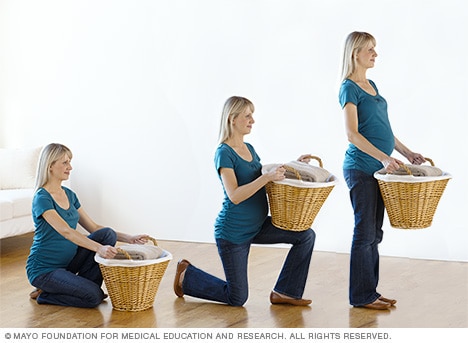
Proper lifting during pregnancy
To lift correctly, bend at the knees — not at the waist. Keep your back as straight as possible. Use your leg muscles to stand and keep the object close to your body.
Keeping stress under control
Stress on the job can drain your energy and make you feel more tired. To help lower workplace stress:
- Take control. Make daily to-do lists and prioritize your tasks. Think about what you can ask someone else to do. See if there's anything that you can take off your list entirely.
- Talk it out. Share frustrations with a supportive co-worker, friend or family member.
- Relax. Try relaxation techniques, such as breathing slowly or imagining a calm place. Mindfulness and meditation apps might be helpful. Try a prenatal yoga class if your healthcare professional says it's OK.
Staying safe at work
Some working conditions might raise the risk of health concerns during pregnancy, especially if you're at high risk of preterm labor. Those conditions include:
- Exposure to harmful substances or radiation.
- Standing for a long time.
- Heavy lifting without using proper form.
- Climbing ladders.
- Exposure to loud noise.
- Working in very hot or very cold conditions.
- Working the night shift.
If you're concerned about any of these issues, talk with your healthcare professional. Together you can decide if you need to take steps to stay safe or if you need to change your work duties during pregnancy.
Getting the vaccinations your healthcare professional recommends during pregnancy also can help keep you safe at work and healthy at home.
Mayo Clinic's Ultimate Guide to Pregnancy
This guide offers research-backed advice to help you and your baby experience a healthy pregnancy, written by some of the world's leading medical experts.
