Stye (sty) Symptoms and causes
Overview
A stye is a painful lump near the edge of the eyelid that may look like a boil or a pimple. Styes are often caused by bacterial infections and may be filled with pus. A stye usually forms on the outside of your eyelid, but sometimes it can form on the inner part of your eyelid.
In most cases, a stye will begin to disappear on its own in a couple of days. In the meantime, you may be able to relieve the pain or discomfort of a stye by applying a warm washcloth to your eyelid.
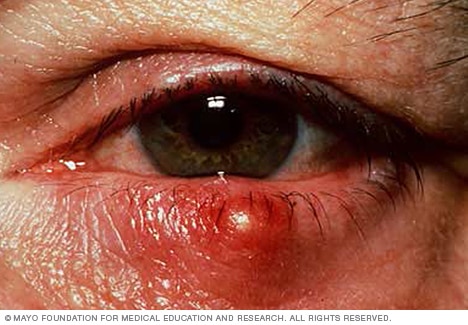
Stye
A stye is a bacterial infection involving one or more of the small glands near the base of your eyelashes. It is similar to a boil or a pimple and is often painful.
Symptoms
Symptoms of a stye include:
- A red or discolored lump on the eyelid that is like a boil or a pimple.
- Eyelid pain.
- Eyelid swelling.
- Tearing.
Another condition that causes inflammation of the eyelid is a chalazion. A chalazion happens when there's a blockage in one of the small oil glands near the eyelashes. Unlike a stye, a chalazion usually isn't painful and tends to be most prominent on the inner side of the eyelid. Treatment for both conditions is similar.
When to see a doctor
Most styes are harmless to the eye and won't affect the ability to see clearly. Try self-care measures first, such as applying a warm washcloth to your closed eyelid for 5 to 10 minutes several times a day and gently massaging the eyelid. Contact a healthcare professional if:
- The stye doesn't start to improve after 48 hours.
- Redness or discoloration and swelling involve the entire eyelid or extend into the cheek or other parts of the face.
Causes
A stye is caused by an infection of oil glands in the eyelid. The bacterium staphylococcus is a common cause of most of these infections.
Risk factors
Factors that increase someone's risk of a stye include:
- Touching the eyes with unwashed hands.
- Inserting contact lenses without thoroughly disinfecting them or washing hands first.
- Leaving on eye makeup overnight.
- Using old or expired cosmetics.
- Having a long-lasting inflammation along the edge of the eyelid, called blepharitis.
- Having a skin condition characterized by facial redness, known as rosacea.
From Mayo Clinic to your inbox
Sign up for free and stay up to date on research advancements, health tips, current health topics, and expertise on managing health. Click here for an email preview.
Prevention
To prevent eye infections:
- Wash your hands. Wash your hands with soap and warm water or use an alcohol-based hand sanitizer several times each day. Keep your hands away from your eyes.
- Take care with cosmetics. Reduce your risk of recurrent eye infections by throwing away old cosmetics. Don't share your cosmetics with others. Don't wear eye makeup overnight.
- Make sure your contact lenses are clean. If you wear contact lenses, wash your hands thoroughly before handling your contacts and follow your eye professional's advice on disinfecting them.
- Apply warm compresses. If you've had a stye before, using a warm compress regularly may help prevent it from coming back.
- Manage blepharitis. If you have blepharitis, follow your eye professional's instructions for caring for your eyes.
CON-20378001
Mayo Clinic does not endorse companies or products. Advertising revenue supports our not-for-profit mission.
Advertising & Sponsorship
Mayo Clinic Press
Check out these best-sellers and special offers on books and newsletters from Mayo Clinic Press.
