Pemphigus Symptoms and causes
Overview
Pemphigus is a group of rare skin disorders that cause blisters and sores on the skin or mucous membranes, such as in the mouth or on the genitals. It's most common in people middle-aged or older.
Pemphigus is easier to control if caught and treated early. It's usually treated with medicines that you take long term. The sores may heal slowly or not at all. The condition can become life-threatening if the sores become infected.
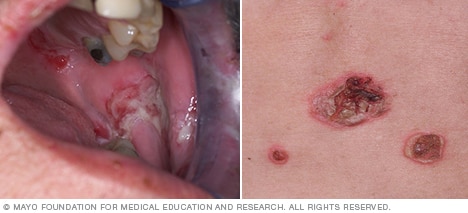
Pemphigus vulgaris
Pemphigus is a rare skin disorder with blistering of the skin and mucous membranes. The most common type is pemphigus vulgaris, which involves painful sores and blisters on the skin and in the mouth.
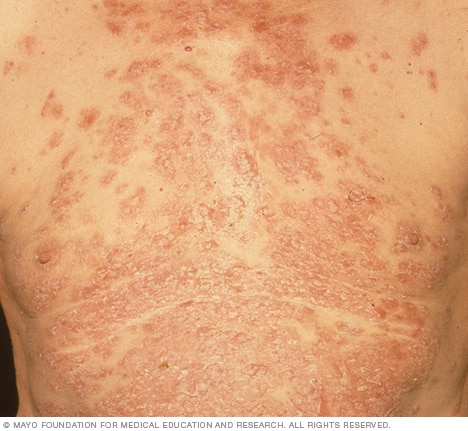
Pemphigus foliaceus
Pemphigus foliaceus doesn't usually affect mucous membranes. The blisters may begin on the face and scalp and later show up on the chest and back. They may be crusty, itchy and painful.
Symptoms
Pemphigus causes blisters on the skin and mucous membranes. The blisters break easily, leaving open sores. The sores may become infected and ooze.
The symptoms of two common types of pemphigus are as follows:
- Pemphigus vulgaris. This type usually begins with blisters in the mouth and then on the skin or genital mucous membranes. They're often painful but don't itch. Blisters in the mouth or throat may make it hard to talk, drink and eat.
- Pemphigus foliaceus. This type causes blisters on the chest, back and shoulders. The blisters may be itchy or painful. Pemphigus foliaceus doesn't cause mouth blisters.
Pemphigus is distinct from bullous pemphigoid, which is another type of blistering skin condition that affects older adults.
When to see a doctor
See a healthcare professional if you have blisters that don't heal in the mouth or on the skin or genital mucous membranes.
Causes
Pemphigus is an autoimmune disorder, which means that your immune system mistakenly attacks healthy cells in your body. With pemphigus the immune system attacks cells in the skin and mucous membranes.
Pemphigus isn't passed from one person to another. In most cases, it's unknown what causes the disease to arise.
Rarely, the disease can develop as a side effect of medicines, like penicillamine and certain blood pressure drugs. This type of the condition usually clears up when the medicine is stopped.
Risk factors
The risk of pemphigus increases if you're middle-aged or older. The condition also is more common in people of Jewish, Indian, southeast European or Middle Eastern ancestry.
Complications
Possible complications of pemphigus include:
- Infection of the skin.
- Infection that spreads to your bloodstream, also called sepsis. This type of infection can be life-threatening.
- Scarring and changes in skin color after the affected skin heals. This is called postinflammatory hyperpigmentation when the skin darkens and postinflammatory hypopigmentation when the skin loses color. People with brown or Black skin have a higher risk of long-term skin color changes.
- Malnutrition, because painful mouth sores make it difficult to eat.
- Side effects from the medicine used to treat pemphigus. Examples are high blood pressure and infection.
- Death, rarely, if certain types of pemphigus are left untreated.
CON-20154765
Mayo Clinic does not endorse companies or products. Advertising revenue supports our not-for-profit mission.
Advertising & Sponsorship
Mayo Clinic Press
Check out these best-sellers and special offers on books and newsletters from Mayo Clinic Press.
