Lobular carcinoma in situ (LCIS) Symptoms and causes
Overview
Lobular carcinoma in situ is a growth of cells that happens in a milk gland in the breast tissue. The cells undergo changes that make them look different from typical cells. Lobular carcinoma in situ, which is often shortened to LCIS, isn't cancer. But having lobular carcinoma in situ increases the risk of getting breast cancer in the future.
Lobular carcinoma in situ usually isn't found on a mammogram or felt during a breast exam. The condition is most often found after a procedure to remove some breast tissue, such as a breast biopsy or a lumpectomy.
Lobular carcinoma in situ increases the risk of breast cancer in both breasts. If you're diagnosed with lobular carcinoma in situ, you may need increased breast cancer screening. You also may want to consider treatments to reduce your risk of developing invasive breast cancer.

Lobular carcinoma in situ
Lobular carcinoma in situ is a growth of cells that happens inside a milk gland, also called a lobule, in the breast. Lobular carcinoma in situ, also called LCIS, isn't cancer. It's a sign of an increased risk of breast cancer.
Symptoms
Lobular carcinoma in situ doesn't cause signs or symptoms. It's usually found after a procedure to remove some breast tissue, such as a breast biopsy or a lumpectomy. Lobular carcinoma in situ, also called LCIS, isn't cancer. It's a sign that you have an increased risk of breast cancer in the future.
When to see a doctor
Make an appointment with a doctor or other healthcare professional if you notice a change in your breasts. Changes may include a lump, an area of puckered or otherwise unusual skin, a thickened region under the skin, and nipple discharge.
Ask when you should consider breast cancer screening and how often it should be repeated. Most healthcare professionals recommend routine breast cancer screening beginning in your 40s.
Causes
It's not clear what causes lobular carcinoma in situ, also called LCIS. Lobular carcinoma in situ begins when cells in a milk-producing gland of a breast, called a lobule, develop changes in their DNA. These changes cause the cells to look different from healthy cells. The changed cells remain in the lobule and don't extend into, or invade, nearby breast tissue.
If you have lobular carcinoma in situ, it doesn't mean that you have cancer. But having lobular carcinoma in situ increases your risk of breast cancer and makes it more likely that you may develop invasive breast cancer.
The risk of breast cancer in women diagnosed with lobular carcinoma in situ is thought to be approximately 25% to 30%. For comparison, the risk of developing breast cancer for women in general is thought to be 13%.
Your individual risk of breast cancer is based on many factors. Talk to your healthcare team to better understand your personal risk of breast cancer.
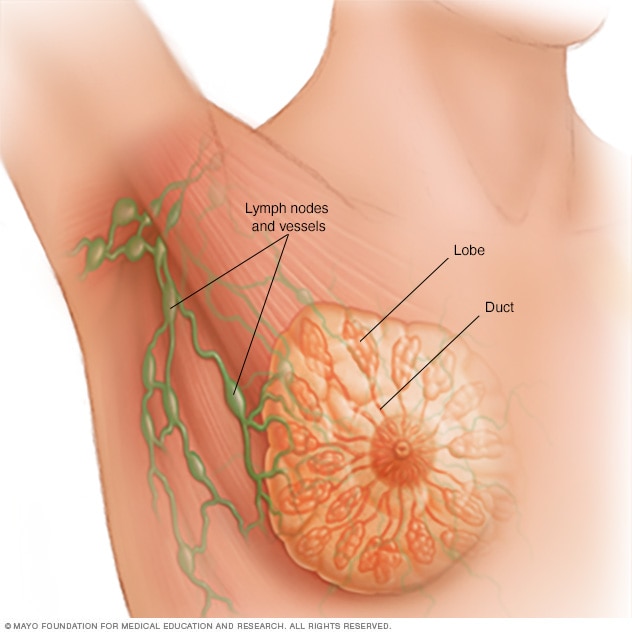
Breast anatomy
Each breast contains 15 to 20 lobes of glandular tissue, arranged like the petals of a daisy. The lobes are further divided into smaller lobules that produce milk for breastfeeding. Small tubes, called ducts, conduct the milk to a reservoir that lies just beneath the nipple.
Risk factors
Lobular carcinoma in situ is more common in those who haven't gone through menopause yet.
Get the latest breast cancer information from Mayo Clinic delivered to your inbox.
Sign up for free and receive the latest on breast cancer treatment, care and management.
Prevention
Lobular carcinoma in situ, also called LCIS, increases the risk of breast cancer. If you're worried about breast cancer, take steps to reduce your risk, such as:
Ask about breast cancer screening
Talk with your doctor or other healthcare professional about when to begin breast cancer screening. Ask about the benefits and risks of screening. Together, you can decide what breast cancer screening tests are right for you.
Breast cancer screening often involves having regular mammograms. If you have a history of lobular carcinoma in situ, talk with your healthcare professional about whether additional imaging tests, such as MRI, might be right for you.
Become familiar with your breasts through breast self-exams
You may choose to become familiar with your breasts by occasionally inspecting them during a breast self-exam for breast awareness. If you find a new change, lumps or other unusual signs in your breasts, tell a healthcare professional right away.
Breast awareness can't prevent breast cancer. But it may help you to better understand the look and feel of your breasts. This might make it more likely that you'll notice if something changes.
Drink alcohol in moderation, if at all
If you choose to drink alcohol, limit the amount you drink to no more than one drink a day. For breast cancer prevention, there is no safe amount of alcohol. So if you're very concerned about your breast cancer risk, you may choose to not drink alcohol.
Exercise most days of the week
Aim for at least 30 minutes of exercise on most days of the week. If you haven't been active lately, ask your healthcare professional whether exercising is OK and start slowly.
Limit hormone therapy during menopause
Combination hormone therapy for menopause symptoms may increase the risk of breast cancer. Talk with a healthcare professional about the benefits and risks of hormone therapy.
Some people have symptoms during menopause that cause discomfort. These people may decide that the risks of hormone therapy are acceptable to get relief. To reduce the risk of breast cancer, use the lowest dose of hormone therapy possible for the shortest amount of time.
Maintain a healthy weight
If your weight is healthy, work to maintain that weight. If you need to lose weight, ask a healthcare professional about healthy ways to lower your weight. Eat fewer calories and slowly increase the amount you exercise.



CON-20374514
Mayo Clinic does not endorse companies or products. Advertising revenue supports our not-for-profit mission.
Advertising & Sponsorship
Mayo Clinic Press
Check out these best-sellers and special offers on books and newsletters from Mayo Clinic Press.
