Keratosis pilaris Symptoms and causes
Overview
Keratosis pilaris (ker-uh-TOE-sis pih-LAIR-is) is a harmless skin condition that causes dry, rough patches and tiny bumps, often on the upper arms, thighs, cheeks or buttocks. The bumps usually don't hurt or itch.
Keratosis pilaris is often considered a common variant of skin. It can't be cured or prevented. But you can treat it with moisturizers and prescription creams to help improve how the skin looks. The condition usually disappears by age 30.
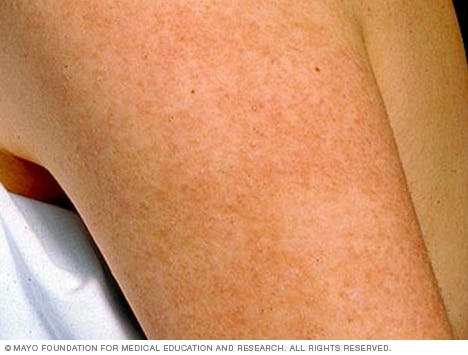
Keratosis pilaris
Keratosis pilaris causes small bumps to appear on the upper arms, legs or buttocks. They usually don't hurt or itch.
Symptoms
Keratosis pilaris can occur at any age, but it's more common in young children. Symptoms include:
- Painless tiny bumps on the upper arms, thighs, cheeks or buttocks
- Dry, rough skin in the areas with bumps
- Worsening when seasonal changes cause low humidity and dry skin
- Sandpaper-like bumps resembling goose flesh
When to see a doctor
Treatment for keratosis pilaris usually isn't needed. But if you're concerned about your or your child's skin, consult your health care provider or a specialist in skin conditions (dermatologist).
Causes
Keratosis pilaris is caused by the buildup of keratin — a hard protein that protects skin from harmful substances and infection. The keratin blocks the opening of hair follicles, causing patches of rough, bumpy skin.
It's not clear why keratin builds up in people with keratosis pilaris. It might happen along with a genetic disease or skin conditions such as atopic dermatitis. Dry skin tends to make keratosis pilaris worse.
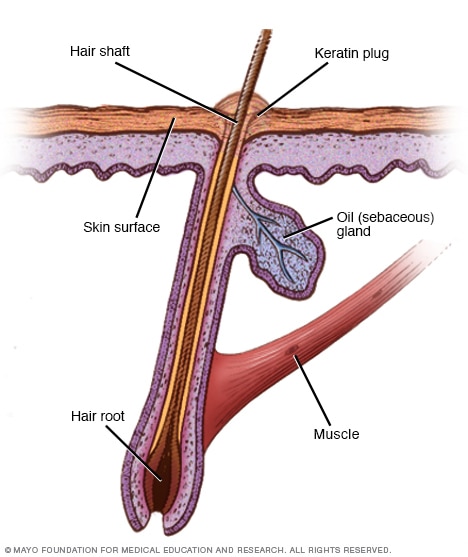
Keratin plug
Keratosis pilaris develops when keratin forms a scaly plug that blocks the opening of the hair follicle. Usually plugs form in many hair follicles, causing patches of rough, bumpy skin.
Risk factors
Keratosis pilaris is very common. It tends to run in families.
From Mayo Clinic to your inbox
Sign up for free and stay up to date on research advancements, health tips, current health topics, and expertise on managing health. Click here for an email preview.
CON-20155451
Mayo Clinic does not endorse companies or products. Advertising revenue supports our not-for-profit mission.
Advertising & Sponsorship
Mayo Clinic Press
Check out these best-sellers and special offers on books and newsletters from Mayo Clinic Press.
