Esophageal spasms Symptoms and causes
Overview
Esophageal spasms are painful contractions in the muscular tube connecting the mouth and stomach, called the esophagus. Esophageal spasms can feel like sudden, bad chest pain that lasts from a few minutes to hours. Some people may mistake it for heart pain, also called angina.
Esophageal spasms usually happen only now and then, and they might not need treatment. But sometimes the spasms happen a lot and can prevent food and liquids from traveling through the esophagus. If esophageal spasms affect the ability to eat or drink, treatments are available.
Symptoms
Symptoms of esophageal spasms include:
- Squeezing pain in the chest. The pain is often intense and might be mistaken for heart pain or heartburn.
- Difficulty swallowing solids and liquids, sometimes related to swallowing specific substances. Red wine or extremely hot or cold liquids are more common culprits.
- The feeling that an object is stuck in the throat.
- The return of food and liquids back up the esophagus, also called regurgitation.
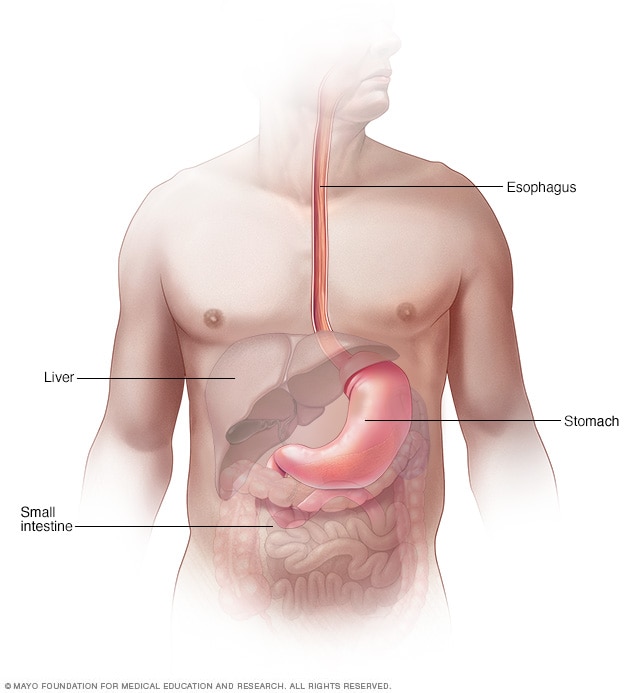
Esophagus
The esophagus is a muscular tube that connects the mouth and the stomach. Rings of muscle contract and relax to allow food and liquids to pass through the upper and lower portions.
When to see a doctor
The squeezing chest pain that happens with esophageal spasms also can be caused by a heart attack. If you have squeezing chest pain, seek medical care right away.
Causes
It's not clear what causes esophageal spasms. However, they appear to be related to abnormal functioning of nerves that control the muscles used when swallowing.
A healthy esophagus moves food into the stomach through a series of coordinated muscle contractions. Esophageal spasms make it difficult for the muscles in the walls of the lower esophagus to coordinate. This makes it harder for the muscles to move food to the stomach.
There are two types of esophageal spasms — distal esophageal spasm and hypercontractile esophagus, also known as nutcracker esophagus.
Risk factors
Risk factors for esophageal spasms include:
- Sex. Women are more likely to have esophageal spasms than men.
- Age. Esophageal spasms tend to happen around age 60.
From Mayo Clinic to your inbox
Sign up for free and stay up to date on research advancements, health tips, current health topics, and expertise on managing health. Click here for an email preview.
CON-20372236
Mayo Clinic does not endorse companies or products. Advertising revenue supports our not-for-profit mission.
Advertising & Sponsorship
Mayo Clinic Press
Check out these best-sellers and special offers on books and newsletters from Mayo Clinic Press.
