Mesenteric lymphadenitis Symptoms and causes
Overview
Lymphadenitis is a condition in which the small round or bean-shaped clusters of cells, called lymph nodes, become swollen and inflamed. The swelling can affect the lymph nodes in the membrane that connects the bowel to the wall around the stomach area, called the mesentery. Then the condition is called mesenteric lymphadenitis (mez-un-TER-ik lim-fad-uh-NIE-tis).
An infection in the intestines, such as a virus, is the usual cause of mesenteric lymphadenitis. Also called mesenteric adenitis, the condition mainly affects children and teens.
Mesenteric lymphadenitis can act like appendicitis or a condition in which part of the intestine slides into another part of the intestine, called intussusception. Unlike appendicitis or intussusception, mesenteric lymphadenitis usually clears up on its own.
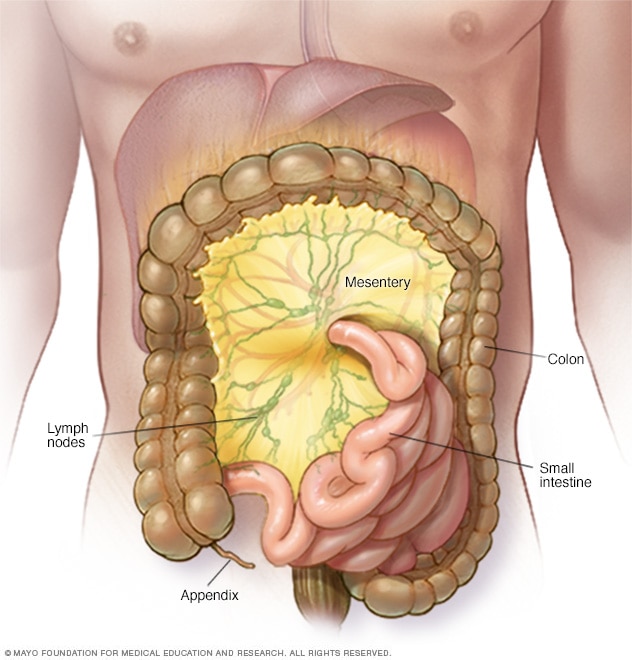
Mesentery
The mesentery is a fold of membrane that attaches the intestine to the wall around the stomach area and holds it in place. Mesenteric lymphadenitis is swelling of the lymph nodes in the mesentery.
Symptoms
Possible symptoms of mesenteric lymphadenitis include:
- Pain in the stomach area, often on the lower right side, but the pain can be more spread out.
- General tenderness of the stomach area.
- Fever.
- Enlarged mesenteric lymph nodes.
Depending on what's causing the condition, symptoms also might include:
- Diarrhea.
- Nausea and vomiting.
When to see a doctor
Pain in the stomach area is common in children and teens. So it can be hard to know when to seek medical advice.
Call a healthcare professional right away for a child who has:
- Sudden, severe pain in the stomach area.
- Stomach area pain with fever.
- Stomach area pain with diarrhea or vomiting.
- Tenderness to touch of the stomach area.
- Bloody or maroon-colored stool.
Also, call a healthcare provider for a child who has pain in the stomach area that doesn't get better in a short time and who also:
- Has a change in bowel habits.
- Has a loss of appetite.
- Is not able to sleep.
Causes
The most common cause of mesenteric lymphadenitis is a viral infection, such as gastroenteritis. Gastroenteritis is often called stomach flu. This infection causes inflammation and swelling in the lymph nodes in the thin tissue that attaches the intestine to the back of the wall around the stomach area, called mesentery.
Other causes of mesenteric lymphadenitis include bacterial infection, inflammatory bowel disease and lymphoma.
Risk factors
Any infection that causes inflammation and swelling in the lymph nodes in the tissue that attaches the bowel to the abdominal wall increases the risk of mesenteric lymphadenitis.
Conditions that raise the risk of mesenteric lymphadenitis include:
- Viral or bacterial gastroenteritis.
- Inflammatory bowel disease.
- Lymphoma.
From Mayo Clinic to your inbox
Sign up for free and stay up to date on research advancements, health tips, current health topics, and expertise on managing health. Click here for an email preview.
CON-20193989
Mayo Clinic does not endorse companies or products. Advertising revenue supports our not-for-profit mission.
Advertising & Sponsorship
Mayo Clinic Press
Check out these best-sellers and special offers on books and newsletters from Mayo Clinic Press.
