Diagnosis
Plasma cell dyscrasia may be found and diagnosed when medical tests are done for another reason. An unusual result on a blood or urine test may be the first sign.
If your healthcare professional thinks you have a plasma cell dyscrasia, you usually have more tests to learn the type. Tests also can help your care team learn how plasma cell dyscrasia is affecting different parts of your body.
Lab tests
You may have blood and urine tests to diagnose the type of plasma cell dyscrasia and to look for complications. These tests may include:
- Complete blood count. This test measures parts of the blood, including the red and white blood cells and platelets. It can tell if you have anemia or other changes in blood cell counts.
- Other blood tests. Some blood tests may be done to check your calcium level and how well your kidneys are working. Others can look for proteins released into the body when the heart is damaged.
- Electrophoresis and immunofixation. Protein electrophoresis checks blood and urine for a monoclonal protein (M protein). Immunofixation helps identify the specific type of M protein. Finding an M protein may suggest a plasma cell dyscrasia or plasma cell disorder. But an M protein alone does not confirm a diagnosis. More tests are needed.
- Immunoglobulin free light chains. Plasma cells make proteins called light chains. There are two types, kappa and lambda. This blood test measures both kappa and lambda free light chains and compares their levels. The healthcare professional looks at the results from this test and electrophoresis and immunofixation to give a diagnosis.
- Urine tests. A 24-hour urine test can measure protein, including the M protein. These tests help show how plasma cell dyscrasia is affecting the kidneys.
You might have blood and urine tests repeated every now and then. Changes in results may be as important as a single result.
Imaging tests
If your healthcare professional thinks you have plasma cell dyscrasia, you also may have imaging tests to look for bone or organ damage. Imaging tests alone can't diagnose plasma cell dyscrasia. But they can help your healthcare team learn if plasma cell changes are causing other health concerns.
Imaging tests for plasma cell dyscrasia may include computed tomography (CT) or magnetic resonance imaging (MRI) scans. A positron emission tomography (PET) scan also may be done with a CT scan (PET-CT). Some people also need heart tests such as an echocardiogram.
Positron emission tomography (PET)
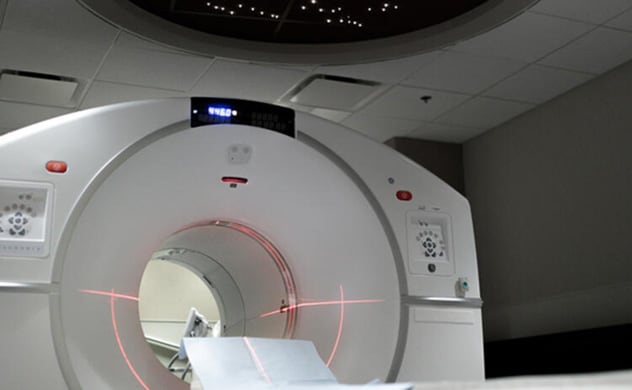
Positron emission tomography (PET)
During a positron emission tomography (PET) scan, a healthcare professional injects a small amount of a radioactive substance called a tracer into a vein. You then lie on a narrow table that moves into a large, ring-shaped machine, also called a scanner. The scanner makes pictures that show how cells and tissues take up the tracer. A PET scan can help diagnose conditions such as cancer, heart disease and brain conditions. The test also may be done to help plan treatment.
Bone marrow biopsy
Some people with plasma cell dyscrasia may need a biopsy, such as a bone marrow biopsy. Your healthcare team may recommend a bone marrow biopsy if blood or urine tests show protein levels that aren't in the regular range or if you have signs of multiple myeloma or AL amyloidosis.
During this biopsy, a healthcare professional removes a small sample of bone marrow, usually from the hip bone area. The sample is checked under a microscope.
Other tests can give more information about the plasma cells and light chains in the biopsy sample. Plasma cells make proteins called light chains. Usually, plasma cells make a mix of both kappa and lambda light chains. But in plasma cell dyscrasia, copies of the same plasma cell may make mostly one type. When this happens, the plasma cells are called kappa- or lambda-restricted cells. Finding this pattern can help diagnose a plasma cell dyscrasia.
Your healthcare professional uses the results of all your tests to diagnose the specific plasma cell dyscrasia and plan your care.
Treatment
Treatment of plasma cell dyscrasia depends on the type. Some types may not need treatment right away and can be watched over time. For others, treatment should start as soon as possible.
Whether a plasma cell dyscrasia can be cured also depends on the type. For example, treatment may cure a solitary plasmacytoma, but regular checkups are still needed. Multiple myeloma can be managed and treated. Treatment may remove all signs of the cancer, and the cancer may stay away for a long time. But the cancer can come back.
Your healthcare team works with you to create a treatment plan that fits your condition and symptoms.
Regular checkups
Some types of plasma cell dyscrasia, such as monoclonal gammopathy of undetermined significance (MGUS) and smoldering multiple myeloma, may not need treatment right away. Your healthcare team may check you regularly for changes in your condition. This may be called watchful waiting or active monitoring.
Medicines
The medicines used depend on the type of plasma cell dyscrasia. You may get medicines to manage or destroy the changed plasma cells. Some people need medicines to ease symptoms and treat complications. Medicines for plasma cell dyscrasia may include chemotherapy, targeted therapy, immunotherapy and steroids.
Surgery or other procedures
Some people may need a procedure or surgery. The type of surgery or procedure depends on the type of plasma cell dyscrasia.
- Radiation therapy. This treatment uses powerful energy beams to target and treat cells that aren't healthy, such as cancer cells. It may be used to treat a plasmacytoma, bone lesions or complications of multiple myeloma. It also may be used in some people with POEMS syndrome.
- Plasma exchange, also called plasmapheresis. Your healthcare professional may suggest this procedure if the blood becomes too thick due to extra protein. This treatment removes blood plasma containing this extra protein and replaces it with plasma from another person. It can lower protein levels quickly. But it doesn't treat the underlying condition.
- Dialysis. If plasma cell dyscrasia causes the kidneys to stop working well, this treatment may be needed. Dialysis removes wastes, salts and extra fluid from the blood.
- Spine or bone procedures. Procedures such as vertebroplasty or kyphoplasty may be done if plasma cell dyscrasia causes the bones in the spine to collapse. These procedures inject bone cement into a weakened or collapsed bone in the spine to support it and help ease pain. Some people need surgery to stabilize a weakened bone or relieve pressure on the spinal cord or nerves.
Stem cell transplant
Some people with multiple myeloma, AL amyloidosis or POEMS syndrome may be able to have a stem cell transplant using their own blood stem cells. This is called an autologous stem cell transplant. Before strong chemotherapy medicines are given, blood stem cells are collected from the person and stored. After chemotherapy, the stored stem cells are given back to help the bone marrow recover and make new blood cells.
Follow-up care
After treatment for plasma cell dyscrasia, you need regular health checkups. These checkups may include tests to look at any affected organs. Test results can show your healthcare team how well treatment is working. Ask your healthcare team how often you need checkups.
Prognosis
Prognosis means what may happen over time. It is an estimate of how a condition may change in the future. But it doesn't say what exactly will happen to one person. It also may be called the outlook.
The outlook and life expectancy rates vary widely. They depend on the type of plasma cell dyscrasia. Outlook also depends on which organs are affected and how well treatment works. Monoclonal gammopathy of undetermined significance (MGUS) and low-risk smoldering multiple myeloma may stay stable for many years. Other types of plasma cell dyscrasia may get worse and shorten life expectancy. For example, high-risk multiple myeloma is more likely to get worse or come back after treatment. AL amyloidosis that affects much of the heart can be life-threatening.
Your healthcare team can tell you more about what to expect based on the type of plasma cell dyscrasia you have and how it is affecting your body.
Preparing for your appointment
If you are worried about your risk of plasma cell dyscrasia, make an appointment with your healthcare professional. If tests show signs of plasma cell dyscrasia, you may be sent to a doctor who is trained in blood diseases. This type of doctor is called a hematologist.
Appointments can be brief. Because there's often a lot to talk about, it's a good idea to be prepared for your appointment. Here's some information to help you get ready.
What you can do
When you make your appointment, ask if you need to do anything ahead of time. For example, you may be told not to eat or drink for a while before some tests.
Other things you can do to prepare:
- Write down any symptoms. Include those that may not seem related to plasma cell dyscrasia.
- Write down important personal information. Tell your healthcare team about any family history of plasma cell disorders. Knowing as much as you can about your family history can be helpful.
- Make a list of all the medicines, vitamins and supplements that you take. Include the doses. Include those you buy without a prescription.
- Ask someone to go with you to help you remember what your care team says.
Also write down questions to ask your healthcare team. For plasma cell dyscrasia, some basic questions include:
- What do my test results mean?
- What type of plasma cell dyscrasia do I have?
- Do I need more tests?
- Could this result be a sign of cancer?
- Could my bones, kidneys or other organs be affected?
You also may want to ask questions about treatment and what to expect over time such as:
- What type of treatment do I need?
- If I don't need treatment now, do I need regular tests or checkups?
- What changes in my test results would mean I need treatment?
- What symptoms should I call my healthcare team about?
- Does my plasma cell dyscrasia affect my risk of getting another condition?
Don't hesitate to ask other questions during your appointment.
What to expect from your doctor
Your healthcare team usually asks many questions, such as:
- Do you have any bone pain, especially in your back, hips or ribs?
- Have you felt more tired or weak than usual?
- How often do you get infections?
- How is your appetite?
- Have you recently lost weight without trying?
- Are you having any numbness or tingling in your hands or feet?
- Are you able to work and do your usual daily tasks?
You also may be asked if anyone in your family has ever been diagnosed with a plasma cell disorder, such as AL amyloidosis. If possible, check with your family before your appointment.
Oct. 27, 2026