Broken collarbone Symptoms and causes
Overview
A broken collarbone is a common injury. The collarbone, also known as the clavicle, connects the shoulder blade to the breastbone. Common causes of a broken collarbone include falls, sports injuries and traffic accidents. Infants sometimes break their collarbones during birth.
Seek medical help quickly for a broken collarbone. Most breaks heal well with ice, pain relievers, a sling, physical therapy and time. Some might require surgery to put plates, screws or rods into the bone to hold the pieces in place during healing.
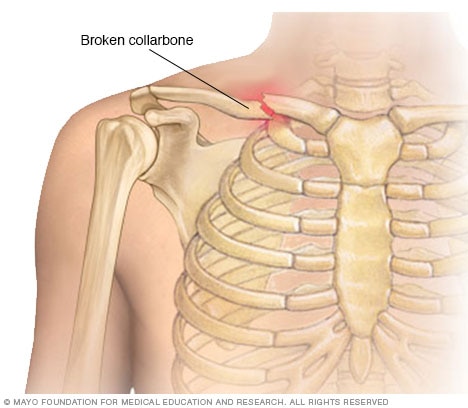
Broken collarbone
The collarbone connects the breastbone to the shoulder blade. A broken collarbone is a common injury that causes pain and swelling at the break.
Symptoms
Symptoms of a broken collarbone include:
- Pain that increases when moving the shoulder.
- Swelling, tenderness or bruising.
- Skin over the break that might look like a tent when gently pinched.
- A bump on or near the shoulder.
- A grinding or crackling sound when moving the shoulder.
- Stiffness or not being able to move the shoulder.
Newborns who break a collarbone during birth often will not move the arm for days and will cry if someone moves the arm.
When to see a doctor
If you notice symptoms of a broken collarbone or have enough pain to prevent using your arm as usual, see a healthcare professional right away. Waiting to be treated can lead to poor healing.
Causes
Common causes of a broken collarbone include:
- Falls, such as falling onto the shoulder or an outstretched arm.
- Sports injuries, such as a direct blow to the shoulder on the field, rink or court.
- Traffic accidents, from a car, motorcycle or bike crash.
- Birth injury, usually from a difficult vaginal birth.
Risk factors
Teenagers and children are at higher risk of a broken collarbone than adults. The risk goes down after age 20. Then it rises again in older people as they lose bone strength with age.
Complications
Most broken collarbones heal without difficulty. Complications, when they occur, might include:
- Nerve or blood vessel injury. Rarely, the jagged ends of a broken collarbone may injure nearby nerves and blood vessels. Seek immediate medical attention for numbness or coldness in an arm or hand.
- Poor or slow healing. A badly broken collarbone might heal slowly or might not fully heal. Poor joining of the bones during healing can shorten the bone.
- A lump in the bone. As part of the healing process, the place where the bone knits together forms a bony lump. The lump is easy to see because it is close to the skin. Most lumps disappear over time, but not all do.
- Osteoarthritis. A fracture that involves the joints that connect the collarbone to the shoulder blade or the breastbone might increase the risk of developing arthritis in that joint.
CON-20370295
Mayo Clinic does not endorse companies or products. Advertising revenue supports our not-for-profit mission.
Advertising & Sponsorship
Mayo Clinic Press
Check out these best-sellers and special offers on books and newsletters from Mayo Clinic Press.
