Hypoglycemia Symptoms and causes
Overview
Hypoglycemia is a condition caused by low blood sugar, also called blood glucose. Glucose is your body's main energy source.
Hypoglycemia is often related to diabetes treatment. But other medicines and conditions, many of them rare, can cause low blood sugar in people who don't have diabetes.
For many people, a fasting blood sugar of 70 milligrams per deciliter (mg/dL), which is 3.9 millimoles per liter (mmol/L), or below is usually an alert for hypoglycemia. But your numbers might be different. Talk with your healthcare professional about what's right for you.
Hypoglycemia needs treatment right away. The goal of treatment is to quickly get your blood sugar back to within the standard range. This is done either with a high-sugar food or drink or with medicine. Long-term treatment involves finding the cause of hypoglycemia and treating it.
Symptoms
Hypoglycemia can include these warning symptoms:
- Blue or gray skin.
- Shakiness.
- Sweating.
- Headache.
- Hunger or upset stomach, also called nausea.
- Heartbeat that's fast or isn't regular.
- Feeling tired or weak.
- Feeling irritable or anxious.
- Trouble thinking or paying attention.
- Dizziness or lightheadedness.
- Tingling or numbness of the lips, tongue or cheek.
As hypoglycemia worsens, symptoms can be more severe and include:
- Confusion, behavior that is not usual or both, such as not being able to do routine tasks.
- Loss of coordination, such as trouble walking.
- Slurred speech.
- Blurry vision or tunnel vision.
- Double vision.
- Nightmares, if asleep.
Severe hypoglycemia may cause:
- Not being able to respond or help oneself.
- Fainting or losing consciousness.
- Seizures.
- Coma, rarely.
When to see a doctor
Seek medical help right away if:
- You have what might be hypoglycemia symptoms and you don't have diabetes.
- You have diabetes, and hypoglycemia isn't getting better with treatment, such as drinking juice or regular, not diet, soft drinks; eating candy; or taking glucose tablets.
- You have diabetes, and hypoglycemia happens again even though you just treated it with a fast-acting carbohydrate, such as juice, a regular soft drink, candy or glucose tablets.
Get emergency help for someone with diabetes or a history of hypoglycemia who has symptoms of severe hypoglycemia or loses consciousness.
Causes
Hypoglycemia happens when your blood sugar level, also called blood glucose level, falls too low for the body to function. There are several reasons why this can happen. The most common reason for low blood sugar is a side effect of medicines used to treat diabetes.
Blood sugar balance
When you eat, your body breaks down foods into glucose. Glucose, the main energy source for the body, enters the cells with the help of insulin. Insulin is a hormone made by the pancreas. Insulin allows glucose to enter cells and give them the fuel the body needs. Extra glucose is stored in the liver and muscles in the form of glycogen.
When you haven't eaten for many hours and your blood sugar level drops, you stop making insulin. Another hormone from the pancreas called glucagon signals the liver to break down the stored glycogen into glucose. The glucose is released into the bloodstream. This keeps your blood sugar within the standard range until you eat again.
Your body also can make glucose. This process happens mainly in the liver but also in the kidneys. With long periods of fasting, the body can break down protein and fat stores and make new glucose. Products of fat breakdown can be used as another fuel source.
Possible causes, with diabetes
If you have diabetes, your body might not make insulin. This happens in type 1 diabetes. Or your body might make less insulin than what it needs. This happens in type 2 diabetes. As a result, glucose builds up in the bloodstream and can reach dangerously high levels. To lower these levels, you might take insulin or other medicines.
But too much insulin or other diabetes medicine may cause your blood sugar level to drop too much. This results in hypoglycemia. Hypoglycemia also can happen if you eat less than usual after taking your regular dose of diabetes medicine, or if you exercise more than you typically do.
Possible causes, without diabetes
Hypoglycemia in people without diabetes is much less common. Causes can include:
- Medicines. Taking someone else's diabetes medicine is a possible cause of hypoglycemia. Other medicines can cause hypoglycemia, especially in children or in people with kidney failure. One example is quinine, used to treat malaria.
- Drinking too much alcohol. Drinking heavily without eating can keep the liver from making new glucose and releasing it into the bloodstream. This can lead to hypoglycemia.
- Some serious medical conditions. Severe liver conditions such as liver failure, severe hepatitis or cirrhosis, severe infection, and advanced kidney disease can cause hypoglycemia. Kidney conditions also can keep your body from getting rid of medicines as it should. This can affect glucose levels due to a buildup of medicines that lower blood sugar levels.
- Long-term starvation. Low blood sugar occurs with malnutrition and starvation. When you don't get enough food, the glycogen your body stores to make glucose is used up. This can happen in people with advanced heart failure, advanced cancer and an eating disorder called anorexia nervosa.
- Making too much insulin. A rare tumor of the pancreas called insulinoma can cause the body to make too much insulin. This can cause hypoglycemia. Other tumors also can lead to the body making too much of insulinlike substances.
- Not having enough of certain hormones. Certain adrenal gland and pituitary tumor conditions can happen due to the body not having enough of certain hormones that balance how much glucose is made. Children can have hypoglycemia if they have too little growth hormone.
Hypoglycemia after meals
Sometimes hypoglycemia symptoms happen after certain meals. The cause is low sugar from a mismatch between food and insulin released in response to food.
Hypoglycemia that happens after eating is called postprandial hypoglycemia. This type happens often in people who've had surgeries that change the usual way the stomach works. The surgery most commonly linked to this is stomach bypass surgery, also called bariatric surgery. But postprandial hypoglycemia also can happen in people who've had other surgeries or who haven't had any surgery.
About 1 in 10 healthy people has glucose levels less than 70 mg/dL after drinking sugar-containing drinks and does not have symptoms of hypoglycemia.
Risk factors
The most common risk factor for hypoglycemia is having diabetes and taking insulin or some of the other diabetes medicines.
Risk factors for people without diabetes include not eating enough, drinking too much alcohol, taking certain medicines or having certain medical conditions that change how the body manages insulin and glucose.
From Mayo Clinic to your inbox
Sign up for free and stay up to date on research advancements, health tips, current health topics, and expertise on managing health. Click here for an email preview.
Complications
Hypoglycemia that isn't treated can lead to:
- Seizure.
- Coma.
- Heartbeat that is too fast or isn't regular.
- Death.
Hypoglycemia also can cause:
- Dizziness and weakness.
- Falls.
- Injuries.
- Motor vehicle accidents.
- Greater risk of dementia in older adults.
Impaired hypoglycemia awareness
Over time, having repeated hypoglycemia can lead to serious effects of hypoglycemia without the warning symptoms. Impaired hypoglycemia awareness is sometimes also called hypoglycemia unawareness. The body and brain no longer show the symptoms that warn of low blood sugar, such as shakiness or heartbeats that aren't regular. When this happens, the risk of severe, life-threatening hypoglycemia goes up.
If you have diabetes and often have hypoglycemia along with impaired hypoglycemia awareness, your healthcare professional might change your treatment, raise your blood sugar level goals and recommend blood glucose awareness training.
A continuous glucose monitor (CGM) is an option for some people with diabetes and impaired hypoglycemia awareness. A CGM can warn you if your blood glucose level is dropping too low so you can manage it to prevent hypoglycemia. A CGM also can alert you when your blood glucose is dangerously low.
Undertreated diabetes
If you have diabetes, periods of low blood sugar are not comfortable and can be frightening. Fear of hypoglycemia can cause you to take less insulin to make sure that your blood sugar level doesn't go too low. This can lead to diabetes that isn't well controlled. Talk with your healthcare professional about your fear. Some people with diabetes have had training to adjust their treatment themselves. If you have not had this training, don't change your diabetes medicine dose without talking with your healthcare professional.
Prevention
If you have diabetes
Follow the diabetes management plan you and your healthcare professional have made. If you're taking new medicines, changing your eating or medicine schedules, or adding new exercise, talk with your healthcare professional about how these changes might affect your diabetes management and your risk of low blood sugar.
Learn the symptoms you have with low blood sugar. This can help you be aware of and treat hypoglycemia before your blood sugar level gets too low. Checking your blood sugar level often lets you know when your blood sugar is getting low and what might cause it. You might choose to let family and friends know your low blood sugar symptoms so they can watch for them too.
A continuous glucose monitor is a good option for some people. A CGM has a tiny wire that's inserted under the skin. The wire sends blood glucose readings to a receiver. If your blood sugar level is dropping too low, some CGM models alert you with an alarm.
Some insulin pumps are linked to CGMs. Insulin pumps are programmed to deliver insulin continuously, with food or as needed. The pumps can lower and even shut off insulin delivery when blood sugar levels are dropping too fast. This can help keep hypoglycemia from happening.
Be sure to always have a fast-acting carbohydrate with you, such as juice, hard candy or glucose tablets. Then you can treat a falling blood sugar level before it gets dangerously low.
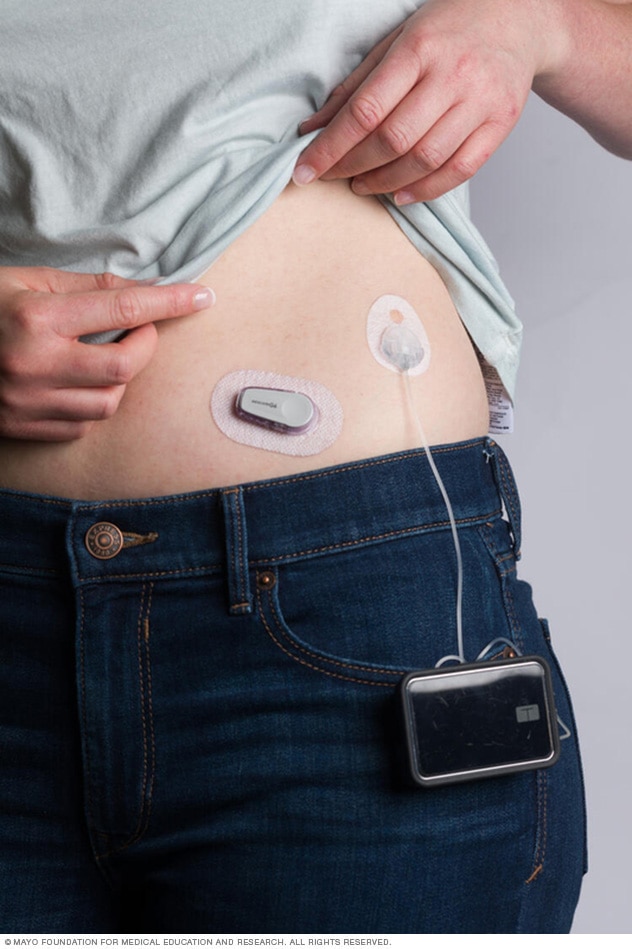
Continuous glucose monitor and insulin pump
A continuous glucose monitor, on the left, is a device that measures blood sugar every few minutes using a sensor placed under the skin. An insulin pump, attached to the pocket, is a device that's worn outside of the body. A tube connects the reservoir of insulin to a catheter placed under the skin of the belly.
If you don't have diabetes
Eating often can prevent hypoglycemia in some people who have the condition when not eating. Eating food containing complex starch, such as whole grains, legumes and starchy vegetables, can help keep glucose levels steady and prevent hypoglycemia in some people.
Eating smaller meals can prevent hypoglycemia in some people with postprandial hypoglycemia. Changing the type of food you eat also may be helpful, such as not having foods and drinks that have a lot of sugar.
Work with your healthcare professional to find and treat the cause of your hypoglycemia.
CON-20373670
Mayo Clinic does not endorse companies or products. Advertising revenue supports our not-for-profit mission.
Advertising & Sponsorship
Mayo Clinic Press
Check out these best-sellers and special offers on books and newsletters from Mayo Clinic Press.
