If you have diabetes, you may need a blood glucose meter to help you track your blood sugar levels. This device measures and shows you the amount of sugar, also called glucose, in a sample of your blood.
Exercise, food, medicines, stress and other factors affect your blood glucose level. Using a blood glucose meter can help you better manage your diabetes by tracking ups and downs in your blood glucose level.
There are many types of blood glucose meters. Some models are basic. Others have more features.
The cost of blood glucose meters and test strips varies. So does insurance coverage. Look at all your choices before you buy.
Choosing the right meter
To use most blood glucose meters, you first put a test strip into the device. Then you poke the side of a clean fingertip with a special needle to get a drop of blood. Touch the test strip to the blood. Then wait for the meter to show your blood glucose level on the screen.
When used and stored the right way, most blood glucose meters give true results. They can have different features. Here are some things to think about when choosing a blood glucose meter:
- Insurance coverage. Check with your insurance company. Some companies cover only certain meters or limit how many tests you can take.
- Cost. Prices vary. Keep in mind that test strips cost the most over time.
- Ease of use. Are the meter and test strips easy to hold? Can you read the numbers on the screen? Is it easy to get blood on the strip? How much blood does the meter need?
- Special features. Features may include large, easy-to-handle buttons and test strips and screens that light up. Some models read the results aloud. This may help people with vision issues.
- How it gives information. Do you want a meter that saves the date, time and result of each test? Do you want it to show trends over time? Some meters share the results with your healthcare professional through a smartphone app. Some let you download your readings to a computer so you can email the results to your healthcare professional.
- Support. Most companies have a toll-free number to call for help. Look for a meter with clear instructions. Some companies also put user manuals on their websites.
Advances in meters
Finger pokes are still the best way to check blood sugar. But research has led to new products designed to make the process less painful. Ask your healthcare professional about these choices.
| Device | How it works | Considerations |
|---|---|---|
| Alternative site monitor | Lets you take blood from areas that may hurt less than your finger, such as your arm, the palm of your hand or your thigh | Not as exact as fingertip samples when blood sugar level rises or falls quickly |
| Continuous glucose monitor (CGM) | Uses a sensor under the skin to measure blood sugar; sends each reading to your smartphone, smartwatch or other small device; alerts you when blood sugar levels are too low or too high | Expensive; sensor replacement needed every 10 to 15 days, depending on the brand; rarely, regular meter still needed to confirm results and to set up the device |
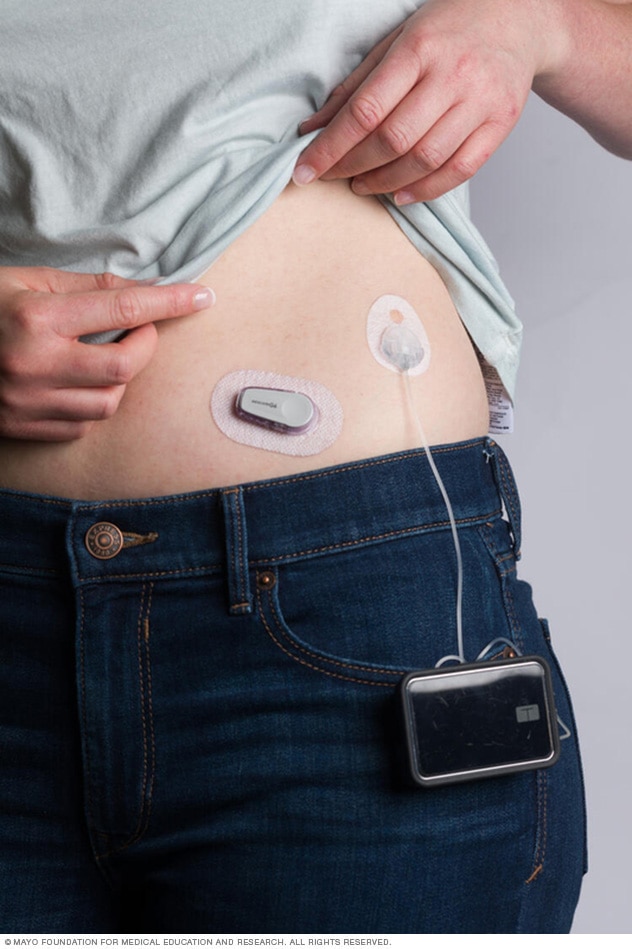
Continuous glucose monitor and insulin pump
A continuous glucose monitor, on the left, is a device that measures your blood sugar every few minutes using a sensor inserted under the skin. An insulin pump, attached to the pocket, is a device that's worn outside of the body with a tube that connects the reservoir of insulin to a catheter inserted under the skin of the abdomen. Insulin pumps are programmed to deliver specific amounts of insulin automatically and when you eat.
If you're still not sure which blood glucose meter to get after looking at the costs, features and other factors, ask your healthcare professional or diabetes educator for advice.
From Mayo Clinic to your inbox
Sign up for free and stay up to date on research advancements, health tips, current health topics, and expertise on managing health. Click here for an email preview.
