Knee bursitis Symptoms and causes
Overview
Knee bursitis is a condition in which one or more small fluid-filled sacs near the knee joint become inflamed. The sacs are called bursae. Bursae reduce friction and cushion pressure points between bones and tendons, muscles and skin near the joints.
Any of the bursae in the knee can be affected by painful swelling, also called inflammation. But most often, knee bursitis happens over the kneecap or on the inner side of the knee below the joint.
Knee bursitis causes pain and can limit your movement. Treatment often includes a mix of self-care techniques and medical treatments to ease pain and inflammation.
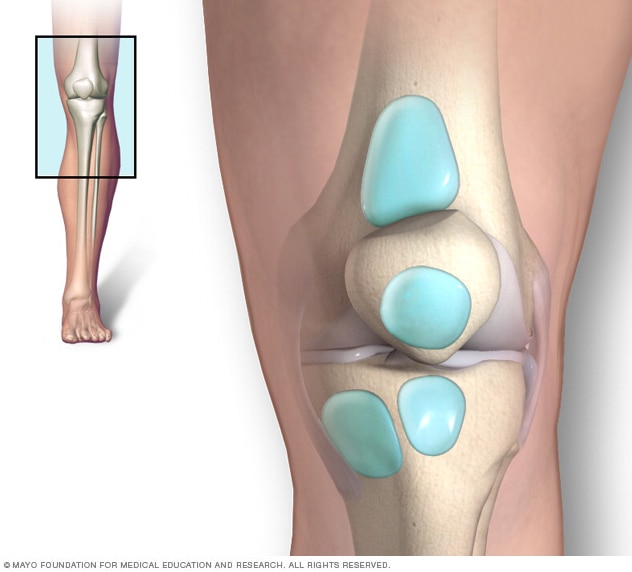
Knee bursae
Bursae are small, fluid-filled sacs, shown in blue. They ease friction between moving parts in the body's joints. Knee bursitis is swelling and irritation, called inflammation, of one or more of the bursae in the front of the knee.
Symptoms
Knee bursitis symptoms vary. They depend on which bursa is affected and what's causing the inflammation.
The affected portion of your knee might feel warm, tender and swollen. You also might feel pain when you move or when you're at rest.
A direct blow to the knee can cause symptoms to come on fast. But knee bursitis often stems from friction and irritation of the bursae. This can occur with jobs that require a lot of kneeling on hard surfaces. So, the symptoms can start slowly and become worse over time.
When to see a doctor
Sometimes, the bursa that lies over the kneecap can become infected. Call your healthcare professional if you have:
- A fever or chills along with pain and swelling in your knee.
- Long-lasting swelling or a change in the color of the skin around the knee.
- Trouble moving or extending your knee.
Causes
Knee bursitis can be caused by:
- Frequent and ongoing pressure, such as from kneeling, especially on hard surfaces.
- Overuse of the knee or strenuous activity.
- A direct blow to the knee.
- An infection of the bursa due to bacteria, which could get into the knee through a bruise or a cut.
- Medical problems that can happen with osteoarthritis, rheumatoid arthritis or gout in the knee.
Risk factors
Factors that can raise the risk of getting knee bursitis include:
- Prolonged kneeling. The risk of bursitis is higher for people who work on their knees for long amounts of time. This includes carpet layers, plumbers and gardeners.
- Playing certain sports. Sports that can lead to direct blows or frequent falls on the knee raise your risk of knee bursitis. So do sports that create friction between the knee and a mat. These sports include wrestling, football, basketball and volleyball. Runners also can get pain and inflammation in the bursa that's located on the inner side of the knee below the joint. This is called pes anserine bursitis.
- Obesity and osteoarthritis. Pes anserine bursitis often occurs in obese women with osteoarthritis.
From Mayo Clinic to your inbox
Sign up for free and stay up to date on research advancements, health tips, current health topics, and expertise on managing health. Click here for an email preview.
Prevention
The following tips can help you prevent bursitis or keep it from coming back:
- Wear kneepads. This can help if you often work on your knees or play sports that put your knees at risk. Use padding to cushion and protect your knees.
- Take breaks. If you're on your knees for a while, take regular breaks to stretch your legs and rest your knees.
- Reach and stay at a healthy weight. This can help take pressure off the knee joints.
CON-20248762
Mayo Clinic does not endorse companies or products. Advertising revenue supports our not-for-profit mission.
Advertising & Sponsorship
Mayo Clinic Press
Check out these best-sellers and special offers on books and newsletters from Mayo Clinic Press.
