Dressler syndrome Symptoms and causes
Overview
Dressler syndrome is swelling and irritation of the sac around the heart that happens after damage to the heart muscle. The damage may trigger an immune system response that causes the condition. The damage can result from a heart attack, heart surgery or a serious injury.
Symptoms of Dressler syndrome include chest pain that can feel like chest pain from a heart attack.
Swelling and irritation of the sac around the heart is called pericarditis. Dressler syndrome is a type of pericarditis that can start after the heart muscle is damaged. So you may hear Dressler syndrome called post-traumatic pericarditis.
Some other names for the condition are:
- Post-myocardial infarction syndrome.
- Post-cardiac injury syndrome.
- Post-pericardiotomy syndrome.
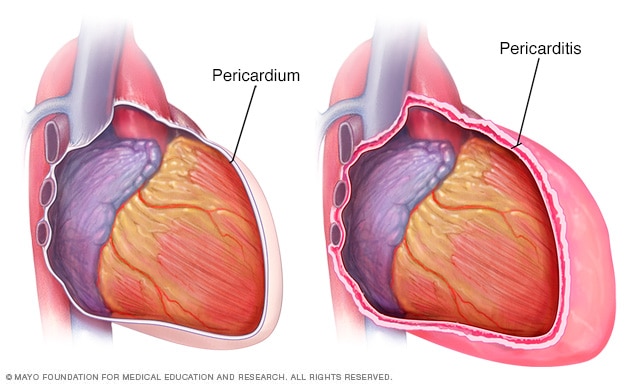
Pericarditis
The heart on the left shows the typical outer lining of the heart (pericardium). The heart on the right shows a swollen and infected lining (pericarditis).
Symptoms
Symptoms of Dressler syndrome are likely to start weeks to a few months after a heart attack, surgery or injury to the chest. Symptoms can include:
- Chest pain, which may get worse with deep breaths.
- Fever.
- Shortness of breath.
When to see a doctor
Get emergency care for sudden or ongoing chest pain. This can be a symptom of a heart attack or another serious condition.
Causes
Experts think Dressler syndrome is caused by the immune system's response to heart damage. The body reacts to the injured tissue by sending immune cells and proteins called antibodies to clean up and repair the affected area. Sometimes this response causes swelling due to the inflammation in the sac around the heart that's known as the pericardium.
Dressler syndrome can happen after a heart attack or some heart surgeries or procedures. It also can happen after a serious injury to the chest, such as trauma from a car accident.
Risk factors
Damage to the heart muscle increases the risk of Dressler syndrome. Some things that cause heart muscle are:
- Chest injury.
- Some types of heart surgery.
- Heart attack.
Complications
A complication of Dressler syndrome is fluid buildup in the tissues surrounding the lungs called pleural effusion.
Rarely, Dressler syndrome can cause more-serious complications, including:
- Cardiac tamponade. Swelling of the pericardium can cause fluid to build up in the sac. The fluid can put pressure on the heart. The pressure forces the heart to work harder, and the heart doesn't pump blood as well as it should.
- Constrictive pericarditis. Swelling that's ongoing or that keeps coming back can cause the pericardium to become thick or scarred. The scarring can reduce the heart's ability to pump blood.
Prevention
Some studies suggest that taking the anti-inflammatory medicine colchicine (Colcrys, Gloperba, others) soon after heart surgery may help prevent Dressler syndrome.
Living with dressler syndrome?
Heart & Blood Health Discussions
Tue, Oct 20, 2026
Mon, Oct 12, 2026
Sat, Sep 26, 2026
CON-20371798
Mayo Clinic does not endorse companies or products. Advertising revenue supports our not-for-profit mission.
Advertising & Sponsorship
Mayo Clinic Press
Check out these best-sellers and special offers on books and newsletters from Mayo Clinic Press.
