Sacroiliitis Symptoms and causes
Overview
Sacroiliitis (say-kroe-il-e-I-tis) is a painful condition of swelling and irritation, called inflammation, that affects one or both sacroiliac joints. These joints sit where the lower spine and pelvis meet.
Sacroiliitis can cause pain and stiffness in the buttocks or lower back. The pain might go down one or both thighs. Standing or sitting for a long time or climbing stairs can make the pain worse.
Sacroiliitis can be hard to diagnose because it can be like other causes of low back pain. It's been linked to a group of diseases that cause inflammatory arthritis of the spine. Treatment might involve physical therapy and medicines.
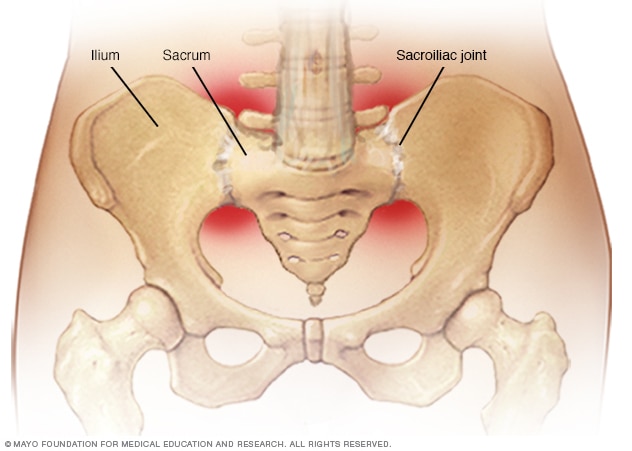
Sacroiliac joints
The sacroiliac joints link the pelvis and lower spine. These two joints are made up of the bony structure above the tailbone, known as the sacrum, and the top part of the pelvis, known as the ilium. The sacroiliac joints support the weight of the upper body when standing.
Symptoms
The pain of sacroiliitis most often happens in the buttocks and lower back. It also can affect the legs, groin and even the feet. The pain may get better with certain movements. The following can make sacroiliitis pain worse:
- Sitting, walking or standing for a long time.
- Running.
- Stair climbing.
- Sleeping on the side with the pain.
Causes
Causes of sacroiliac joint issues include:
- Injury. A sudden hit to the sacroiliac joints, such as from a motor vehicle accident or a fall, can damage them.
- Arthritis. Wear-and-tear arthritis, also known as osteoarthritis, can happen in sacroiliac joints. So can a type of arthritis that affects the spine, called ankylosing spondylitis.
- Pregnancy. The sacroiliac joints loosen and stretch for childbirth. The added weight and changed way of walking during pregnancy can stress these joints.
- Not moving enough. A lack of exercise can lead to tight muscles and tension around the joint.
- Infection. Rarely, a sacroiliac joint can become infected The risk is higher in people who have diabetes or who shoot street drugs with a needle.
- Surgery to fuse the spine. This can cause damage to the joint, ligaments and nerves around the joint.
Risk factors
Certain conditions may raise the risk of swelling and irritation, called inflammation, in the sacroiliac joints.
Inflammatory forms of arthritis, such as ankylosing spondylitis and psoriatic arthritis, may increase the risk of sacroiliitis. Inflammatory bowel disease, including Crohn's disease and ulcerative colitis, also may increase the risk.
Changes that happen to the body during pregnancy and childbirth also can stress the sacroiliac joints and cause pain and swelling.
From Mayo Clinic to your inbox
Sign up for free and stay up to date on research advancements, health tips, current health topics, and expertise on managing health. Click here for an email preview.
Complications
Sacroiliitis can make it hard to do certain actions, such as bending, lifting, staying in one place and rising from being seated. The lasting pain of sacroiliitis can lead to depression and loss of sleep.
CON-20155227
Mayo Clinic does not endorse companies or products. Advertising revenue supports our not-for-profit mission.
Advertising & Sponsorship
Mayo Clinic Press
Check out these best-sellers and special offers on books and newsletters from Mayo Clinic Press.
