Descripción general
La tomografía computarizada por emisión de fotón único es un tipo de prueba por imágenes que utiliza una sustancia radioactiva y una cámara especial para crear imágenes tridimensionales. Esta prueba también se conoce por sus siglas inglesas como SPECT.
Muchos estudios por imágenes muestran cómo se ven los órganos internos, pero la tomografía computarizada por emisión de fotón único puede mostrar cómo funcionan. Por ejemplo, un estudio de tomografía computarizada por emisión de fotón único puede mostrar si la sangre fluye bien hacia el corazón, qué zonas de tu cerebro están más o menos activas o qué partes de tus huesos se ven afectadas por el cáncer.
Productos y servicios
Por qué se realiza
Entre los usos más comunes de la tomografía computarizada por emisión de fotón único se incluye ayudar a diagnosticar o controlar los trastornos cerebrales, los problemas cardíacos y los trastornos óseos.
Trastornos cerebrales
En la tomografía computarizada por emisión de fotón único se crea un mapa tridimensional detallado de la actividad del flujo sanguíneo en el cerebro, que puede ayudar a determinar qué partes del cerebro son afectadas por lo siguiente:
- Vasos sanguíneos obstruidos. En la tomografía computarizada por emisión de fotón único se pueden encontrar problemas con el flujo sanguíneo que va al cerebro. Puede ayudar a diagnosticar o comprobar ciertos trastornos cerebrales vasculares, como la enfermedad de moyamoya, una afección en la que las arterias del cerebro se obstruyen o estrechan.
- Trastornos convulsivos. La tomografía computarizada por emisión de fotón único puede ayudar a diagnosticar y tratar trastornos convulsivos, como la epilepsia. Esto se logra cuando precisa el área de actividad convulsiva en el cerebro.
- Enfermedad de Parkinson. En casos poco frecuentes, un profesional de atención médica puede recomendar una tomografía computarizada por emisión de fotón único, o imagen del transportador de dopamina (DaTscan), para confirmar el diagnóstico de Parkinson. La enfermedad de Parkinson es una afección neurológica progresiva que afecta el movimiento.
Algunas instituciones médicas pueden usar una tomografía computarizada por emisión de fotón único para comprobar otras afecciones cerebrales, como la demencia o el traumatismo cerebral.
Problemas cardíacos
Debido a que el marcador radioactivo destaca áreas del flujo sanguíneo, la tomografía computarizada por emisión de fotón único puede buscar lo siguiente:
- Arterias coronarias obstruidas. Si las arterias que irrigan el músculo cardíaco se estrechan o se obstruyen, las partes del músculo cardíaco que se nutren de estas arterias pueden resultar dañadas o incluso morir.
- Bombeo débil. La tomografía computarizada por emisión de fotón único puede revelar el grado de vaciado de las cavidades cardíacas durante las contracciones.
Trastornos óseos
Las áreas de cicatrización ósea se suelen iluminar en las tomografías computarizadas por emisión de fotón único; por lo tanto, este tipo de prueba se utiliza con más frecuencia para diagnosticar fracturas óseas ocultas. Las tomografías computarizadas por emisión de fotón único también pueden diagnosticar y seguir la progresión del cáncer que se diseminó a los huesos. También ayudan a encontrar los lugares para hacer una biopsia ósea.
Más información
Riesgos
Para la mayoría de las personas, las tomografías computarizadas por emisión de fotón único son seguras. Si te administran un marcador radioactivo por infusión o inyección, podrías experimentar lo siguiente:
- Sangrado, dolor o hinchazón en el lugar donde se insertó la aguja en el brazo
- En muy pocos casos, una reacción alérgica al marcador radioactivo
Asegúrate de decirle al equipo de atención médica o tecnólogo en radiación si existe la posibilidad de que estés cursando un embarazo o si amamantas.
Riesgos de la radiación
El equipo de atención médica utiliza una pequeña cantidad de radiación para realizar una tomografía computarizada por emisión de fotón único; dicha prueba no está asociada con ningún riesgo de salud a largo plazo. Habla con alguien de tu equipo si te preocupa la exposición a la radiación durante la exploración por tomografía computarizada por emisión de fotón único.
Cómo prepararse
La preparación para una tomografía computarizada por emisión de fotón único dependerá de tu situación específica. Pregunta a tu equipo de atención médica si debes prepararte de alguna forma especial antes de la tomografía computarizada por emisión de fotón único.
En general, deberías hacer lo siguiente:
- Dejar tus alhajas de metal en casa
- Informarle al tecnólogo si estás cursando un embarazo o amamantas
- Llevar una lista de todos los medicamentos y los suplementos que tomas
Lo que puedes esperar
Durante la prueba
Exploración por tomografía computarizada por emisión monofotónica
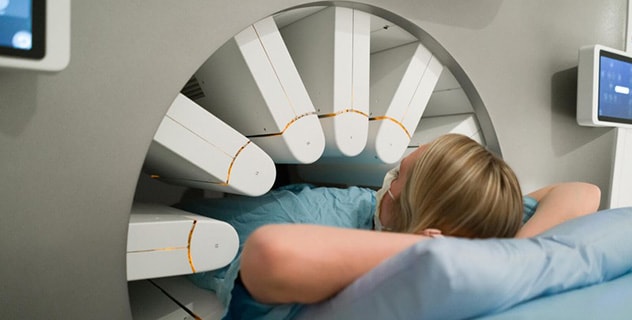
Exploración por tomografía computarizada por emisión monofotónica
Durante una tomografía computarizada por emisión de fotón único, el equipo de atención médica te solicita que te recuestes en una camilla. Después, la máquina para la tomografía computarizada por emisión de fotón único gira a tu alrededor y toma imágenes de los órganos internos y otras estructuras resaltadas por el trazador radiactivo en tu cuerpo.
Las tomografías computarizadas por emisión de fotón único constan de dos pasos: la administración de una inyección radioactiva, o marcador, y el uso de una máquina de tomografía computarizada por emisión de fotón único para escanear un área específica de tu cuerpo.
Administración de una sustancia radioactiva
Recibirás una sustancia radioactiva a través de una infusión intravenosa en una vena del brazo. La dosis del marcador es muy pequeña y es posible que sientas una sensación de frío a medida que ingresa al cuerpo. Es posible que te pidan que te acuestes tranquilamente en una habitación durante 20 minutos o más antes de la exploración mientras el cuerpo absorbe el marcador radioactivo. En algunos casos, es posible que debas esperar varias horas o, en raras ocasiones, varios días entre la inyección y la tomografía computarizada por emisión de fotón único.
Los tejidos más activos del cuerpo absorberán más sustancia radioactiva. Por ejemplo, durante una convulsión, el área del cerebro que la causa puede retener más cantidad del marcador radioactivo. Esto puede precisar el área del cerebro que causa la convulsión.
Realización de la tomografía computarizada por emisión de fotón único
La máquina de tomografía computarizada por emisión de fotón único es un aparato circular grande que tiene una cámara. Esta puede detectar el marcador radioactivo que tu cuerpo absorbe. Durante la exploración, te recostarás sobre una mesa mientras la máquina de tomografía computarizada por emisión de fotón único gira a tu alrededor. Esta máquina toma imágenes de tus órganos internos y otras estructuras. Las imágenes se envían a una computadora que utiliza la información para crear imágenes tridimensionales de tu cuerpo.
La duración de la exploración depende de la razón por la que se realiza el procedimiento.
Después del estudio
La mayor parte del marcador radioactivo se elimina del cuerpo a través de la orina unas pocas horas después de la tomografía computarizada por emisión de fotón único. Es posible que te indiquen tomar más líquido, como jugo o agua, luego de la tomografía computarizada por emisión de fotón único. Esto ayuda a eliminar el marcador de tu cuerpo. El cuerpo descompone el marcador radioactivo restante durante los próximos días.
Resultados
Resultados de una tomografía computarizada por emisión de fotón único
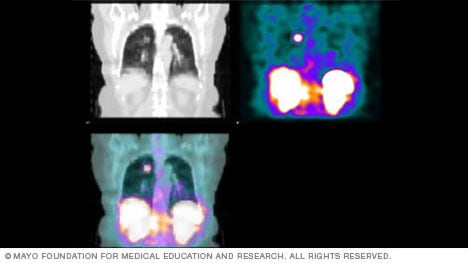
Resultados de una tomografía computarizada por emisión de fotón único
Los resultados de la tomografía computarizada por emisión de fotón único pueden ser a color o en escala de grises. Las diferentes tonalidades o colores muestran qué células del cuerpo absorben más o menos cantidad del trazador radiactivo. Esta exploración implica imágenes de los riñones, el hígado y el bazo.
Un radiólogo o un especialista de atención médica con formación avanzada en medicina nuclear analizará los resultados de la tomografía computarizada por emisión de fotón único y los enviará a tu equipo de atención médica. Las imágenes de la exploración pueden revelar colores que le indican al equipo qué áreas del cuerpo absorbieron mayor cantidad de marcador radioactivo y qué áreas absorbieron menos. Por ejemplo, una imagen computarizada por emisión de fotón único del cerebro puede mostrar un color más claro donde las células cerebrales están menos activas y colores más oscuros donde las neuronas cerebrales están más activas. Algunas imágenes computarizadas por emisión de fotón único muestran escalas de grises en lugar de colores.
Pregunta al equipo de atención médica cuánto tiempo deberás esperar para recibir tus resultados.
Jan. 05, 2024