Colon cancer treatment
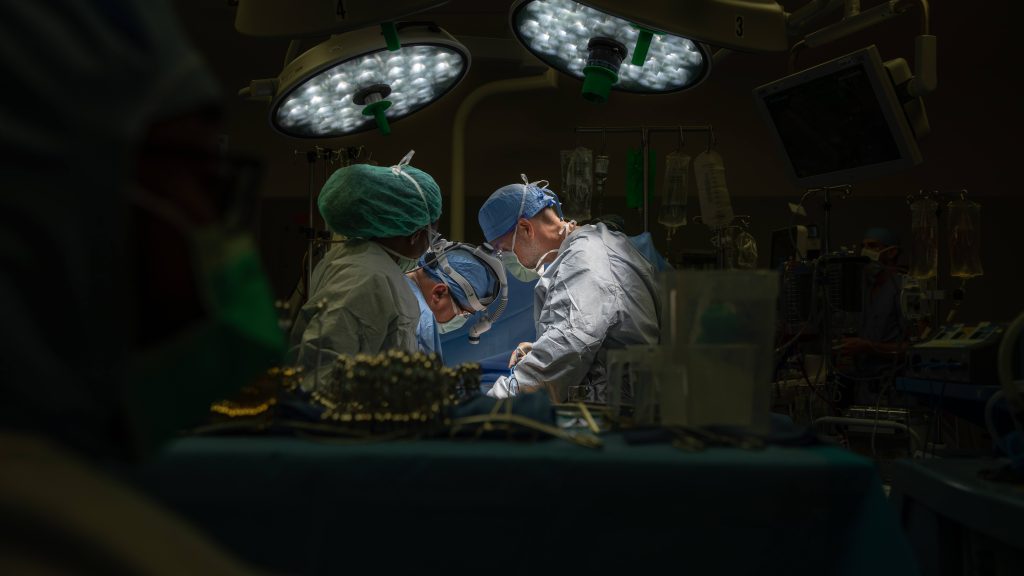
Colon cancer treatment often involves surgery to remove cancer. Surgery may be combined with chemotherapy, radiation therapy, targeted therapy or immunotherapy.
Medical review by Mayo Clinic Staff
Updated: September 10, 2026
If you or a loved one has been diagnosed with colon cancer, you may be wondering what treatment options you have and what your care plan may look like. Understanding your unique diagnosis, your overall health status and your treatment options can help you choose the care plan that works best for you. You may even have access to molecular profiling, which is an evaluation of your cancer to better understand the genetic changes that may have contributed to it. Based on your cancer's size and location, your genes and your health history, your colon cancer care plan may include surgery, chemotherapy, radiation, targeted therapy, immunotherapy or other specialized treatment options.
Surgery for colon cancer
Surgery is a main treatment option for many people with colon cancer. Colon cancer surgery can provide a cure for some patients.
If your colon cancer is small and was detected early, surgery may be the only treatment you need. When it's not possible to remove the cancer with surgery, you may have surgery to relieve symptoms rather than cure the cancer. This surgery can remove colon blockages and ease symptoms, such as bleeding or pain. If your colon cancer has spread to other parts of your body — called metastatic colon cancer — you may need surgery to remove cancer from those distant areas.
Some surgeries can be minimally invasive, which means your surgeon uses several small cuts, also called incisions, to take the cancer out of your body. For these surgeries, doctors use special tools to access and cut away your cancer. Some surgeries also may involve robotic tools that your surgeon controls.
There are many types of surgery, and researchers are continually studying new surgeries and ways to improve existing procedures. They aim to continue improving colon cancer surgery so more people can have successful surgeries with fewer side effects and easier recoveries.
Polypectomy
If your cancer is small and has not spread beyond the colon, you may only need a minimally invasive treatment called a polypectomy. A polypectomy happens during your colonoscopy. Your doctor uses special tools to cut away and take out polyps from inside your colon. If your cancer is contained within a polyp, removing the polyp may remove all the cancer.
Experts are studying ways to enhance polyp detection with artificial intelligence (AI). AI-assisted colonoscopies have been shown to help detect and characterize polyps so your care team can find and remove your cancer as early as possible.
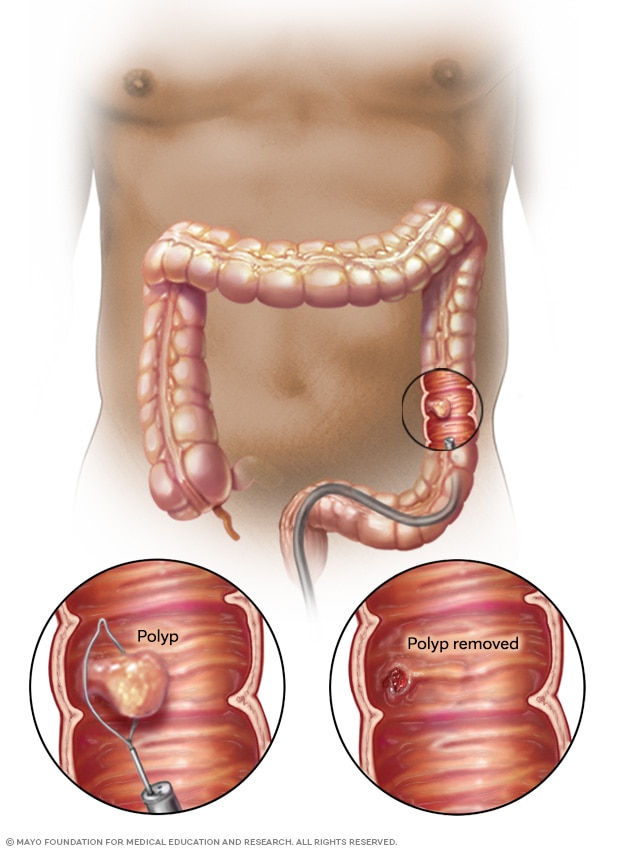
During a polypectomy, specialized tools are placed through a flexible tube called a colonoscope, which is guided into the colon to remove the polyp from the colon's lining.
Endoscopic mucosal resection
If you have early-stage cancer that is confined to the colon or if you have lesions in your colon that are likely to become cancer, your doctor may recommend an endoscopic mucosal resection. This is a minimally invasive procedure done with tools similar to those used in a polypectomy.
Colectomy
If your colon cancer has grown into or through your colon, doctors may remove all or part of your colon in a surgery called a colectomy. During a colectomy, your surgical team removes the part of your colon that has cancer as well as some healthy tissue surrounding the cancer. If only part of your colon is removed, the team usually can reconnect the healthy portions of the colon using a procedure called anastomosis. If your colon cancer also is affecting your rectum, you may need a proctocolectomy, which is a surgery to remove both the colon and the rectum.
Colectomy can often be minimally invasive surgery. During your colectomy, your care team also takes samples of your lymph nodes to test whether your cancer has spread. It’s important to work with a team that is very experienced with colon cancer surgery so you have the best understanding of your cancer’s spread. Your care team may also work in a multidisciplinary setting, which means your surgeon works alongside doctors from other specialties that can help you manage your risk of cancer spread.
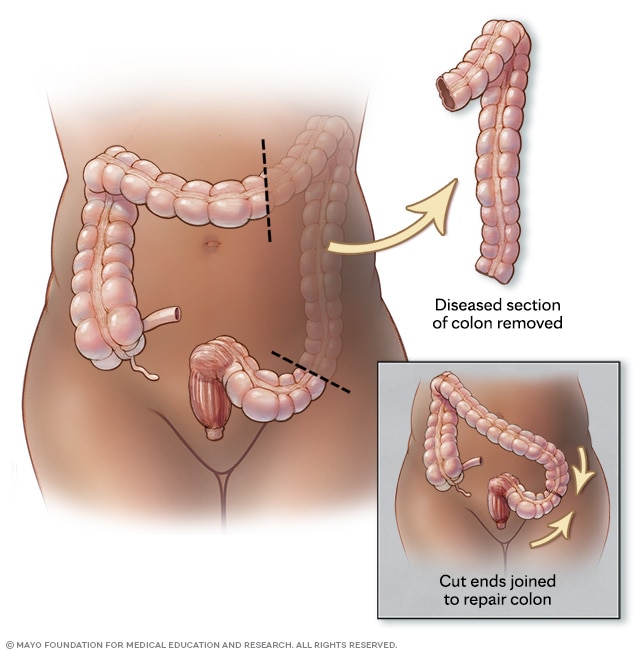
A colectomy is a surgical procedure to remove all or part of the colon, after which the remaining healthy sections are typically reconnected, allowing stools to pass through the colon as usual.
Ostomy
If your surgeon can’t reconnect the healthy portions of your colon after a colectomy, you may need an ostomy. During ostomy creation, your surgeon creates an opening in the wall of the abdomen. This allows stool to leave your body by emptying into a bag that fits over the opening. Colostomy and ileostomy surgeries are common ostomy procedures, and they are named for the part of the bowel in which the opening is created.
If you need an ostomy, it may be temporary or permanent. A temporary ostomy allows your colon to heal after surgery and is then reversed. Your care team helps you understand how to care for your ostomy. You can still eat the foods you like and take part in all the activities you enjoyed before having an ostomy.
Having an ostomy is a big worry for many patients. Some people may be able to have procedures that use an internal reservoir instead of an external pouch. Continent ileostomy, also called Kock pouch or K-pouch surgery, and ileoanal anastomosis, also called J-pouch surgery, are examples of surgeries that use internal reservoirs.
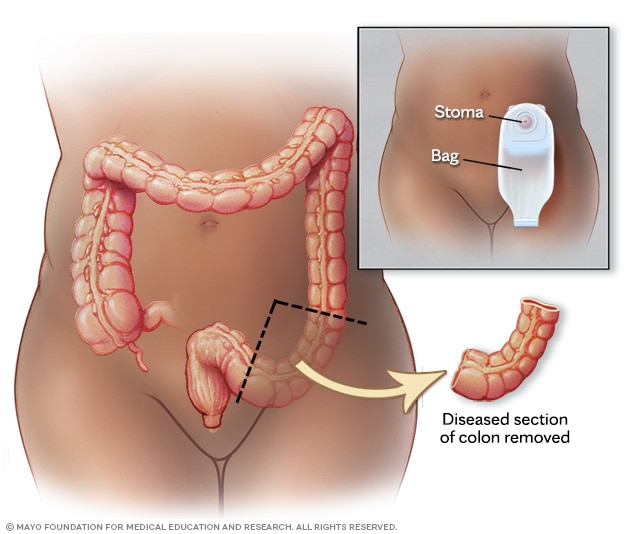
During colostomy surgery, an opening is made in the belly called a stoma. Part of the colon is brought through the stoma and attached to a pouch outside the body. Stools then pass through the stoma and go into the pouch.
Cytoreductive surgery
If it is not possible to remove all of your cancer surgically, your care team may recommend cytoreductive surgery, also called debulking surgery. During this type of surgery, your doctor removes as much of your cancer as possible. Cytoreductive surgery is often done along with nonsurgical treatments that target any cancer that could not be removed.
Liver transplant
If your cancer has spread only to the liver and cannot be safely removed with other techniques, you may be eligible for a liver transplant. Liver transplantation is an effective therapy for a small number of patients with colorectal liver metastases.
At Mayo Clinic, select people with colorectal cancer may be considered for liver transplant.
Liver transplant for colorectal cancer is a complex option offered at only a few centers in the United States. Our teams bring together surgical expertise, careful patient selection, and coordinated care to make this approach possible in appropriate situations. This expanded option reflects how we continue to advance treatment when standard approaches are limited.
Synchronous cancer treatment
Sometimes, surgeons from different specialties can remove tumors from different organs during a single operation. This is called synchronous treatment. It can be particularly helpful if you have two primary cancers diagnosed in a short time frame. This approach combines two operations into one and streamlines the treatment plan for people who have advanced tumors.
Support group discussions
From Mayo Clinic Connect, our online patient community.
Find more discussions:
Chemotherapy for colon cancer
Chemotherapy is a colon cancer treatment option that uses strong medicines to kill cancer cells. You can have chemotherapy for colon cancer before or after surgery, or you may have it when surgery is not an option. With a multidisciplinary team, you also may have some treatment options that combine chemotherapy with radiation and surgery.
Before colon cancer surgery, chemotherapy may be used to shrink a large cancer so that it’s easier to remove. This is called neoadjuvant therapy. Combining advanced neoadjuvant therapies with surgical advancements can provide treatment options for patients who previously had none.
After colon cancer surgery, chemotherapy can be used to kill any cancer cells that may be left in your body. This helps reduce your risk that the cancer will come back. Chemotherapy given after surgery is called adjuvant chemotherapy.
Mayo Clinic researchers helped establish today’s standards for adjuvant chemotherapy.
After surgery for colon cancer, chemotherapy can help lower the risk of recurrence. Our researchers led the first clinical trial showing that adjuvant chemotherapy reduces recurrence risk. This work shaped worldwide standards of care and continues to guide how clinicians choose and time treatment today.
Special forms of chemotherapy also can be used alongside surgery. This approach helps doctors apply chemotherapy more directly to your cancer cells, and it requires that your oncologists and surgeons work closely together.
- Hyperthermic intraperitoneal chemotherapy (HIPEC). This is a specialized combination treatment for cancer in the abdominal cavity, called the peritoneum. Cancerous tumors are first removed with cytoreductive surgery. The cavity is then bathed with hot chemotherapy to kill any microscopic cancer cells that remain.
- Pressurized intraperitoneal aerosol chemotherapy (PIPAC). In this procedure, chemotherapy can be used in an aerosolized form. PIPAC is done with a minimally invasive surgery that uses special tools to disperse the aerosolized chemotherapy. The medicine circulates in the abdominal cavity for 30 minutes so it can penetrate deeply into the cancer cells. It is then removed using a closed air waste evacuation system.
- Hepatic artery infusion pump chemotherapy. This therapy targets colon cancer that has spread to the liver. The process starts with the surgical placement of a small pump under the skin, typically in the belly. This pump delivers chemotherapy to the liver through an attached catheter that is placed in a blood vessel connected to the liver’s main artery. The liver’s main artery is called the hepatic artery. The pump allows doctors to deliver higher doses of chemotherapy directly to the liver while limiting widespread side effects.
Mayo Clinic helped bring PIPAC into clinical practice
Mayo Clinic performed the first pressurized intraperitoneal aerosol chemotherapy (PIPAC) procedure in 2019. Since then, our teams have continued to study PIPAC through multisite clinical trials, helping define how this approach can be used safely and effectively for select cancers. This ongoing research supports careful patient selection and continued progress in treatment options.
Radiation for colon cancer
Radiation therapy uses powerful energy beams to kill cancer cells. The energy can come from X-rays, protons or other sources. Your doctor might recommend radiation therapy to ease symptoms, and you may have radiation and chemotherapy at the same time. Like chemotherapy, radiation can be used before, during or after surgery.
Proton beam therapy
Proton beam therapy is a specific type of radiation that is very targeted. The most advanced form of proton beam therapy is pencil beam scanning. This allows radiation oncologists to deliver higher doses of radiation to cancer cells while sparing healthy tissue. Proton beam therapy can be an especially helpful option for colon cancer because of the location of the cancer. Precisely targeting radiation therapy allows for limited damage to healthy tissues important for reproduction, digestion and urination.
Intraoperative radiation therapy
Intraoperative radiation therapy (IORT) is radiation delivered during surgery. Surgeons use IORT when they can't remove enough healthy tissue around the cancer or when the cancer has spread locally but not to distant parts of the body. During IORT, a single, high dose of radiation is given during surgery — after the cancer has been removed but before the abdomen has been closed.
Selective internal radiation therapy
Selective internal radiation therapy (SIRT), also called Y-90 radioembolization, is a treatment that sends tiny radioactive beads directly into the blood vessels that feed colon cancer tumors in the liver. These beads give off radiation that helps shrink the tumors while sparing most of the healthy liver. It’s often used when surgery isn’t possible and other treatments haven’t worked.
Targeted therapy
Targeted therapy may be an option for some people with colon cancer. Targeted therapy uses medicines that attack or block certain chemicals in cancer cells. Blocking these chemicals can cause cancer cells to die.
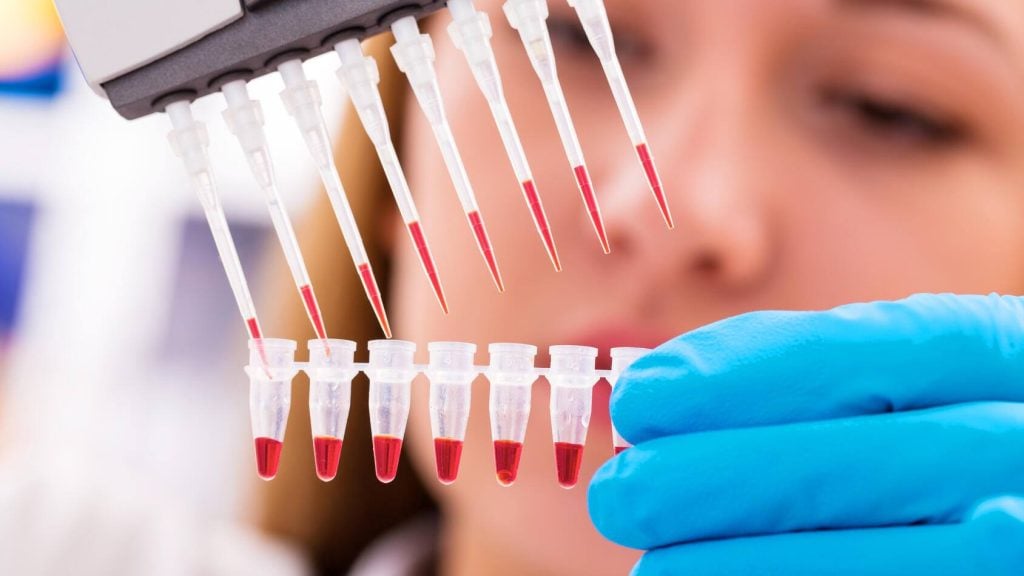
To use targeted therapy, doctors need to understand the genetic changes that contributed to your cancer. Molecular profiling with technology known as next-generation sequencing gives doctors that understanding. The technology can quickly evaluate many pieces of DNA so you know whether there are targeted therapies that may work for you.
Immunotherapy
Immunotherapy is a treatment with medicine that helps your immune system kill cancer cells. Your immune system fights off diseases by attacking germs and other cells that shouldn't be in your body. Cancer cells survive by hiding from the immune system. Immunotherapy helps the immune system find and kill the cancer cells. You may need immunotherapy if your colon cancer is associated with certain genes or if you have advanced or metastatic colon cancer.
All colon cancers should be tested to see if immunotherapy may be helpful. About 1 in 10 people with colon cancer has tumors that are either deficient in mismatch repair (dMMR) or show microsatellite instability (MSI). These features mean that cancer cells have trouble fixing DNA mistakes. These tumors tend to build up lots of errors in their DNA, which makes them easier for the immune system to spot. Therefore, patients with dMMR or MSI tumors are most likely to benefit from immunotherapy. Testing for these tumor types helps doctors choose the best treatment.
Ablation therapy
Ablation therapy is a minimally invasive treatment that can be used for colon cancer. It uses heat, cold, lasers or chemicals to destroy cancer cells. Your doctor may use energy beams or probes inserted using a catheter to perform ablation therapy. Ablation can be a good option if you can't have surgery to remove your colon cancer. Ablation typically works best for small tumors or to treat cancer that has spread to other parts of the body.
Histotripsy
Histotripsy is a new treatment that uses sound waves to break up cancer cells without surgery or heat. It's being studied for people with colon cancer that has spread, especially to the liver. This treatment may be an option for patients who can't have surgery or other treatments. Research on histotripsy is ongoing to make it safer and more available for patients in the future.
Palliative care
Palliative care is a special type of healthcare that focuses on relieving pain and other symptoms of a serious illness. Palliative care involves a team of healthcare professionals. The team can include doctors, nurses and other specially trained professionals. Their goal is to improve quality of life for you and your family.
Palliative care is an extra layer of support during cancer treatment. When you have palliative care with other cancer treatments, you may feel better and live longer.
Clinical trials
Explore Mayo Clinic studies testing new treatments, interventions and tests as a means to prevent, detect, treat or manage this condition.
Coping and support
It can be hard to cope with a cancer diagnosis. In time, people learn to cope in their own ways. Until you find what works for you, you might try to:
- Learn enough about your cancer to make treatment decisions. Ask your healthcare team about the type and stage of your cancer, as well as your treatment options and their side effects. The more you know, the more you’ll be able to take part in decisions about your care. Ask your healthcare team to recommend other sources of information, such as websites you can trust.
- Keep friends and family close. Keeping people you care about close to you can help you deal with cancer. Friends and family can help you take care of things if you’re in the hospital. And they can offer you support when you feel like you have too much to handle.
- Find a good listener to talk with. Find someone who will listen to you talk about your hopes and fears. This may be a friend or family member. Talking with a counselor, medical social worker, clergy member or cancer support group also might be helpful.
Ask your healthcare team about support groups in your area or contact a cancer organization, such as the National Cancer Institute or the American Cancer Society.
Support group discussions
Find more discussions:

Innovative therapy helps one man with cancer pay it forward
Brian Principe was diagnosed with colon cancer that had spread to his liver. After liver-directed chemotherapy, his tumors have shrunk, and he is helping others prevent the disease.
Preparing for your appointment
If you have colon cancer, you'll likely be sent to specialists who treat the disease. You might meet with:
- A doctor who treats digestive diseases, called a gastroenterologist.
- A doctor who uses medicines to treat cancer, called an oncologist.
- A doctor who removes colon cancer using surgery, called a surgeon or surgical oncologist.
- A doctor who uses radiation to treat cancer, called a radiation oncologist.
At Mayo Clinic, specialists across disciplines work together to coordinate chemotherapy decisions.
Mayo Clinic’s colon cancer team uses a fully integrated, multidisciplinary model—bringing together medical oncologists, surgical oncologists, radiologists, pathologists, pharmacists, and supportive-care teams. This coordinated approach streamlines treatment decisions and ensures each person’s care plan is precise, timely, and aligned to their goals.
Here’s some information to help you get ready for your appointment.
What you can do
Ask a family member or friend to go to your appointment with you. This person can help you remember the information you're told.
Make a list of:
- Your symptoms and when they began.
- Key medical information, including other conditions you have and your family medical history.
- All medicines, vitamins and supplements you take, including doses.
- Questions to ask your healthcare team.
Some basic questions to ask include:
- Where in my colon is my cancer?
- What is the stage of my colon cancer?
- Can you explain the lab report of my cancer to me?
- Can I have a copy of my lab report?
- Has my colon cancer spread? Where to?
- Will I need more tests?
- What are the treatment options for my colon cancer?
- What is the chance that my colon cancer can be cured?
- What are the potential side effects of each treatment?
- How will each treatment affect my daily life?
- How much time can I take to decide about treatment?
- Are there any brochures or other printed material that I can take with me? What websites do you recommend?
What to expect from your doctor
Be prepared to answer some basic questions about your symptoms, such as:
- Have your symptoms been ongoing, or do they come and go?
- How bad are your symptoms?
- What, if anything, seems to improve your symptoms?
- What, if anything, appears to worsen your symptoms?
Mayo Clinic’s approach to treating colon cancer
The experts at Mayo Clinic are leading the way in colon cancer treatment. From excelling at standard treatments to inventing new ones, our team is bringing the treatments of tomorrow to patients today.
We also are a National Cancer Institute-Designated Comprehensive Cancer Center, which means our doctors are researchers as well. They are involved with cutting-edge studies and clinical trials that help all people with colon cancer access the latest treatment options.
At Mayo Clinic, you can expect expert colon cancer care delivered with compassion. Your team is focused on you. Team members work together, applying their expertise to your situation and collaborating as a team. So while your team treats your colon cancer, you can focus on healing.
“We are offering the latest approaches to treating colon cancer, including chemotherapies, immunotherapies and advanced surgical approaches. We can even perform a liver transplant for some patients whose cancer has spread to the liver. Our goal is to enhance the care options available for people with colon cancer.”

Jeremy Jones, M.D.
Mayo Clinic medical oncologist and hematologist
You can also contact our helpful scheduling teams by calling: