Colon polyps Care at Mayo Clinic
Colon polyps care at Mayo Clinic
Your Mayo Clinic care team
Doctors specializing in gastroenterology and hepatology evaluate and treat colon polyps at Mayo Clinic. If you have Crohn's disease or another medical condition, Mayo Clinic specialists will collaborate with your primary care professional to form the best treatment plan.
Having all this expertise in a single place means that your care is discussed among the team, test results are available quickly, appointments are scheduled in coordination and the most highly specialized experts in the world are all working together for your health.
Advanced diagnosis and treatment
Mayo Clinic doctors use the most advanced techniques available to find colon polyps. During a colonoscopy, other techniques, such as high-definition narrow band imaging or special staining, may be used to enhance polyp detection. New systems using artificial intelligence to assist doctors in identifying colon polyps are being pioneered at Mayo Clinic.
Mayo Clinic surgeons are committed to using minimally invasive procedures, such as endoscopic submucosal resection and laparoscopic approaches, to treat even very large polyps and early cancers.
Efficient care
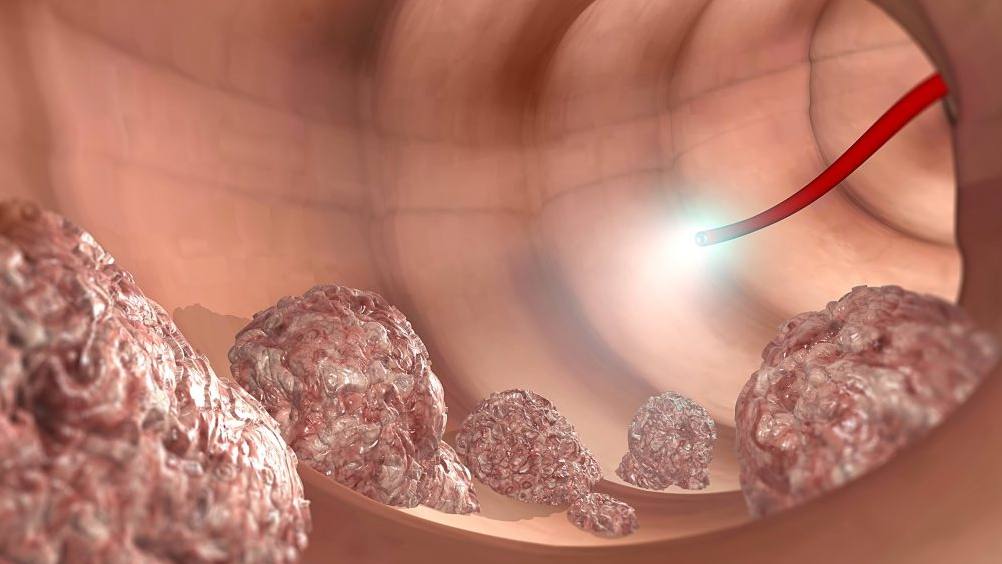
At Mayo Clinic, colon polyps are usually removed during colonoscopy. However, if the colon polyps are too large to be safely managed during the initial colonoscopy, subspecialty clinics have been established to arrange timely coordination of care. This may result in a colonoscopy with a complex therapeutic endoscopist who specializes in removal of complex polyps during this procedure. If this strategy cannot be used, you may have the colon polyps taken out by Mayo Clinic colorectal surgeons.
Expertise and rankings
Experience
Each year, Mayo Clinic doctors treat close to 3,000 people for colon polyps. Mayo Clinic specialists have experience treating people with rare hereditary polyp disorders, including Lynch syndrome, familial adenomatous polyposis (FAP), and its variations such as attenuated FAP, MAP, juvenile polyposis, Peutz-Jeghers syndrome, Cowden disease, and Cronkhite-Canada syndrome.
Research leaders
Mayo Clinic researchers are working to improve diagnosis and treatment of colon polyps. Specific efforts include developing enhanced screening methods for colon polyps and hereditary polyp disorders, as well as exploring the natural history of FAP.
People seeking care for colon polyps at Mayo Clinic in Minnesota are placed on a colorectal cancer prevention registry and updated on new screening techniques and procedures. Mayo researchers are working to discover more genetic changes that cause hereditary polyp disorders.
Nationally recognized expertise
Mayo Clinic in Rochester, Minnesota, ranks No. 1 for digestive disorders in the U.S. News & World Report Best Hospitals rankings. Mayo Clinic in Phoenix/Scottsdale, Arizona, and Mayo Clinic in Jacksonville, Florida, are ranked among the Best Hospitals for digestive disorders by U.S. News & World Report. In U.S. News & World Report’s regional analysis, Mayo Clinic Children’s is ranked No. 1 in Minnesota and No. 1 in the five-state Upper Midwest region, which includes Minnesota, Wisconsin, Iowa, North Dakota and South Dakota.
Mayo Clinic Comprehensive Cancer Center meets the strict standards for a U.S. National Cancer Institute comprehensive cancer center. These standards recognize scientific excellence and a multispecialty approach focused on cancer prevention, diagnosis and treatment.
Locations, travel and lodging
Mayo Clinic has major campuses in Phoenix and Scottsdale, Arizona; Jacksonville, Florida; and Rochester, Minnesota. The Mayo Clinic Health System has dozens of locations in several states.
For more information on visiting Mayo Clinic, choose your location below:


Costs and insurance
Mayo Clinic works with hundreds of insurance companies and is an in-network provider for millions of people.
In most cases, Mayo Clinic doesn't require a physician referral. Some insurers require referrals or may have additional requirements for certain medical care. All appointments are prioritized on the basis of medical need.
Learn more about appointments at Mayo Clinic.
Please contact your insurance company to verify medical coverage and to obtain any needed authorization prior to your visit. Often, your insurer's customer service number is printed on the back of your insurance card.
More information about billing and insurance:


CON-20306107
