Cirrhosis Symptoms and causes
Overview
Cirrhosis is a complication of long-term inflammation of the liver. It results in the replacement of healthy liver tissue with scar tissue, called fibrosis. While heavy long-term alcohol use is a common cause of cirrhosis, many other diseases and liver conditions can lead to cirrhosis.
The definition of cirrhosis covers a broad process. As the liver is continually injured — whether by alcohol use, obesity or ongoing infection — it tries to repair itself. In the process, scar tissue forms. As cirrhosis gets worse, more and more scar tissue forms, making it difficult for the liver to do its job. Advanced cirrhosis is life-threatening.
The liver damage caused by cirrhosis generally can't be undone. But if liver cirrhosis is diagnosed early and the underlying cause is treated, further damage can be limited. In rare cases, it may be reversed.
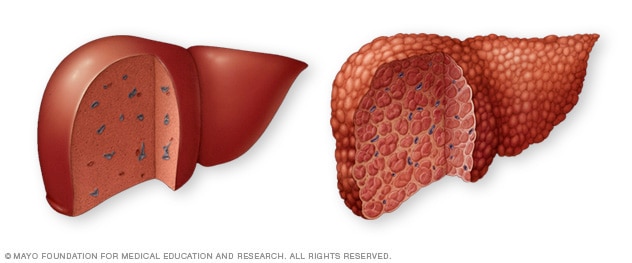
Typical liver vs. liver cirrhosis
A typical liver (left) shows no signs of scarring. In cirrhosis (right), scar tissue replaces healthy liver tissue.
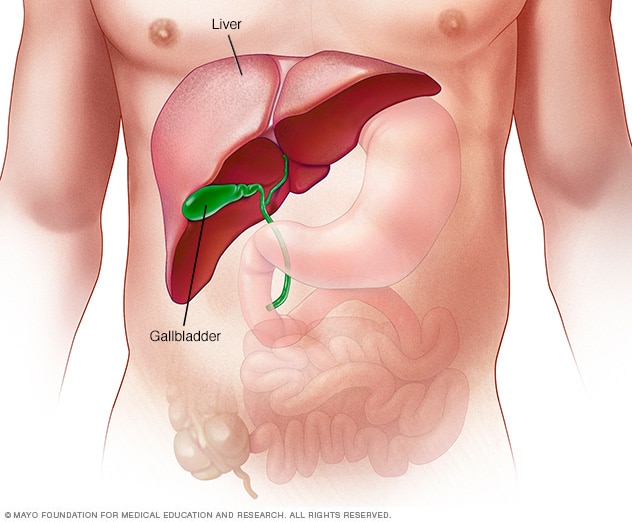
The liver
The largest organ inside the body, the liver is located mainly in the upper right portion of the abdomen, beneath the diaphragm and above the stomach.
Symptoms
Cirrhosis often has no symptoms until liver damage is serious. When symptoms do happen, they may include:
- Extreme tiredness.
- Easily bleeding or bruising.
- Loss of appetite.
- Nausea.
- Swelling in the legs, feet or ankles, called edema.
- Weight loss.
- Itchy skin.
- Yellowing of the skin and eyes, called jaundice.
- Fluid buildup in the belly, called ascites (uh-SY-teez).
- Spiderlike blood vessels on the skin, called spider angiomas.
- Redness in the palms of the hands.
- Pale fingernails, especially the thumb and index finger.
- Clubbing of the fingers, in which the fingertips spread out and become rounder than usual.
- Confusion, drowsiness or slurred speech.
Sexual problems may affect both men and women with cirrhosis. In men, erectile dysfunction, loss of sex drive and shrinkage of the testicles are common. A type of breast enlargement called gynecomastia also may occur.
In women, low sex drive, painful intercourse, inability to reach orgasm and lack of ovulation may occur. Women also may lose their periods, even when they're not in menopause.
When to see a doctor
Make an appointment with a healthcare professional if you have any of the symptoms noted above.
Causes
A wide range of diseases and conditions can damage the liver and lead to cirrhosis. Some of the causes include:
- Long-term alcohol use disorder.
- Viral hepatitis (hepatitis B and hepatitis C).
- Metabolic dysfunction-associated steatotic liver disease — formerly known as nonalcoholic fatty liver disease or NASH cirrhosis — a condition in which fat builds up in the liver.
- Hemochromatosis, which is a condition that causes iron buildup in the body.
- Autoimmune hepatitis, which is a liver disease caused by the body's immune system.
- Destruction of the bile ducts caused by primary biliary cholangitis.
- Hardening and scarring of the bile ducts caused by primary sclerosing cholangitis.
- Wilson's disease — a condition in which copper builds up in the liver.
- Cystic fibrosis, which is a condition that damages the lungs, digestive system and other organs.
- Alpha-1-antitrypsin deficiency, which is a condition that damages the lungs, liver, skin and blood vessels.
- Poorly formed bile ducts — a condition known as biliary atresia.
- Diseases of sugar metabolism, such as galactosemia or glycogen storage disease.
- Alagille syndrome, which is a genetic digestive disorder.
- Infection, such as syphilis or brucellosis.
- Medicines, including methotrexate or isoniazid.
Risk factors
- Drinking alcohol. Alcohol use is a risk factor for cirrhosis.
- Being overweight. Being obese increases the risk of conditions that may lead to cirrhosis.
- Having viral hepatitis. Not everyone with chronic hepatitis will develop cirrhosis, but it's one of the world's leading causes of liver disease.
Get the latest liver transplant-related health information from Mayo Clinic
Sign up for free, and receive liver transplant and decompensated cirrhosis content, plus expertise on liver health.
Complications
Complications of cirrhosis usually mean the liver disease has become more advanced. When complications develop, they increase the risk of serious illness and may signal a higher chance of death compared with earlier stages of cirrhosis.
- High blood pressure in the veins that supply the liver. Cirrhosis can raise pressure in the veins that carry blood through the liver, a condition called portal hypertension. This increased pressure can lead to serious complications, including ascites and bleeding.
- Swelling in the legs and belly. The increased pressure in the portal vein can cause fluid to build up in the legs, called edema, and in the belly, called ascites. Edema and ascites also may happen if the liver can't make enough of certain blood proteins, such as albumin. Once ascites develops, the risk of further complications increases.
- Swelling of the spleen. Portal hypertension can cause the spleen to trap white blood cells and platelets. This makes the spleen swell. This condition is known as splenomegaly. Fewer white blood cells and platelets in your blood can be the first sign of cirrhosis.
- Bleeding. Portal hypertension can cause blood to be redirected to smaller veins. Strained by the extra pressure, these smaller veins can burst, causing serious bleeding. Portal hypertension also may cause enlarged veins, called varices (VAR-ih-sees), in the esophagus or the stomach. Enlarged veins in the esophagus increase the risk of serious bleeding, which can be life-threatening. If the liver can't make enough clotting factors, this also can contribute to continued bleeding.
- Broken blood vessels. Blood vessels under the skin may break, creating patterns that look like spiders. These blood vessels are called spider angiomas.
- Infections. Having cirrhosis makes it hard for the body to fight infections. Ascites also can lead to bacterial peritonitis, an infection of fluid in the belly. This is a serious infection that can trigger kidney failure and other organ problems.
- Malnutrition. Cirrhosis may make it more difficult for the body to process nutrients, leading to weakness and weight loss.
- Buildup of toxins in the brain. A liver damaged by cirrhosis can't clear toxins from the blood as well as a healthy liver can. These toxins can then build up in the brain and cause mental confusion and difficulty concentrating. This is known as hepatic encephalopathy. This is a sign of advanced cirrhosis. Over time, it can progress to unresponsiveness or coma.
- Jaundice. Jaundice happens when the diseased liver doesn't remove enough of a blood waste product, called bilirubin, from the blood. Jaundice causes yellowing of the skin and whites of the eyes and darkening of urine. When jaundice develops in cirrhosis, it is a sign of worsening liver function.
- Kidney failure. Cirrhosis can reduce blood flow to the kidneys and lead to kidney failure, sometimes called hepatorenal syndrome.
- Bone disease. Some people with cirrhosis lose bone strength and are at greater risk of fractures.
- Increased risk of liver cancer. A large proportion of people who develop liver cancer have preexisting cirrhosis.
- Acute-on-chronic cirrhosis. Some people end up having multiorgan failure. Researchers now believe this is a complication in some people who have cirrhosis. However, they don't fully understand what causes it.
When jaundice, ascites, bleeding, liver cancer or brain changes occur, healthcare professionals may call the condition decompensated cirrhosis. Without these complications cirrhosis is said to be compensated.
Prevention
Lower the risk of cirrhosis by taking these steps to care for your liver:
- Do not drink alcohol. If you have liver disease, you should not consume any kind of alcoholic drink, even if alcohol was not the original cause.
- Eat a healthy diet. Choose a diet that's full of fruits and vegetables. Select whole grains and lean sources of protein. Cut down on the amount of fatty and fried foods you eat.
- Maintain a healthy weight. Too much body fat can damage the liver. Talk to a healthcare professional about a weight-loss plan if you carry excess weight.
- Reduce your risk of hepatitis. Sharing needles and having unprotected sex can increase the risk of hepatitis B and C. Ask a health professional about hepatitis vaccinations. Hepatitis C can be cured. All adults should be screened for hepatitis C at least once.
If you're concerned about your risk of liver cirrhosis, talk to a health professional about ways to reduce your risk.

CON-20157220
Mayo Clinic does not endorse companies or products. Advertising revenue supports our not-for-profit mission.
Advertising & Sponsorship
Mayo Clinic Press
Check out these best-sellers and special offers on books and newsletters from Mayo Clinic Press.
