概述
Deep inferior epigastric perforator (DIEP) flap surgery is a type of breast reconstruction that uses your own tissue. In breast reconstruction with flap surgery, a surgeon takes tissue from another area of the body to shape the new breast. The piece of tissue is called a flap. In a DIEP procedure, a surgeon transfers skin, fat and blood vessels from the lower belly to create a new breast after mastectomy.
Unlike older flap procedures such as a transverse rectus abdominis muscle (TRAM) flap, the DIEP flap keeps most of the abdominal muscles in place. The surgeon carefully separates the small blood vessels that pass through the muscle, but the muscle is not typically transferred with the flap. This helps preserve strength in the abdominal muscles.
The goal of breast reconstruction is to give you the most natural look and feel possible after breast cancer surgery. For some people, breast reconstruction helps them feel more confident and comfortable with their bodies. But breast reconstruction can't replace the breast exactly. The new breast may not look or feel the same or have the same sensations as a natural breast.
目的
腹壁下动脉穿支皮瓣
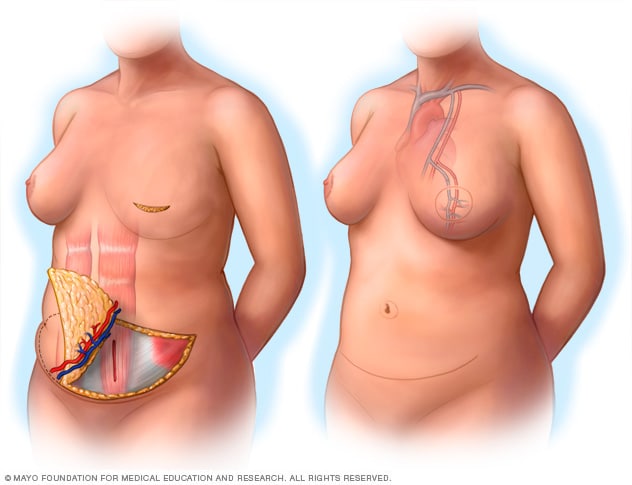
腹壁下动脉穿支皮瓣
在进行腹壁下动脉穿支皮瓣术时,外科医生取腹部的一部分皮肤、脂肪及血管,用于构建新乳房。该手术亦被称为 DIEP 皮瓣术。外科医生将组织连接到胸部的血管。随后利用这些组织塑造新的乳房形态。
Breast reconstruction with flap surgery is done to restore shape to a breast after a mastectomy to treat or prevent breast cancer. A mastectomy is surgery to remove all breast tissue from one or both breasts. Some people choose breast reconstruction after mastectomy to feel better about themselves and how they look.
One benefit of DIEP flap surgery is that the surgeon takes only skin, fat and blood vessels from the belly to create the new breast and leaves most of the abdominal muscle in place. This approach helps keep the abdominal muscles strong.
The breast reconstruction process may start at the time of the mastectomy. This is called immediate reconstruction. It also can be done months or years later after you recover from mastectomy or complete other treatments. This is called delayed reconstruction. Often breast reconstruction takes two or more operations to complete.
Your surgeon may recommend DIEP flap reconstruction if you have enough tissue in your lower belly to create a breast. This option uses your own tissue instead of a breast implant. DIEP flap surgery is not an option for everyone. Your care team considers several factors. These include your overall health, previous surgeries, your blood vessels, whether you smoke, and other medical conditions.
风险
As with any surgery, DIEP flap surgery has risks. These include risks related to anesthesia, bleeding, blood clots, infection and poor wound healing.
Risks of surgery
The risks of breast reconstruction surgery include:
- Slow healing of surgical cuts in the skin, called incisions.
- Infection.
- Bleeding.
- Risks linked to the medicine that puts you in a sleeplike state during surgery. The medicine is called a general anesthetic. Risks include nausea, vomiting and confusion.
Risks of having flap surgery
The risks of having breast reconstruction with tissue flaps include:
- Tissue death, called necrosis, from too little blood supply to the new breast.
- Changes in feeling in the reconstructed breast.
- Loss of feeling at the belly donor site.
- Small puckers or wrinkles near the donor site or the reconstruction site.
- Weakness in the belly wall may cause a bulge called a hernia.
Radiation therapy to the skin and chest wall after breast reconstruction with flap surgery may cause complications during healing. DIEP reconstruction may be performed before or after radiation, depending on your cancer treatment plan and your needs. Your breast surgeon, radiation oncologist and plastic surgeon can discuss the timing that is most appropriate for you.
Some complications of flap surgery may require a second surgery to correct the issue.
如何进行准备
If you're considering breast reconstruction with flap surgery, including the DIEP approach, talk with a plastic surgeon about your options. Choose a plastic surgeon who is board certified and experienced in breast reconstruction after mastectomy. Your breast cancer surgeon and plastic surgeon may work together to plan your care and develop a surgical treatment and breast reconstruction plan that is right for you.
Your plastic surgeon talks with you about your surgical choices and the benefits and risks of reconstruction with flap surgery. Your body type, health and cancer treatment help determine which type of reconstruction may give you the best result.
You may see photos of people who have had different types of breast reconstruction. This can help you decide if DIEP flap surgery is right for you.
If you choose DIEP, your plastic surgeon may order a CT or MRI angiogram to map the blood vessels in your abdomen before surgery. The surgeon also talks with you about where the surgery will take place and what follow-up procedures you may need.
If you feel comfortable, bring someone you trust to your appointments. A trusted person can listen, ask questions and offer support. Having someone with you can make it easier to remember and understand the information your care team shares. These meetings can be stressful, and important details might be missed or forgotten.
Your care team may provide instructions about how to get ready for surgery. Follow your healthcare team's instructions carefully. Tell your healthcare team about all the medicines, vitamins, herbal supplements and other dietary supplements you take. Some medicines, including blood thinners, may need to be stopped before surgery. Follow your care team's instructions about which medicines to stop and when to stop them. The instructions also might say to quit smoking if you smoke. Smoking makes it harder for the body to heal after surgery.
可能出现的情况
Your care team may review your medical history and do a physical exam. Your surgeon may talk with you about what to expect before, during and after your DIEP flap surgery.
Before the procedure
Before your surgery, your care team may review the procedure and answer your questions.
You receive general anesthesia. This medicine puts you into a sleeplike state so that you don't feel pain during surgery.
Your surgeon may mark your breast and lower belly before surgery. These markings help plan the incisions and the amount of tissue used for reconstruction.
During the procedure
During DIEP, the surgeon carefully separates the blood vessels from the muscle. The tissue is then completely detached from the abdomen and transferred to the chest as a free flap. Under a microscope, the surgeon reconnects tiny arteries and veins so that the transplanted tissue receives blood flow in its new location.
The surgery often takes several hours. The length depends on whether one breast or both breasts are reconstructed and whether you have other procedures at the same time.
After the procedure
DIEP flap surgery is a complex operation. It typically requires a longer hospital stay and a longer recovery than reconstruction with a breast implant. This is because the surgery involves both the breast and the donor site in the belly.
After surgery, you recover in a hospital where your healthcare team closely watches the blood flow to the reconstructed breast. Checking the flap often during the first few days helps identify issues with blood flow as early as possible.
Most people stay in the hospital for several days after DIEP flap surgery. The length of stay varies depending on recovery and your surgeon's recommendations. Enhanced recovery after surgery (ERAS) programs may allow some people to go home sooner without increasing complications.
After surgery, you may wear a stretchy bandage or support bra to keep swelling down and support the reconstructed breast. You may have a small tube under your skin for a time to drain blood or fluids. Your care team teaches you how to care for the drains before you go home. Your healthcare professional also prescribes medicine to help you manage your pain.
You may be tired and sore for several weeks after surgery. Getting back to usual activities takes time. You might need to limit some activities. Follow your healthcare team's instructions on which activities to avoid. These may include overhead lifting or anything that could cause strain.
Recovery is different for each person. But in general, people can return to usual activities within 6 to 8 weeks after breast reconstruction. Full healing can take a year or more.
If you have concerns as you recover, contact your care team.
结果
After DIEP flap surgery, it takes time for the tissue on your chest and belly to heal. As your chest heals, you'll likely meet with your surgery team to talk about the results.
The aim of breast reconstruction is to give you the most natural look and feel possible after breast surgery. But breast reconstruction can't make your breast look or feel the same as it did before your mastectomy. Knowing what breast reconstruction can and cannot do may help you understand what you can expect.
What breast reconstruction can do:
- Give your breast a shape.
- Help your breasts look more alike under clothing or in a bathing suit.
- Help you avoid needing to put a breast-shaped form, called a prosthesis, inside your bra.
What breast reconstruction may do:
- Help you feel better about yourself and your body.
- Take away some of the physical reminders of your cancer.
What breast reconstruction won't do:
- Restore the breast exactly as it was before your mastectomy.
- Restore the same sensation you had in the breast before surgery.
No reconstruction can completely replace a natural breast. But many people who have DIEP flap surgery report high long-term satisfaction with the appearance of their reconstructed breast. They also report improvements in quality of life.
临床试验
探索 Mayo Clinic 的研究 测试新的治疗、干预与检查方法,旨在预防、检测、治疗或控制这种疾病。
妥善处理与支持
Breast reconstruction is a personal choice. Some people decide to have reconstruction, while others do not. There is no right or wrong decision.
As you consider DIEP flap surgery or other breast reconstruction options, you may experience a range of emotions. Ask family, friends or others who have been through breast reconstruction for support. Talk with your care team too. They can connect you with resources and support.
Aug. 11, 2026