概述
完全型肺静脉回流异常
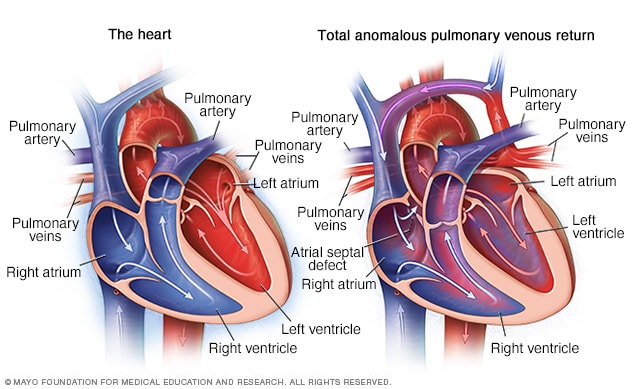
完全型肺静脉回流异常
在完全型肺静脉回流异常(TAPVR)中,肺静脉错误地将血液输送至心脏右上腔,即右心房。因此,富氧血与贫氧血混合,如紫色部分所示。如左图所示,正常心脏中的富氧血从肺静脉流向左上腔,即左心房。
完全型肺静脉回流异常(TAPVR)是一种出生时即存在的罕见心脏状况。也就是说,它属于先天性心脏缺损。
该状况的其他名称为:
在这种心脏状况中,肺部血管(称为肺静脉)连接至心脏中错误的部位。
正常心脏中的富氧血从肺部流向心脏左上腔室(称为左心房),然后血液流向身体其他部位。
罹患 TAPVR 时,静脉连接会发生改变。血液流经右上心腔(称为右心房)。这种血流变化导致贫氧血与富氧血混合。这会导致流向身体的血液中氧气不足。
TAPVR 的类型取决于静脉连接的位置。大多数先天性 TAPVR 患儿没有先天性心脏病家族史。
Types
TAPVR types are classified by where the pulmonary veins connect and drain. There are four major types:
- Supracardiac: The pulmonary veins connect above the heart, usually through a vein that carries blood to the major vein, called the superior vena cava. The superior vena cava brings oxygen-poor blood to the right side of the heart.
- Infracardiac/infradiaphragmatic: The pulmonary veins connect below the heart and diaphragm, most often to a vein in the liver called the portal vein. Other connections are also possible.
- Intracardiac: The pulmonary veins connect directly to the right side of the heart, usually through a vein called the coronary sinus, or connect directly into the right atrium.
- Mixed: The pulmonary veins have more than one type of atypical connection. For example, three veins may drain together while the fourth drains through a different pathway.
Supracardiac TAPVR is the most common type. Between 40% and 50% of people with TAPVR have the supracardiac type.
There also are differences between obstructed and unobstructed TAPVR.
In obstructed TAPVR, the atypical pathway is narrowed or blocked. This makes it difficult for blood to leave the lungs, causing pressure and fluid to build up in the lungs. Newborns and infants with obstructed TAPVR can become very sick soon after birth.
In unobstructed TAPVR, there is no major narrowing or blockage in the atypical pathway. Blood can flow more easily, but it still returns to the wrong side of the heart. This causes too much blood to flow through the lungs and makes the right side of the heart work harder. Symptoms may be mild at first, but babies can develop serious symptoms over time.
症状
婴儿完全型肺静脉回流异常(TAPVR)的症状可能包括呼吸困难、喂养不良和弱脉。低氧水平会导致婴儿皮肤发灰或发青,这称为发绀。这些变化可能较易察觉,也可能较难察觉,具体取决于肤色。
TAPVR 症状可能在出生后不久出现。但是,一些人要到年龄较大时才会出现症状。
When to seek care
Serious congenital heart defects are often diagnosed before or soon after a child is born. If you think that your newborn or infant has symptoms of total anomalous pulmonary venous return (TAPVR), call your child's healthcare professional.
病因
大多数先天性心脏缺损是由早在胎儿出生前心脏发育时发生的变化引起的。未出生的婴儿也被称为胎儿。尚不清楚导致大多数先天性心脏缺损(包括完全型肺静脉回流异常 [TAPVR])的确切原因。
基因变化、某些药物或健康状况以及环境或生活方式因素(例如抽烟)可能发挥了一定作用。
风险因素
先天性心脏缺损包括完全型肺静脉回流异常(TAPVR),可能的风险因素包括:
- 风疹,也称为德国麻疹。 怀孕期间发生风疹可能会改变婴儿的心脏发育。可以在怀孕前进行血液检查,以确定是否对风疹具有免疫力。如果没有,您可以接种疫苗。
- 糖尿病。 怀孕期间患 1 型或 2 型糖尿病可能会改变胎儿的心脏发育。怀孕期间出现的糖尿病被称为妊娠期糖尿病。妊娠期糖尿病一般不会增加婴儿患先天性心脏病的风险。
- 遗传因素。 虽然 TAPVR 通常不在家族中遗传,但基因变化与出生时的心脏状况相关。例如,唐氏综合征患者通常出生时就有心脏状况。
- 抽烟。 如果您抽烟,请戒烟。怀孕期间抽烟或暴露于二手烟会增加婴儿出现先天性心脏缺损的风险。
- 饮酒。 怀孕期间饮酒与婴儿的心脏状况相关。
- 某些药物。 怀孕期间使用的一些药物可能会增加婴儿出现先天性心脏缺损的风险。这包括治疗双相障碍的锂(Lithobid)和治疗痤疮的异维 A 酸(Claravis、Myorisan 等)。与医护团队讨论您使用的药物。
Sept. 30, 2026