Kidney pain
Definition
Some health problems that affect a kidney can cause pain. You might feel kidney pain as a dull ache just below the ribs along your side or back. But pain in these areas often has other causes that aren't related to the kidneys.
The kidneys are a pair of small organs located toward the back of your body, just under the lower ribs. One kidney sits on each side of the spine. Kidney pain — also called renal pain — most often affects only one side of the body. Fever and urinary symptoms often happen along with kidney pain.
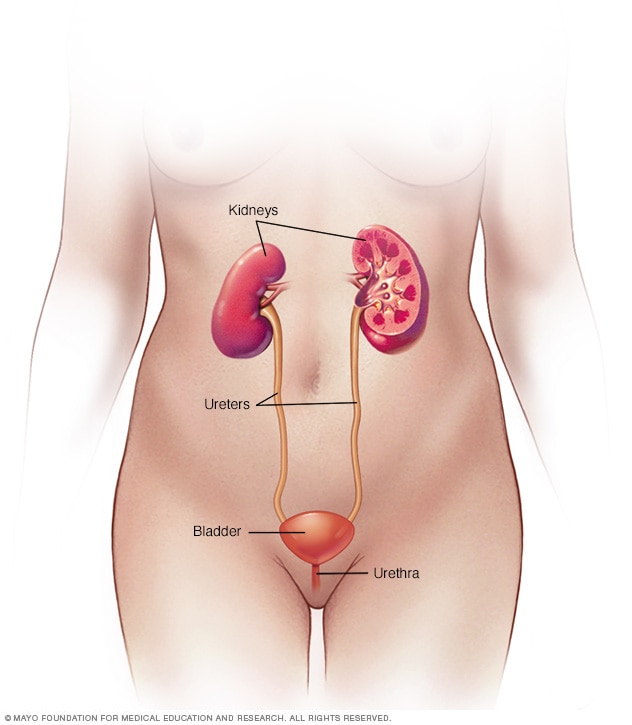
Female urinary system
The urinary system includes the kidneys, ureters, bladder and urethra. The urinary system removes waste from the body through urine. The kidneys sit toward the back of the upper abdomen. They filter waste and fluid from the blood and make urine. Urine moves from the kidneys to the bladder through narrow tubes called the ureters. The bladder stores urine until it's time to urinate. Urine leaves the body through a small tube called the urethra.
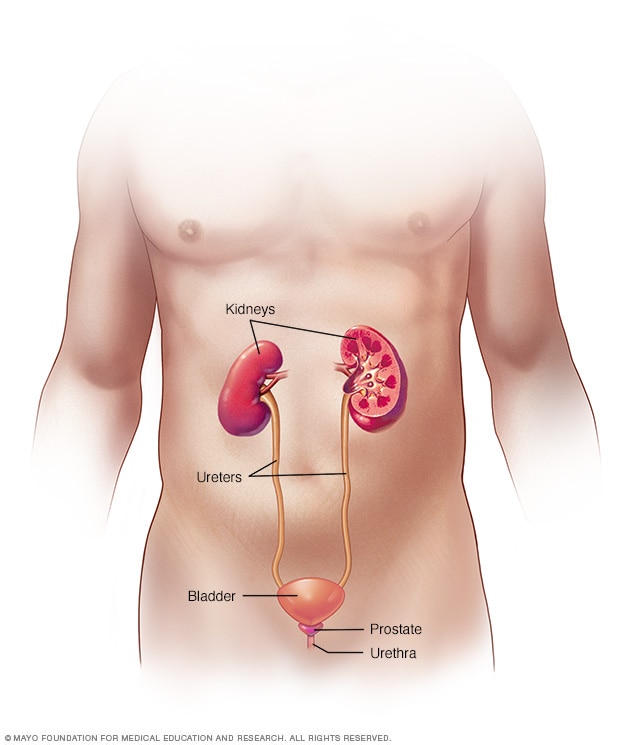
Male urinary system
The urinary system includes the kidneys, ureters, bladder and urethra. The urinary system removes waste from the body through urine. The kidneys sit toward the back of the upper abdomen. They filter waste and fluid from the blood and make urine. Urine moves from the kidneys through narrow tubes to the bladder. These tubes are called the ureters. The bladder stores urine until it's time to urinate. Urine leaves the body through a small tube called the urethra.
Causes
Many things can cause kidney pain. It can be due to health problems such as:
- Bleeding in the kidney (also called a hemorrhage)
- Blood clots in kidney veins (also called renal vein thrombosis)
- Dehydration
- Kidney cysts (fluid-filled pouches that form on or in the kidneys)
- Kidney stones
- Kidney injury (which could be caused by an accident, a fall or contact sports)
Some diseases that can cause kidney pain are:
- Hydronephrosis (which is swelling in one or both kidneys)
- Kidney cancer (or a kidney tumor)
- Kidney infection
- Polycystic kidney disease (a genetic illness that causes cysts to form in the kidneys)
You could have one of these health problems and not have kidney pain. For example, most kidney cancers don't cause symptoms until they're advanced.

Causes shown here are commonly associated with this symptom. Work with your doctor or other health care professional for an accurate diagnosis.
When to see a doctor
Contact a healthcare professional right away if you feel constant, dull, one-sided pain in your back or side. Ask for a same-day appointment if you also:
- Have fever, body aches and fatigue.
- Had a recent urinary tract infection.
- Feel pain when you urinate.
- See blood in your urine.
- Have an upset stomach or vomiting.
Get emergency care if you have sudden, serious kidney pain, with or without blood in your urine.
From Mayo Clinic to your inbox
Sign up for free and stay up to date on research advancements, health tips, current health topics, and expertise on managing health. Click here for an email preview.
SYM-20050902
Mayo Clinic does not endorse companies or products. Advertising revenue supports our not-for-profit mission.
Advertising & Sponsorship
Mayo Clinic Press
Check out these best-sellers and special offers on books and newsletters from Mayo Clinic Press.
