Erectile dysfunction is the inability to get and keep an erection firm enough for sex. But it also can be an early warning sign of heart disease. And if you already have heart disease, getting the right treatment may help with erectile dysfunction. Understand the connection and what you can do about it.
How are erectile dysfunction and heart disease linked?
Erectile dysfunction, also called ED, and heart disease are closely linked. They both depend on healthy blood vessels. And they share common risk factors.
Both ED and heart disease often begin with damage to the inner lining of blood vessels. This lining is called the endothelium. When the lining isn't working as it should, it lessens blood flow throughout the body. This is called endothelial dysfunction.
Endothelial dysfunction causes poor blood supply to the heart. And it slows blood flow to the penis. Over time, endothelial dysfunction may cause a buildup of plaque in your body. This buildup is called atherosclerosis.
Because the arteries in the penis are smaller than those in the heart, you may have ED years before heart symptoms, such as chest pain, happen.
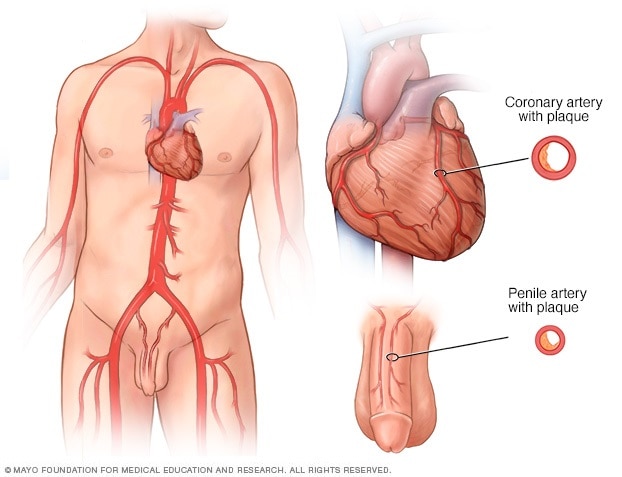
Warning signs of heart conditions
ED may be an early sign of heart disease. Endothelial dysfunction and plaque buildup lessen blood supply to both the heart and the penis. Because the arteries in the penis are smaller, ED symptoms may occur years before heart disease symptoms happen.
What are the risk factors for erectile dysfunction and heart disease?
Erectile dysfunction and heart disease share many risk factors, including:
- Diabetes. If you have diabetes, you're at high risk of ED and heart disease.
- Tobacco use. Smoking increases your risk of developing cardiovascular disease and can cause ED.
- Alcohol use. Drinking too much alcohol can cause heart disease. And it may contribute to high blood pressure and high cholesterol levels. Alcohol also impairs erections.
- High blood pressure. Over time, high blood pressure damages the lining of the arteries. This quickens the process of cardiovascular disease. Certain high blood pressure medicines, such as thiazide diuretics, also can affect sexual function.
- High cholesterol. A high level of low-density lipoprotein cholesterol, called LDL or “bad” cholesterol, can lead to plaque buildup.
- Age. As you get older, it's common for erections to take longer to develop. And they may not be as firm. The younger you are, the more likely that erectile dysfunction signals a risk of heart disease. If you are younger than age 50, you're at high risk.
- Obesity. Excess weight often makes other risk factors for heart disease worse. And it is a risk factor for ED.
- Low testosterone. Low testosterone is linked to higher rates of ED and cardiovascular disease.
How strong is the connection between erectile dysfunction and heart disease?
Having erectile dysfunction does not always mean you have an underlying heart condition. But research suggests that people who have ED that has no obvious cause, such as an injury, and who have no symptoms of heart disease should be screened for heart disease. Screening should happen before starting ED treatment.
What are the treatment options for erectile dysfunction if I have heart disease?
If you have both ED and heart disease, talk with your healthcare professional about treatment options. If you take certain heart medicines, especially nitrates, it is not safe to use many of the medicines typically used to treat ED.
If your healthcare professional thinks you might be at risk of heart disease, consider making lifestyle changes. Any lifestyle change that improves heart health also improves penis health. Try to be more active. Stay at a healthy weight. If you smoke, stop. And drink alcohol only in moderation — or not at all.
Erectile dysfunction care at Mayo Clinic
Our caring team of Mayo Clinic experts can help you with your health concerns. Visit Mayo Clinic Men's Health to get started.
