High cholesterol Symptoms and causes
Overview
Cholesterol is a waxy substance found in the blood. The body needs cholesterol to build healthy cells. But high levels of cholesterol can raise the risk of heart disease.
With high cholesterol, fats and other substances can build up in blood vessels called arteries. This buildup is called plaque. As more plaque forms over time, the arteries can become narrowed or clogged. That makes it hard for enough blood to flow through the arteries. Sometimes a piece of plaque can break loose and form a blood clot. The clot may cause a heart attack or stroke.
High cholesterol can be inherited. That means it can pass from parents to children through genes. But high cholesterol often is the result of lifestyle choices such as not getting enough exercise, not eating a balanced diet or consuming large amounts of saturated fat. You can make changes to help prevent the condition. And if you have high cholesterol, you can help lower it with a healthy diet, regular exercise and sometimes medicine.
Types
Cholesterol travels through the blood, attached to proteins. The mix of proteins and cholesterol is called a lipoprotein. Cholesterol is commonly described by the type of lipoprotein that carries it.
- Low-density lipoprotein (LDL) cholesterol. This is known as the "bad" cholesterol. LDL carries cholesterol particles throughout the body. "Bad" cholesterol builds up in the walls of arteries. This makes the arteries hard and narrow. When a gene change causes high cholesterol, the body may have trouble removing LDL cholesterol from the blood.
- High-density lipoprotein (HDL) cholesterol. This is known as the "good" cholesterol. HDL picks up extra cholesterol and takes it back to the liver.
Symptoms
High cholesterol has no symptoms. A blood test is the only way to find out if you have it. That's why it's important to get cholesterol checks as recommended, even if you feel well.
When to see a doctor
The American Heart Association recommends that children get checked, also called screened, for high cholesterol once between ages 9 and 11. Screening may start earlier if a child has a family history of high cholesterol, heart attack or stroke. Screening also may start earlier if a child has conditions such as diabetes or obesity.
The next cholesterol screening is often recommended for people between ages 17 and 21. After that, many adults get their cholesterol checked about every five years. People who have health conditions such as high blood pressure, obesity or diabetes may need to get screened more often. And those who take cholesterol-lowering medicine might need to be screened more often. Those who have a family history of high cholesterol or heart disease also may need screenings more often.
If your test results aren't within the standard range, your healthcare professional might recommend more-frequent testing as well.
Causes
Lifestyle factors that may be within your control are the most common causes of high cholesterol. These factors include eating a diet high in saturated fats and trans fats and not getting enough exercise.
Sometimes factors that aren't within your control can lead to high cholesterol. These include gene changes that pass from parents to children, some health conditions and some medicines.
Conditions linked to high cholesterol or higher heart disease risk include:
Common conditions and inherited factors
- Overweight and obesity.
- Diabetes.
- Hypothyroidism.
- Sleep apnea.
- Familial hypercholesterolemia.
Other health conditions
- Chronic kidney disease.
- Chronic liver disease.
- HIV/AIDS.
- Lupus.
Some types of medicines taken for other health conditions also can make cholesterol levels worse. These may include some medicines used for acne, high blood pressure, HIV/AIDS and organ transplants.
Risk factors
Risk factors for high cholesterol levels include:
- Eating habits. Too much saturated fat or trans fats can lead to high cholesterol. Saturated fats are found in fatty cuts of meat and full-fat dairy products. Sometimes trans fats are found in packaged or processed foods.
- Overweight or obesity. Excess body fat can raise LDL cholesterol and triglycerides.
- Lack of activity. Regular physical activity can help improve cholesterol levels, including the body's "good" HDL cholesterol.
- Smoking. Cigarette smoking may lower the level of HDL cholesterol.
- Alcohol. Too much alcohol can affect triglycerides and cholesterol levels. If you choose to drink alcohol, limit how often you drink and keep the amount small. For overall health, drink no more than one drink a day. Do not drink every day. The less you drink, the better.
- Age. High cholesterol can happen at any age, including in childhood. But cholesterol levels often rise as people get older.
From Mayo Clinic to your inbox
Sign up for free and stay up to date on research advancements, health tips, current health topics, and expertise on managing health. Click here for an email preview.
Complications
High cholesterol can lead to other health conditions called complications. With high cholesterol, a dangerous amount of plaque can build up on the walls of arteries. This is called atherosclerosis. Over time, the plaque buildup can cause arteries to narrow and block blood flow.
Less blood flow through the arteries can cause complications such as:
- Chest pain, also called angina. If the arteries that supply the heart with blood narrow due to plaque buildup, that may cause chest pain. It also may cause other symptoms of a common type of heart disease called coronary artery disease.
- Heart attack. If plaque or a blood clot completely blocks blood flow to part of the heart, a heart attack can happen. A heart attack is an emergency that needs treatment right away.
- Stroke. If plaque or a blood clot blocks blood flow to the brain, a stroke can happen. A stroke is an emergency that needs treatment right away.
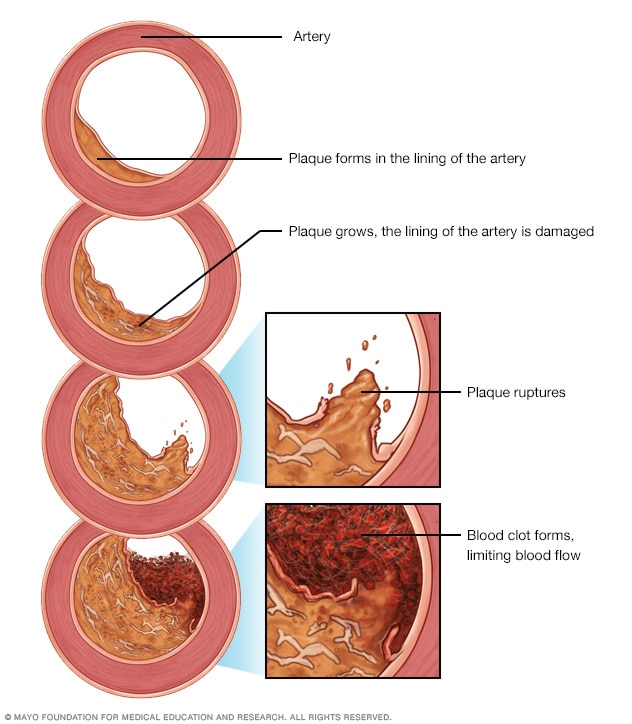
Development of atherosclerosis
If there's too much cholesterol in the blood, the cholesterol and other substances may form deposits called plaque. Plaque can cause an artery to become narrowed or blocked. If a plaque ruptures, a blood clot can form. Plaque and blood clots can reduce blood flow through an artery.
Prevention
The same heart-healthy lifestyle changes that can lower cholesterol also can help prevent high cholesterol. You can practice the following habits:
- Eat a diet that focuses on lean protein, fruits, vegetables and whole grains. Limit sodium and added sugar.
- Also limit the amount of saturated fats and trans fats you eat. Instead, eat foods with healthy fats such as fatty or oily fish, nuts, and olive or canola oil.
- Lose extra weight and keep it off.
- If you smoke, ask your care team to help you quit.
- Exercise on most days of the week. Aim for about 150 minutes of moderate-intensity activity each week.
- Do resistance training two times a week. This can help improve HDL cholesterol levels.
- Drink less alcohol, if at all. Limit alcohol to one or fewer drinks a day.





CON-20155272
Mayo Clinic does not endorse companies or products. Advertising revenue supports our not-for-profit mission.
Advertising & Sponsorship
Mayo Clinic Press
Check out these best-sellers and special offers on books and newsletters from Mayo Clinic Press.
