Overview
Left ventricular hypertrophy
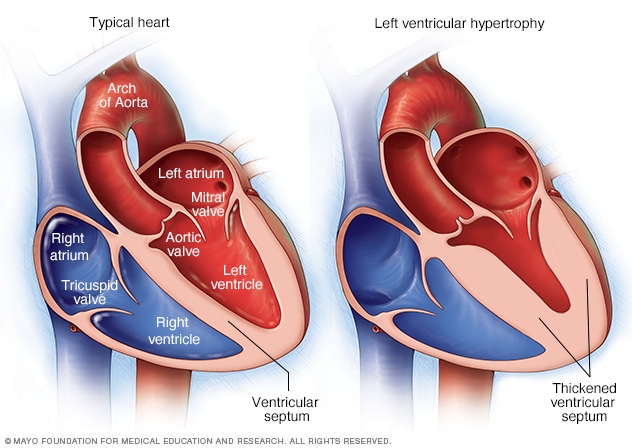
Left ventricular hypertrophy
Left ventricular hypertrophy is a thickening of the wall of the heart's lower left heart chamber, called the left ventricle. The lower left heart chamber is the heart's main pumping chamber. This thickening may increase pressure within the heart. The condition can make it harder for the heart to pump blood. The most common cause is high blood pressure.
Left ventricular hypertrophy is thickening of the walls of the lower left heart chamber. The lower left heart chamber is called the left ventricle. The left ventricle is the heart's main pumping chamber.
During left ventricular hypertrophy, the thickened heart wall can become stiff. Blood pressure in the heart rises. The changes make it harder for the heart to pump blood. In time, the heart may fail to pump with as much force as needed.
High blood pressure that isn't well controlled is the most common cause of left ventricular hypertrophy. Complications include irregular heartbeats, called arrhythmias, and heart failure.
Treatment of left ventricular hypertrophy depends on the cause. Treatment may include medicines or surgery.
Symptoms
Left ventricular hypertrophy usually starts slowly. The condition doesn't cause symptoms by itself. But symptoms may happen as the strain on the heart gets worse. Symptoms may include:
- Shortness of breath, mainly while lying down.
- Swelling of the legs.
- Chest pain, often when exercising.
- Rapid, fluttering or pounding heartbeats, called palpitations.
- Fainting or feeling lightheaded.
When to see a doctor
Seek care right away if:
- You feel chest pain that lasts more than a few minutes.
- You have trouble breathing.
- You are very lightheaded or lose consciousness.
- You have a sudden, bad headache, trouble speaking, or weakness on one side of your body.
If you have mild shortness of breath or other symptoms, such as palpitations, see your healthcare professional.
If you have high blood pressure or another condition that raises the risk of left ventricular hypertrophy, your healthcare team is likely to suggest regular health checkups to check your heart.
Causes
Anything that puts stress on the heart's lower left chamber can cause left ventricular hypertrophy. The lower left chamber is called the left ventricle. As the strain on the lower left chamber gets worse, the muscle tissue in the chamber wall thickens. Sometimes, the heart chamber itself also gets bigger.
Left ventricular hypertrophy also may be caused by gene changes that affect the heart muscle's structure.
Things that can cause the heart to work harder and may possibly lead to left ventricular hypertrophy include:
- High blood pressure. Also called hypertension, this is the most common cause of left ventricular hypertrophy. Long-term high blood pressure strains the left side of the heart, causing it to grow bigger. Treating high blood pressure can help lessen left ventricular hypertrophy symptoms. It may even reverse the condition.
- Narrowing of the aortic valve. The aortic valve is between the lower left heart chamber and the body's main artery, called the aorta. Narrowing of the valve is called aortic stenosis. When the valve is narrowed, the heart must work harder to pump blood into the aorta.
- Intense athletic training. Intense, long-term strength and endurance training causes changes in the heart. The changes help the heart handle the extra workload. But the changes can make the heart muscle grow larger. Sometimes this is called athlete's heart or athletic heart syndrome. It's not clear whether the larger heart size in athletes can lead to stiffening of the heart muscle and disease.
Some conditions passed down through families, called genetic conditions, can make the heart thicker. They include:
- Hypertrophic cardiomyopathy. This condition is caused by changes in genes that cause the heart muscle to thicken. The thickening makes it harder for the heart to pump blood. It can happen even without high blood pressure. People with one parent with hypertrophic cardiomyopathy have a 50% chance of having the changed gene that causes the condition.
- Amyloidosis. In this condition, proteins build up around the organs, including the heart. The collection of proteins affects how the organs work. When the condition is passed down through families, it is called familial amyloidosis. It also may affect the nerves and kidneys.
Risk factors
Things that raise the risk of left ventricular hypertrophy include:
- Age. Left ventricular hypertrophy is more common in older people. So is high blood pressure, which can cause heart muscle thickening.
- Overweight or obesity. Being overweight raises the risk of high blood pressure and left ventricular hypertrophy.
- Family history. Changes in genes passed down through families may lead to left ventricular hypertrophy.
- Diabetes. Having diabetes raises the risk of left ventricular hypertrophy.
- Sex at birth. Women who have high blood pressure are more likely to get left ventricular hypertrophy than are men who have high blood pressure.
Complications
Left ventricular hypertrophy changes the structure of the heart and how the heart works. The thickened left ventricle becomes weak and stiff. This keeps the lower left heart chamber from filling with blood. As a result, blood pressure in the heart goes up.
Complications of left ventricular hypertrophy include:
- Heart failure.
- Irregular heartbeats, called arrhythmias.
- Too little oxygen to the heart, called ischemic heart disease.
- Sudden loss of heart function, breathing and consciousness, called sudden cardiac arrest.
Prevention
Healthy lifestyle changes can keep the heart healthy and may prevent left ventricular hypertrophy. Try these tips:
- Don't smoke.
- Eat healthy foods and use less salt.
- Limit or don't drink alcohol.
- Get regular exercise.
- Stay at a healthy weight.
- Get 7 to 9 hours of sleep daily.
- Manage stress.
High blood pressure that isn't well controlled raises the risk of left ventricular hypertrophy. Get your blood pressure checked at least every two years if you're 18 and older. If you have risk factors for heart disease or are over age 40, you may need your blood pressure checked more often.
Ask your healthcare team what blood pressure reading is right for you. Your team may suggest that you check your blood pressure at home. Home blood pressure monitors are available at local stores and pharmacies.
Sept. 18, 2026