Epidermoid cysts Symptoms and causes
Overview
Epidermoid (ep-ih-DUR-moid) cysts are harmless small bumps beneath the skin. They are most common on the face, neck and trunk.
Epidermoid cysts are slow growing and often painless, so they rarely cause problems or need treatment. You might choose to have a cyst removed if it bothers you, breaks open, or is painful or infected.
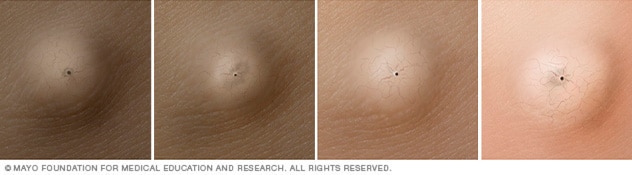
Epidermoid cyst
Illustration of epidermoid cyst on different skin colors. Epidermoid cysts occur most often on the face, neck and trunk.
Symptoms
Epidermoid cyst signs and symptoms include:
- A small, round bump under the skin, often on the face, neck or trunk
- A tiny blackhead plugging the central opening of the cyst
- A thick, smelly, cheesy substance that leaks from the cyst
- An inflamed or infected bump
When to see a doctor
Most epidermoid cysts don't cause problems or need treatment. See your healthcare professional if you have a cyst that:
- Grows or multiplies rapidly.
- Breaks open.
- Is painful or infected.
- Is in a spot that keeps getting scratched or bumped.
- Bothers you because of how it looks.
- Is in an unusual spot, such as a finger or toe.
Causes
The surface of the skin, also called the epidermis, is made up of a thin, protective layer of cells that the body sheds nonstop. Most epidermoid cysts form when these cells move deeper into the skin rather than shed. Sometimes this type of cyst forms due to irritation or injury of the skin or a hair follicle.
Epidermal cells form the walls of the cyst and then secrete the protein keratin into it. Keratin is the thick, cheesy substance that can leak from the cyst.
Risk factors
Anyone can develop an epidermoid cyst, but these factors make it more likely:
- Being past puberty.
- Having a rare, inherited condition called Gardner syndrome.
- Injuring the skin.
From Mayo Clinic to your inbox
Sign up for free and stay up to date on research advancements, health tips, current health topics, and expertise on managing health. Click here for an email preview.
Complications
Potential complications of epidermoid cysts include:
- Inflammation. An epidermoid cyst can become painful and swollen, even if it's not infected. An inflamed cyst is hard to remove. Your doctor is likely to postpone removing a cyst until the inflammation subsides.
- Rupture. A cyst that breaks open can lead to a boil-like infection that needs prompt treatment.
- Skin cancer. In rare cases, epidermoid cysts can lead to skin cancer.
CON-20305522
Mayo Clinic does not endorse companies or products. Advertising revenue supports our not-for-profit mission.
Advertising & Sponsorship
Mayo Clinic Press
Check out these best-sellers and special offers on books and newsletters from Mayo Clinic Press.
