What causes white stool? Should I be concerned?
White stool isn't typical. If you have white stool, you should see a medical professional right away. A lack of bile causes white or clay-like stool. That may mean a serious underlying problem.
Bile is a digestive fluid produced by the liver and stored in the gallbladder. Stool gets its typical brownish color from bile, which flows into the small intestine during the digestive process. If the liver doesn't produce bile or if bile gets stuck in the liver, stool will be light colored or white.
Often the problem occurs in the tube that delivers the bile to the small intestine. This tube is the bile duct. A tumor, a gallstone or something else can squeeze or block the bile duct. When this happens, the bile can't enter the small intestine. As a result, your stool may be white. You also may have belly pain, fever, nausea, itching and yellowing of the skin and eyes, known as jaundice. Some babies are born with narrowed bile ducts. This is a condition known as biliary atresia.
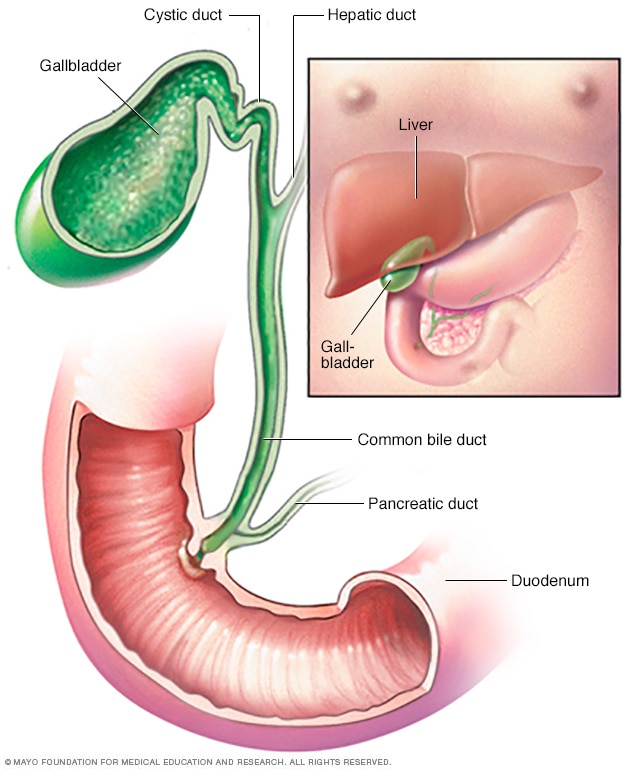
Gallbladder and bile duct
The gallbladder holds a yellow-green fluid called bile. Bile is made in the liver and flows into the gallbladder. It stays in the gallbladder until it's needed to help digest food. While eating, the gallbladder releases bile into the bile duct. The duct carries the bile to the upper part of the small intestine, called the duodenum, to help break down fat in food.
Liver diseases, such as hepatitis and cirrhosis, sometimes can cause white stool. Barium, a white substance used for X-rays of the digestive tract, also can cause white stool. So can certain medicines that contain aluminum hydroxide, including antacids.
From Mayo Clinic to your inbox
Sign up for free and stay up to date on research advancements, health tips, current health topics, and expertise on managing health. Click here for an email preview.
FAQ-20058216
Mayo Clinic does not endorse companies or products. Advertising revenue supports our not-for-profit mission.
Advertising & Sponsorship
Mayo Clinic Press
Check out these best-sellers and special offers on books and newsletters from Mayo Clinic Press.
