Overview
A heart transplant is an operation in which a heart from a donor replaces a failing heart. This treatment most often is reserved for people whose condition hasn't improved enough with medicines or other surgeries.
A heart transplant is a major operation. But your chance of survival is good with proper follow-up care.
Products & Services
Why it's done
Surgeons do heart transplants to treat heart failure when other treatments for heart conditions haven't worked. In adults, heart failure can be caused by:
In children, heart failure is most often caused by either a congenital heart condition or cardiomyopathy.
Another organ transplant may be done at the same time as a heart transplant. Multiorgan transplants are done at select medical centers for people with certain conditions.
Multiorgan transplants include:
- Heart-kidney transplant. This procedure may be for some people who have both kidney failure and heart failure.
- Heart-liver transplant. This procedure may be for people with certain liver and heart conditions.
- Heart-lung transplant. Rarely, healthcare professionals may suggest this procedure for some people with serious lung and heart diseases when a heart transplant or lung transplant alone will not work.
A heart transplant is not right for everyone. A heart transplant may not be an option for you if you:
- Are at an age that would affect your recovery from transplant surgery.
- Have another medical condition, such as a serious kidney, liver or lung disease, that could shorten your life, even with a donor heart.
- Have an active infection.
- Have a recent history of cancer.
- Cannot make lifestyle changes needed to keep your donor heart healthy. These include not using recreational drugs, not smoking and limiting alcohol use.
Ventricular assist devices
For people who cannot have a heart transplant, another option may be a ventricular assist device (VAD). This is a mechanical pump that a surgeon puts in your chest. It helps pump blood from the lower chambers of your heart, called ventricles, to the rest of your body.
VADs are often used as temporary treatments for people waiting for heart transplants. These devices also are becoming more common as a long-term treatment for people who have heart failure but cannot get a heart transplant. If a VAD doesn't help your heart, healthcare professionals may talk with you about a total artificial heart. This device takes the place of your heart's ventricles and can serve as a short-term treatment while you're waiting for a heart transplant.
Left ventricular assist device (LVAD)
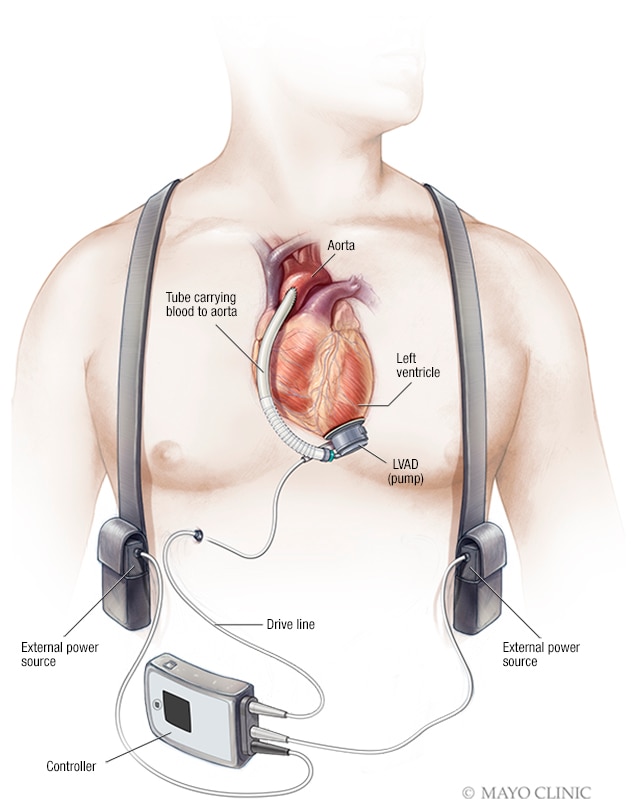
Left ventricular assist device (LVAD)
A left ventricular assist device (LVAD) is put into your chest. It helps pump blood from the left ventricle of your heart to the rest of your body. You wear a control unit and a battery pack outside your body. They connect to the LVAD through a port in your skin.
Risks
Open-heart surgery comes with risks. Risks include bleeding, infection and blood clots. A heart transplant has its own risks, including:
- Rejection of the donor heart. One of the main risks after a heart transplant is having your body reject the donor heart.
Your immune system may see your donor heart as something that doesn't belong. After a heart transplant you take medicines called immunosuppressants to prevent rejection. These medicines have helped lower the rate of organ rejection. If your body starts to reject the heart, a change in medicines sometimes stops it.
To help prevent rejection, always take your medicines as prescribed. Keep all your appointments with your healthcare team.
Rejection often happens without symptoms. To check if your body is rejecting the new heart, your care team takes samples of your heart tissue. The procedure is called a biopsy. This happens often during the first year after your transplant. After that, you won't need biopsies as often.
- Primary graft failure. With this condition, the donor heart doesn't work well. This is the most frequent cause of death in the first few months after transplant.
- Thickening or hardening of the arteries. After your transplant, the walls of the arteries in your heart could thicken and harden. This condition is known as cardiac allograft vasculopathy. It can make it harder for blood to flow through your heart. And it can cause a heart attack, heart failure, heart arrhythmia or sudden cardiac arrest.
- Medicine side effects. The immunosuppressants you need to take for life to prevent organ rejection can cause kidney damage and other issues.
- Cancer. Immunosuppressants also can raise your risk of getting cancer. You may be at greater risk of skin cancer and non-Hodgkin lymphoma, among others.
- Infection. Immunosuppressants make it harder for your body to fight infections. Many people who have heart transplants have an infection within the first year that involves another hospital stay.
How you prepare
Preparations for a heart transplant often begin weeks or months before you receive a donor heart.
Taking the first steps
If your healthcare team advises a heart transplant, you'll likely be referred to a heart transplant center for evaluation. Or you can select a transplant center on your own. Check your health insurance to see which transplant centers are covered under your plan.
When choosing a heart transplant center, look at how many heart transplants a center does each year and the survival rates. You can compare transplant center statistics using a database kept by the Scientific Registry of Transplant Recipients.
Also check to see if a transplant center offers other services you might need. These include support groups, travel arrangements, local housing during your recovery or referrals to places that can help with these concerns.
Once you decide on a center, the next step is an evaluation to see if you're eligible for a transplant. The evaluation will check to see if you:
- Have a heart condition that a transplant might help.
- Might be helped by other treatments that are less invasive.
- Are medically able to have surgery and post-transplant treatments.
- Are willing to quit smoking, if you smoke, and not use alcohol and recreational drugs.
- Can follow the care plan outlined by the transplant team.
- Are prepared to handle the wait for a donor heart.
- Have people who can support you during this stressful time.
Waiting for a donor organ
If the transplant center medical team finds that a heart transplant is an option for you, the center puts you on a waiting list. The wait can be long since there are more people who need hearts than there are donors. Finding a donor depends on your body size, your blood type and how serious your condition is.
While you're on the waiting list, your medical team monitors your heart and other organs. The team adjusts your treatment if needed. The team also helps you learn to care for your heart by eating well and being active.
If medical treatment isn't enough to support your vital organs as you wait for a donor heart, your care team might suggest that you get a ventricular assist device put in. This device helps support your heart while you wait for a donor organ. These devices are sometimes called bridges to transplantation because they give people more time to wait for a donor heart.
Right before your transplant surgery
A heart transplant most often needs to take place within four hours of organ removal for the donor organ to be usable. As a result, hearts are offered first to transplant centers near the donor hospital. Then they're offered to other centers within a certain distance.
The transplant center can give you a pager or cellphone to tell you when a potential heart becomes available. It is important to keep your cellphone or pager charged and turned on at all times.
Once you're told that a donor heart may be available, you and your transplant team need to move quickly to accept the donation. You need to go to the transplant hospital right away.
As much as possible, plan your travel ahead of time. Some heart transplant centers offer private air transportation or other travel arrangements. Have a suitcase packed with everything you need for your hospital stay. Pack an extra 24-hour supply of your medicines.
Once you arrive at the hospital, your healthcare team does a final evaluation to be sure the donor heart is suitable for you and you're ready for surgery. If your care team decides that either the donor heart or the surgery isn't right for you, you might not be able to have the transplant.
 Transporting donor organs for transplant
Mayo Clinic healthcare professionals can receive donor organs from other locations and transport them to prepare them for transplantation.
What you can expect
During the procedure
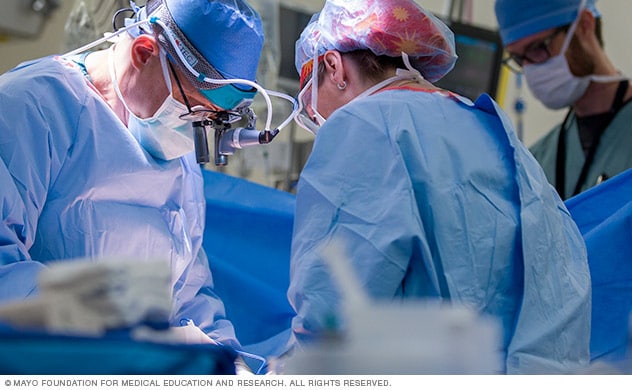 Heart transplant surgery
Mayo Clinic cardiac surgeons work with a team to perform heart transplant surgery.
Heart transplant surgery is an open-heart procedure that often takes 4 to 8 hours. Transplant surgery is more complex and may take longer than other heart surgeries.
Before the procedure, you'll receive a medicine that causes you to enter a sleeplike state. This is called general anesthesia. A heart-lung bypass machine keeps oxygen-rich blood flowing throughout your body during the operation.
Your surgeon makes a cut, called an incision, in your chest. Your surgeon then separates your chest bone and opens your rib cage to reach your heart.
Your surgeon removes the diseased heart and sews the donor heart into place. Your surgeon then joins the major blood vessels to the donor heart. The new heart often starts beating when blood flow is restored. The donor heart may need an electric shock to make the donor heart beat properly.
You get medicine to help manage pain after the surgery. A ventilator helps you breathe, and tubes in your chest drain fluids from around your lungs and heart. After surgery, you get fluids and medicine through a vein.
After the procedure
You stay in the intensive care unit (ICU) for a few days after your transplant. After that, you are moved to a regular hospital room. You're likely to stay in the hospital for a week or two. The amount of time spent in the ICU and in the hospital varies from person to person.
After you leave the hospital, your transplant team watches you closely. You need frequent checkups at first. Many people stay near the transplant center for the first three months. Afterward, the follow-up visits become less frequent, so you may be able to go home between visits.
Your care team watches for any signs or symptoms of rejection of your new heart. These can include shortness of breath, fever, tiredness, not urinating as much or weight gain. It's important to let your transplant team know if you notice any signs or symptoms of rejection or infection.
After a heart transplant, you have regular heart biopsies to see whether your body is rejecting the new heart. These happen often during the first few months after transplant, when rejection is most likely. As time goes on, you need fewer biopsies.
During a heart biopsy, a healthcare professional puts a tube into a vein in your neck or groin and guides it to your heart. The healthcare professional then guides a biopsy device through the tube to remove a tiny sample of heart tissue, which goes to a lab for study.
You need to make several long-term changes after you have had your heart transplant. These include:
- Taking immunosuppressants. These medicines lower the activity of your immune system to prevent it from attacking your donated heart. You take some of these antirejection medicines for the rest of your life.
Because taking immunosuppressants makes you more likely to get infections, your care team also might prescribe antibacterial, antiviral and antifungal medicines. Some medicines can make certain conditions worse or raise your risk of getting them. Conditions include high blood pressure, high cholesterol, cancer and diabetes.
Over time, as the risk of rejection gets lower, the doses and number of antirejection medicines can be reduced.
- Managing medicines and a lifelong care plan. After a heart transplant, it's important to take your medicines as instructed and follow a lifelong care plan.
A daily routine for taking your medicines may be helpful. Keep a list of all your medicines with you at all times for medical appointments and in case you need emergency care. Check with your healthcare professional before you use any medicines. These include those you can buy without a prescription, as well as vitamins, supplements or herbal products.
Your healthcare professional might give you advice about your lifestyle. Suggestions may include wearing sunscreen, exercising, eating a healthy diet and being careful to lower your risk of infection. Your healthcare team also may suggest that you don't use tobacco products or recreational drugs and limit alcohol use.
Follow your healthcare team's instructions. Keep all follow-up appointments. Let your healthcare professional know if you have signs or symptoms of complications.
- Cardiac rehabilitation. This program includes exercise and education to help you improve your health and recover after a heart transplant. Cardiac rehabilitation can help you regain your strength and improve your quality of life. You may start it before you leave the hospital.
Results
Most people who get a heart transplant enjoy a good quality of life. Depending on your condition, you may be able to resume many of your daily activities, such as work, hobbies, sports and exercise. Talk with your healthcare professional about what activities you can do.
Some people who have had heart transplants can become pregnant. If you're thinking about becoming pregnant after your transplant, talk with your healthcare professional. You likely need to adjust your medicines before becoming pregnant. Some medicines can cause pregnancy complications.
Survival rates after heart transplantation vary based on several factors. These rates keep improving despite an increase in heart transplant recipients who have a higher risk of complications. In the United States, the overall survival rate for adults is about 91% after one year and about 80% after five years.
Heart transplant procedure
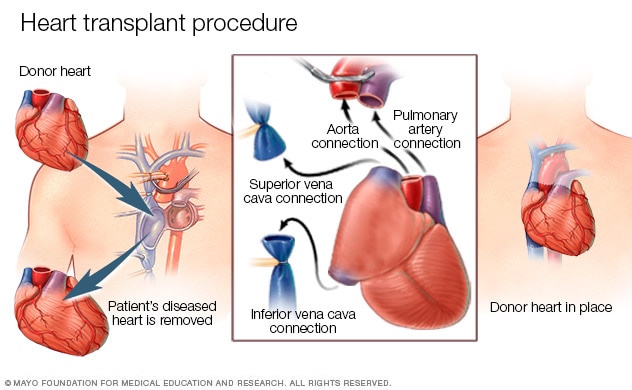
Heart transplant procedure
In a heart transplant procedure, a surgeon removes the diseased heart and sews the donor heart in place. The surgeon then attaches the major blood vessels to the donor heart.
What if your new heart fails?
Heart transplants aren't successful for everyone. Your new heart can fail for several reasons. If this happens, your healthcare professional might suggest adjusting your medicines. Sometimes, your care team may advise another heart transplant.
If there aren't many treatment options left, you might choose to stop treatment. Talk with your heart transplant team, healthcare professional and family about what you expect and prefer for treatment, emergency care and end-of-life care.
Clinical trials
Explore Mayo Clinic studies of tests and procedures to help prevent, detect, treat or manage conditions.
Coping and support
You may feel anxious or overwhelmed while waiting for a transplant. You may have fears about rejection, returning to work or other issues after the transplant. Seeking the support of friends and family members can help you cope during this stressful time.
- Join a support group for transplant recipients. Talking with others who share your experience can ease concerns and fears.
- Talk to your care team about what to expect from a heart transplant. Recognize that life after transplant might not be the same as life before transplant. Knowing what to expect about results and recovery time can help lower stress.
- Learn about your transplant. Learn as much as you can about your procedure and ask questions about things you don't understand. Learning about the procedure can help you know what to expect.
Diet and nutrition
After your heart transplant, you may need to adjust your diet to keep your heart healthy and working well. Reaching and staying at a healthy weight through diet and exercise can help you lower your risk of complications such as high blood pressure, heart disease and diabetes.
A nutrition specialist called a dietitian can discuss your dietary needs and answer your questions. You'll have many healthy food options and ideas to use in your eating plan. Your dietitian's suggestions may include:
- Eating a healthy, balanced diet with plenty of plant-based foods.
- Eating lean meats, such as fish or poultry.
- Choosing foods that are low to moderate in sodium, fat and added sugar.
- Choosing foods high in fiber, such as fruits, vegetables and whole grains.
- Choosing heart-healthy fats, such as avocados, salmon and nuts.
Your dietitian also may suggest that you:
- Drink low-fat or fat-free milk or eat other low-fat or fat-free dairy products to give you enough calcium.
- Not eat fruits that can affect the medicines you take after your transplant. Examples include grapefruit, Seville oranges and pomegranates.
- Reach and stay at a healthy weight.
- Follow food safety guidelines to lower the risk of infection.
- Not drink or limit alcohol.
- Stay hydrated by drinking enough water and other fluids each day.
Exercise
After your transplant, your healthcare professional may suggest that you make exercise and activity a regular part of your life. Physical activity can improve your overall physical and mental health.
Exercising regularly can help you manage your blood pressure, lower stress, keep a healthy weight, strengthen your bones and help keep you moving.
Your treatment team designs an exercise program that fits your needs and goals. Cardiac rehabilitation helps improve your health and recover after a heart transplant.
Your exercise program may include warmup exercises such as stretching or slow walking. Your treatment team may suggest walking, bicycling, strength training and other forms of exercise. Your team also may suggest that you cool down after you exercise, perhaps by walking slowly. Talk with your treatment team about what options are best for you.
Take a break from exercising if you feel tired. If you feel symptoms such as shortness of breath, nausea, irregular heart rate or dizziness, stop exercising. If your symptoms don't go away, contact your healthcare professional right away.
Sept. 02, 2026