Overview
The liver
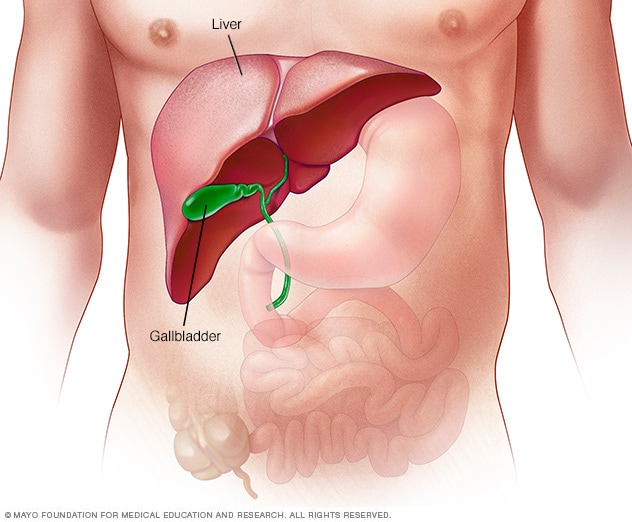
The liver
The largest organ inside the body, the liver is located mainly in the upper right portion of the abdomen, beneath the diaphragm and above the stomach.
The liver is an organ that sits just under the rib cage on the right side of the abdomen. It can weigh up to 4 pounds (1.8 kilograms). The liver is needed to help digest food, rid the body of waste products and make substances, called clotting factors, that keep the blood flowing well, among other tasks.
Liver disease can be passed through families, called inherited. Anything that damages the liver also can cause liver problems, including viruses, alcohol use and obesity.
Over time, conditions that damage the liver can lead to scarring, called cirrhosis. Cirrhosis can lead to liver failure, a life-threatening condition. But early treatment may give the liver time to heal.
Products & Services
Symptoms
Liver problems
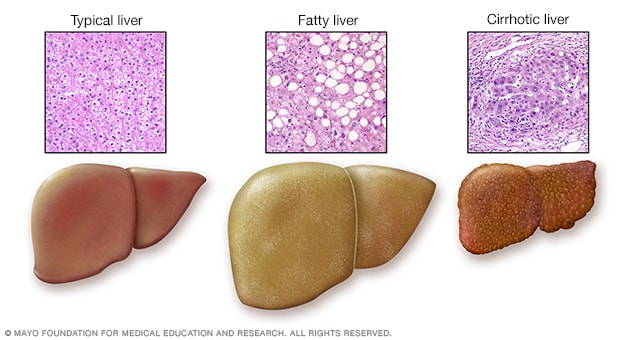
Liver problems
Liver problems that can occur include fatty liver disease and cirrhosis. The liver and its cells, as seen through a microscope, change greatly when a liver becomes fatty or cirrhotic.
Liver disease doesn't always cause symptoms that can be seen or felt. If there are symptoms of liver disease, they may include:
- Yellowing of the skin and the whites of the eyes, called jaundice. Yellowing of the skin might be harder to see on Black or brown skin.
- Belly pain and swelling.
- Swelling in the legs and ankles.
- Itchy skin.
- Dark urine.
- Pale stool.
- Constant tiredness.
- Nausea or vomiting.
- Loss of appetite.
- Bruising easily.
When to see a doctor
Make an appointment with your healthcare professional if you have any lasting symptoms that worry you. Seek medical help right away if you have belly pain that is so bad that you can't stay still.
Causes
Liver disease has many causes.
Infection
Parasites and viruses can infect the liver, causing swelling and irritation, called inflammation. Inflammation keeps the liver from working as it should. The viruses that cause liver damage can be spread through blood or semen, bad food or water, or close contact with a person who is infected.
The most common types of liver infection are hepatitis viruses, including:
- Hepatitis A.
- Hepatitis B.
- Hepatitis C.
Immune system condition
Diseases in which the immune system attacks certain parts of the body are called autoimmune diseases. Autoimmune liver diseases include:
- Autoimmune hepatitis.
- Primary biliary cholangitis.
- Primary sclerosing cholangitis.
Genetics
A changed gene from one or both parents can cause substances to build up in the liver. This can cause liver damage. Genetic liver diseases include:
- Hemochromatosis.
- Wilson's disease.
- Alpha-1 antitrypsin deficiency.
Cancer and other growths
Examples include:
- Liver cancer.
- Bile duct cancer.
- Liver adenoma.
Other
Other common causes of liver disease include:
- Long-term alcohol use.
- Fat that builds up in the liver, called metabolic dysfunction-associated steatotic liver disease, formerly nonalcoholic fatty liver disease.
- Certain prescription or other medicines.
- Certain herbal mixes.
- Being in contact often with toxic chemicals.
Risk factors
Factors that can increase the risk of liver disease include:
- Ongoing moderate or heavy alcohol use.
- Obesity.
- Type 2 diabetes.
- Tattoos or body piercings.
- Shared needles to inject drugs.
- Blood transfusion before 1992.
- Contact with other people's blood and body fluids.
- Sex without protection.
- Contact with chemicals or toxins.
- Family history of liver disease.
Complications
Complications of liver disease depend on the cause of the liver problems. Without treatment, liver disease may progress to liver failure. Liver failure can be fatal.
Prevention
To prevent liver disease:
- If you choose to drink alcohol, do so in moderation. For healthy adults, that means up to one drink a day for women and up to two drinks a day for men.
- Avoid risky behavior. Use a condom during sex. If you get tattoos or body piercings, pick a shop that's clean and safe. Seek help if you shoot illicit drugs. Don't share needles to shoot drugs.
- Get vaccinated. If you're at increased risk of getting hepatitis, talk with your healthcare professional about getting the hepatitis A and hepatitis B vaccines. This also is true if you've been infected with any form of the hepatitis virus.
- Be careful when taking medicines. Take prescription and other medicines only when needed. Take only as much as directed. Don't mix medicines and alcohol. Talk with your healthcare provider before mixing herbal supplements or prescription or other medicines.
- Stay away from other people's blood and body fluids. Hepatitis viruses can be spread by accidental needle sticks or poor cleanup of blood or body fluids.
- Keep your food safe. Wash your hands well before eating or making foods. If traveling in a resource-poor country, use bottled water to drink, wash your hands and brush your teeth.
- Take care with aerosol sprays. Make sure to use these products in an open area. Wear a mask when spraying insecticides, fungicides, paint and other toxic chemicals. Always follow the maker's instructions.
- Protect your skin. When using insecticides and other toxic chemicals, wear gloves, long sleeves, a hat and a mask so that chemicals don't get on your skin.
- Maintain a healthy weight. Obesity can cause nonalcoholic fatty liver disease, now called metabolic-associated steatotic liver disease.
Aug. 06, 2025