Overview
Breast anatomy
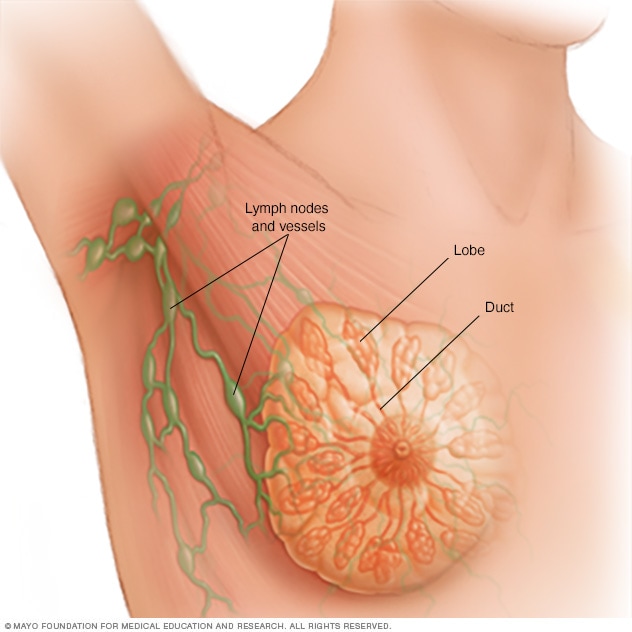
Breast anatomy
Each breast contains 15 to 20 lobes of glandular tissue, arranged like the petals of a daisy. The lobes are further divided into smaller lobules that produce milk for breastfeeding. Small tubes, called ducts, conduct the milk to a reservoir that lies just beneath the nipple.
Breast cancer is a growth of cells that starts in the breast tissue. Breast cancer most often starts in the tubes, called ducts, that can carry breast milk to the nipple. It also can start in the milk-producing glands, which are called lobules.
After skin cancer, breast cancer is the most common cancer diagnosed in women in the United States. But breast cancer doesn't just happen in women. Everyone has breast tissue, so anyone can get breast cancer, including men.
Breast cancer survival rates have been increasing. And the number of people dying of breast cancer is steadily going down.
Advances in breast cancer screening are helping healthcare professionals find breast cancer when it's small and more likely to be treated successfully. Even when breast cancer can't be cured, many treatments exist to slow its growth and help you live longer. New discoveries in breast cancer research are helping healthcare professionals choose the most effective treatment plans.
Breast cancer also may be called a malignant tumor of the breast. Malignant means cancerous and tumor means a growth of cells. Not all tumors in the breast are cancers. Noncancerous breast tumors, also called benign breast tumors, include fibroadenomas and others. The difference between benign and malignant tumors is that malignant tumors can invade and destroy healthy body tissue. Benign tumors don't do this.
Products & Services
Types
There are many types of breast cancer, and the same breast cancer may be described in several ways. The type of cancer you have may be named for the cells where the cancer started. It also may be named for the features found in the cancer cells, whether it has spread or other factors.
Types based on the cells where cancer starts
Cancers that can happen in the breast can be divided into types based on the cells where the cancer starts.
- Ductal carcinoma starts in cells in a breast duct. A breast duct is a small tube that can carry breast milk to the nipple. This type of breast cancer includes ductal carcinoma in situ (DCIS), which is a noninvasive form of breast cancer, and invasive ductal carcinoma.
- Lobular carcinoma starts in cells in a breast lobule. A breast lobule is a gland that can make breast milk. This type is called invasive lobular carcinoma.
- Lymphoma starts in the lymphatic system. The lymphatic system is made up of organs, glands, tubelike vessels and clusters of cells called lymph nodes. It's part of the body's germ-fighting immune system. The most common type that affects the breast is diffuse large B-cell lymphoma.
- Soft tissue sarcoma starts in soft tissue cells. The soft tissues connect, support and surround other body structures. Soft tissues include muscle, fat, blood vessels and nerves. The most common type of sarcoma that affects the breast is angiosarcoma.
Types based on features of the cancer cells
Ductal and lobular breast cancers are often broken down into subtypes based on the features of the cells. These subtypes are based on whether the cells have hormone receptors or make too much of a protein called HER2. A cancer is called positive when testing finds these features and negative when testing does not find them.
- Hormone receptor (HR) positive breast cancer has receptors for the hormones estrogen, progesterone or both. This type, which includes estrogen receptor positive breast cancer, is often treated with estrogen blocker therapy.
- HER2 positive breast cancer has high levels of the HER2 protein or extra copies of the HER2 gene. HER2 positive breast cancer is often treated with targeted therapy medicines.
- Triple-negative breast cancer doesn't have either kind of hormone receptor and does not make high levels of HER2. Triple-negative breast cancer may be treated with chemotherapy and immunotherapy.
- Triple-positive breast cancer has both kinds of hormone receptors and has high levels of HER2. Triple-positive breast cancer may be treated with estrogen blocker therapy and medicines that target HER2.
Other types
Other types of breast cancer may depend on who the cancer affects. Types also may depend on whether the cancer affects the breast skin or nipple and whether it spreads or comes back after treatment.
- Inflammatory breast cancer is a form of breast cancer that affects the breast skin. Inflammatory breast cancer causes skin changes that look like a rash.
- Male breast cancer happens in the breast tissue in men. Male breast cancer is rare.
- Metastatic breast cancer is cancer that has spread to other parts of the body. Metastatic breast cancer most often spreads to the brain, bones, liver and lungs.
- Paget's disease of the breast is a form of breast cancer that affects the nipple. Paget's disease of the breast is rare.
- Recurrent breast cancer is cancer that comes back after treatment. Recurrent breast cancer can come back in the breast area or in other parts of the body.
Products & Services
Symptoms
Nipple changes
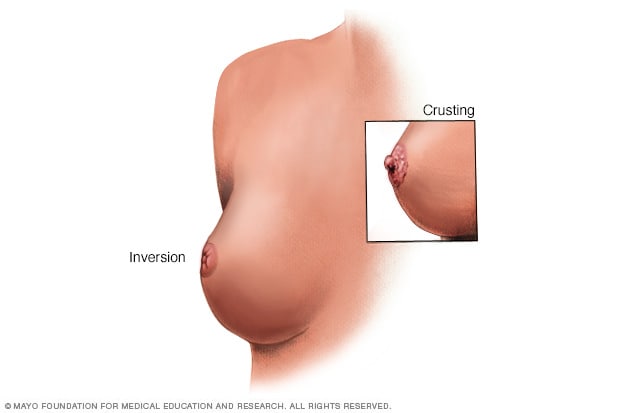
Nipple changes
Breast and nipple changes can be a sign of breast cancer. Make an appointment with a healthcare professional if you notice any changes.
Breast cancer symptoms can include a breast lump, nipple changes, and changes in the skin or shape of the breast. Breast cancer may not cause symptoms at first. Symptoms can vary based on whether the cancer is at an early or advanced stage. Symptoms also may differ in men and in people with inflammatory breast cancer.
General breast cancer symptoms
Signs and symptoms of breast cancer may include:
- A breast lump or thickened area of skin that feels different from the surrounding tissue.
- A nipple that looks flattened or turns inward.
- Changes in the color of the breast skin. In people with white skin, the breast may look pink or red. In people with brown and black skin, the breast may look darker than other areas on the chest or it may look red, purple or brown.
- Change in the size, shape or appearance of a breast.
- Changes to the skin over the breast, such as dimpling or skin that looks like an orange peel.
- Peeling, scaling, crusting or flaking of the skin on the breast.
Breast cancer lumps may have certain features. But how a lump feels can't tell you for sure whether it's cancer. In general, breast lumps caused by breast cancer usually feel firm and have an irregular shape. Lumps that aren't cancer may be less firm. They often feel round. A breast cancer lump may not move when you press on it. A lump that isn't cancer may move. Breast cancer lumps typically don't cause breast pain.
Early breast cancer symptoms
Breast cancer may not cause symptoms at first. It often is found when a screening mammogram shows something concerning. When breast cancer does cause symptoms, a breast lump is one of the most common signs.
Advanced breast cancer symptoms
When breast cancer spreads, it's called metastatic breast cancer. Symptoms can include:
- Bone pain.
- Feeling very tired.
- Shortness of breath.
- Swollen lymph nodes.
- Weight loss without trying.
Breast cancer symptoms in men
Male breast cancer symptoms include:
- A lump or thickening of the skin on the chest, most often near the nipple.
- Changes to the skin covering the chest, such as dimpling, puckering, scaling or changes in the color of the skin.
- Changes to the nipple, such as changes in the skin color or scaling, or a nipple that begins to turn inward.
- Discharge or bleeding from the nipple.
- Swollen lymph nodes in the armpit.
Inflammatory breast cancer symptoms
Inflammatory breast cancer sometimes looks like a breast rash. Symptoms may include:
- A change in the appearance of one breast that develops over several weeks.
- Thickness, heaviness or swelling of one breast.
- Changes in skin color, such as a red, purple, pink or bruised appearance.
- Unusual warmth of the affected breast.
- Dimpling or ridges on the skin of the affected breast, similar to an orange peel.
When to see a doctor
If you find a lump or other change in your breast, make an appointment with a doctor or other healthcare professional. Don't wait for your next mammogram. Report any changes in your breasts even if a recent mammogram showed there was no breast cancer.
Causes
The exact cause of most breast cancers isn't known. Researchers have found things that increase the risk of breast cancer. These include hormones, lifestyle choices and things in the environment. But it's not clear why some people who don't have any risk factors get cancer, yet others with risk factors never do. It's likely that breast cancer happens through a complex interaction of your genetic makeup and your environment.
Breast cancer starts when something changes the DNA inside cells in the breast tissue. A cell's DNA holds the instructions that tell a cell what to do. In healthy cells, the DNA gives instructions to multiply at a set rate. The instructions also tell the cells to die off at a set time. In cancer cells, the changes to the DNA alter the instructions for multiplying and dying. The result is that the cancer cells multiply faster than healthy cells. And they can keep living when healthy cells would die. This causes too many cells in the area.
The cancer cells might form a growth, called a tumor. The tumor can grow to invade and destroy healthy body tissue. In time, cancer cells can break away and spread to other parts of the body. When cancer spreads, it's called metastatic cancer. Breast cancer most often spreads to the bones, brain, liver and lungs.
Risk factors
The main risk factors for breast cancer are getting older and being female. Other risk factors may be related to your personal medical history, your reproductive history and exposure to hormones.
Risk factors related to your personal medical history and your family's medical history include:
- A family history of breast cancer. If a parent, sibling or child had breast cancer, your risk is increased. The risk is higher if your family has a history of getting breast cancer at a young age. The risk also is higher if you have multiple family members with breast cancer. Still, most people diagnosed with breast cancer don't have a family history of the disease.
- A personal history of breast cancer. If you've had cancer in one breast, you have an increased risk of getting cancer in the other breast.
- A personal history of breast conditions. Certain breast conditions are markers for a higher risk of breast cancer. These conditions include lobular carcinoma in situ (LCIS) and atypical hyperplasia of the breast. If you've had a breast biopsy that found one of these conditions, you have an increased risk of breast cancer.
- Increasing age. The risk of breast cancer goes up as you get older.
- Inherited DNA changes that increase cancer risk. Certain DNA changes that increase the risk of breast cancer can be passed from parents to children. The most well-known changes are called BRCA1 and BRCA2. These DNA changes can greatly increase your risk of breast cancer and other cancers, but not everyone with these DNA changes gets cancer.
- Radiation exposure. Radiation treatments to the chest as a child or young adult raise the risk of breast cancer.
Risk factors related to reproductive history and hormone exposure include:
- Beginning your period at a younger age. Beginning your period before age 12 increases the risk of breast cancer.
- Beginning menopause at an older age. Beginning menopause after age 55 increases the risk of breast cancer.
- Being female. Women are much more likely than men are to get breast cancer. But anyone can get breast cancer, including men.
- Having your first child at an older age. Giving birth to your first child after age 35 may increase the risk of breast cancer.
- Having never been pregnant. Having been pregnant one or more times lowers the risk of breast cancer. Never having been pregnant increases the risk.
- Menopausal hormone therapy. Taking certain hormone therapy medicines to manage the symptoms of menopause may increase the risk of breast cancer. The risk is linked to hormone therapy medicines that combine estrogen and progesterone.
Other risk factors include:
- Dense breast tissue. Breast tissue is made up of fatty tissue and dense tissue. Fatty tissue is made of fat. Dense tissue is made of milk glands, milk ducts and fibrous tissue. If you have dense breasts, you have more dense tissue than fatty tissue in your breasts. Having dense breasts increases the risk of developing breast cancer and makes it harder to detect cancer on a mammogram. Talk with your healthcare team about other tests you might have in addition to mammograms to look for breast cancer.
- Alcohol use. Drinking alcohol increases the risk of breast cancer. There is no safe amount of alcohol when it comes to breast cancer. The more alcohol you drink, the greater your risk.
- Obesity. Obesity increases the risk of breast cancer.
Prevention
There's no sure way to prevent breast cancer. But some choices may help reduce your risk. These include maintaining a healthy weight, exercising and limiting alcohol. Breastfeeding, if possible, also may help reduce risk. Limiting menopausal hormone therapy may help as well. People at high risk also may consider preventive medicines or risk-reducing surgery.
Screening tests and breast self-exams don't prevent breast cancer. But they can help find breast cancer early, when treatment is more likely to be successful.
Consider breastfeeding
Breastfeeding may lower the risk of breast cancer. If you want to and are able, consider breastfeeding if you have a baby. The longer you breastfeed, the greater the protective effect.
Limit menopausal hormone therapy
Hormone therapy that uses a combination of estrogen and progesterone may increase the risk of breast cancer. Talk with a healthcare professional about the benefits and risks of hormone therapy.
Make healthy choices in your everyday life
Certain habits that are good for your overall health also may help lower your risk of breast cancer.
- Drink alcohol in moderation, if at all. If you choose to drink alcohol, limit how often you drink and keep the amount small. For overall health, drink one or fewer drinks a day. Do not drink every day. The less you drink, the better. For breast cancer prevention, there is no safe amount of alcohol. So if you're concerned about your breast cancer risk, you may choose to not drink alcohol.
- Exercise most days of the week. Aim for at least 30 minutes of exercise on most days of the week. If you haven't been active lately, ask a healthcare professional whether exercise is safe for you. Start slowly and add more exercise over time.
- Maintain a healthy weight. If your weight is healthy, work to maintain that weight. If you need to lose weight, ask a healthcare professional about healthy ways to lower your weight. In general, try to eat fewer calories every day and slowly increase how much you exercise.
Talk with a healthcare professional about your cancer risk
If you have a family history of breast cancer or think that you may have an increased risk of breast cancer, talk about it with your healthcare professional. You may consider meeting with a genetic counselor or other professional trained in genetics to learn more about your risk. You also may consider genetic testing.
If your risk is high, you may have options to help lower your risk or help find the cancer early. These options may include:
Take steps to find breast cancer early
Breast self-exam
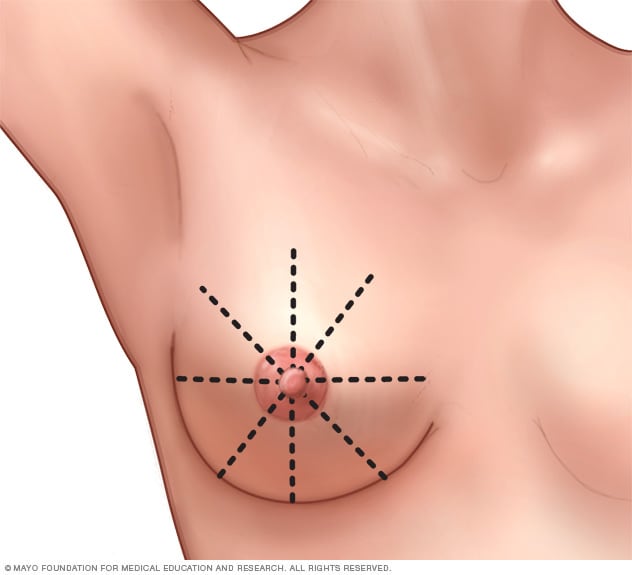
Breast self-exam
To perform a breast self-exam for breast awareness, follow a pattern that ensures you cover your entire breast. For instance, imagine that your breasts are divided into equal wedges, like pieces of a pie. Move your fingers along each piece in toward your nipple.
Breast cancer can't always be prevented, but you can take steps to help find it early.
- Ask about breast cancer screening. Talk with a healthcare professional about when to begin breast cancer screening. Ask about the benefits and risks of screening. Together, you can decide what breast cancer screening tests are right for you. Most healthcare professionals recommend beginning screening in your 40s and having screening every year or two.
- Become familiar with your breasts. Do occasional breast self-exams so that you know what your breasts typically feel like. If there is a new change, a lump or something not typical in your breasts, report it to a healthcare professional right away. Self-exams may help you to better understand the look and feel of your breasts. This might make it more likely that you'll notice if something changes.
More Information
Sept. 01, 2026
- Breast cancer facts and figures. American Cancer Society. https://www.cancer.org/research/cancer-facts-statistics/breast-cancer-facts-figures.html. Accessed Aug. 14, 2026.
- Klimberg VS, et al., eds. Bland and Copeland's The Breast: Comprehensive Management of Benign and Malignant Diseases. 6th ed. Elsevier; 2024. https://www.clinicalkey.com. Accessed Aug. 14, 2026.
- Dabbs DJ. Breast Pathology. 3rd ed. Elsevier; 2024. https://www.clinicalkey.com. Accessed Aug. 18, 2026.
- Cancer stat facts: Female breast cancer. National Cancer Institute. https://seer.cancer.gov/statfacts/html/breast.html. Accessed Aug. 14, 2026.
- Breast cancer. RadiologyInfo.org. https://www.radiologyinfo.org/en/info/breast-cancer. Accessed Aug. 14, 2026.
- Aster JC, et al., eds. Neoplasia. In: Robbins, Cotran & Kumar Pathologic Basis of Disease. 11th ed. Elsevier; 2026. https://www.clinicalkey.com. Accessed Aug. 14, 2026.
- Bleiweiss IJ. Pathology of breast cancer. https://www.uptodate.com/contents/search. Accessed Aug. 18, 2026.
- DeVita VT Jr, et al., eds. Breast cancer. In: DeVita, Hellman, and Rosenberg's Cancer: Principles and Practice of Oncology. 12th ed. ProQuest Ebook Central. Wolters Kluwer; 2023. Accessed Aug. 14, 2026.
- Cutaneous presentations of breast cancer. VisualDx. https://www.visualdx.com. Accessed Aug. 14, 2026.
- Tyler DS, et al., eds. Diseases of the breast. In: Sabiston Textbook of Surgery: The Biological Basis of Modern Surgical Practice. 22nd ed. Elsevier; 2026. https://www.clinicalkey.com. Accessed Aug. 14, 2026.
- Basappa SN, et al. Breast cancer mode of detection in a population-based cohort. Mayo Clinic Proceedings. 2023; doi:10.1016/j.mayocp.2022.10.010.
- AskMayoExpert. Breast cancer screening and options for supplemental screening in the dense breast. Mayo Clinic; 2024.
- Breast cancer risk reduction. National Comprehensive Cancer Network. https://www.nccn.org/guidelines/guidelines-detail?category=2&id=1420. Accessed Aug. 14, 2026.
- Breast cancer screening and diagnosis. National Comprehensive Cancer Network. https://www.nccn.org/guidelines/guidelines-detail?category=2&id=1421. Accessed Aug. 14, 2026.
- Breast cancer. National Comprehensive Cancer Network. https://www.nccn.org/guidelines/guidelines-detail?category=1&id=1419. Accessed Aug. 14, 2026.
- Tumor grade. National Cancer Institute. https://www.cancer.gov/about-cancer/diagnosis-staging/diagnosis/tumor-grade. Accessed Aug. 14, 2026.
- Protocol for the examination of biopsy specimens from patients with invasive carcinoma of the breast. College of American Pathologists. https://www.cap.org/protocols-and-guidelines/cancer-reporting-tools/cancer-protocol-templates. Accessed Aug. 14, 2026.
- Template for reporting results of biomarker testing of specimens from patients with carcinoma of the breast. College of American Pathologists. https://www.cap.org/protocols-and-guidelines/cancer-reporting-tools/cancer-protocol-templates. Accessed Aug. 14, 2026.
- Ki-67 proliferation index. National Cancer Institute. https://www.cancer.gov/publications/dictionaries/cancer-terms/def/ki-67-proliferation-index. Accessed Aug. 14, 2026.
- American College of Surgeons. Breast. In: AJCC Cancer Staging System. American College of Surgeons; 2026. https://online.statref.com. Accessed Aug. 14, 2026.
- Mastectomy. National Cancer Institute. https://www.cancer.gov/types/breast/treatment/surgery/mastectomy. Accessed Aug. 18, 2026.
- Radiation for breast cancer. National Cancer Institute. https://www.cancer.gov/types/breast/treatment/radiation. Accessed Aug. 18, 2026.
- Chemotherapy for breast cancer. National Cancer Institute. https://www.cancer.gov/types/breast/treatment/chemotherapy. Accessed Aug. 18, 2026.
- Hormone therapy for breast cancer. National Cancer Institute. https://www.cancer.gov/types/breast/treatment/hormone-therapy. Accessed Aug. 18, 2026.
- Targeted therapy for breast cancer. National Cancer Institute. https://www.cancer.gov/types/breast/treatment/targeted-therapy. Accessed Aug. 18, 2026.
- Immunotherapy for breast cancer. National Cancer Institute. https://www.cancer.gov/types/breast/treatment/immunotherapy. Accessed Aug. 18, 2026.
- Palliative care. National Comprehensive Cancer Network. https://www.nccn.org/guidelines/guidelines-detail?category=3&id=1454. Accessed Aug. 14, 2026.
- Cancer stat facts: Female breast cancer subtypes. National Cancer Institute. https://seer.cancer.gov/statfacts/html/breast-subtypes.html. Accessed Aug. 14, 2026.
- Abraham J, et al., eds. Breast cancer. In: The Bethesda Handbook of Clinical Oncology. 6th ed. ProQuest Ebook Central. Wolters Kluwer; 2023. Accessed Aug. 14, 2026.
- Rock CL, et al. American Cancer Society nutrition and physical activity guide for cancer survivors. CA: A Cancer Journal for Clinicians. 2022; doi:10.3322/caac.21719.
- Cancer-related fatigue. National Comprehensive Cancer Network. https://www.nccn.org/guidelines/guidelines-detail?category=3&id=1424. Accessed Aug. 14, 2026.
- Breast SPOREs. National Cancer Institute. https://dctd.cancer.gov/research/spores/focus-area/breast. Accessed Aug. 14, 2026.
- Greenup RA, et al. The effect of hospital volume on breast cancer mortality. Annals of Surgery. 2018; doi:10.1097/SLA.0000000000002095.
- Member institutions. Alliance for Clinical Trials in Oncology. https://www.allianceforclinicaltrialsinoncology.org/main/public/standard.xhtml?path=%2FPublic%2FInstitutions. Accessed Aug. 14, 2026.
Related
Associated Procedures
News from Mayo Clinic
Products & Services