Benign prostatic hyperplasia (BPH) Symptoms and causes
Overview
Benign prostatic hyperplasia (BPH) is a health issue that becomes more common with age. It's also called an enlarged prostate. The prostate is a small gland that helps make semen. It's found just below the bladder. And it often gets bigger as you get older.
An enlarged prostate can cause symptoms that may bother you, such as blocking the flow of urine out of the bladder. It also can cause bladder, urinary tract or kidney problems.
Many treatments can help BPH. These include medicines, surgery and other procedures. Your health care provider can help you choose. The right option depends on things such as:
- Your symptoms.
- The size of your prostate.
- Other health problems you might have.
Symptoms
Common symptoms of BPH include:
- Frequent or urgent need to pee, also called urination.
- Peeing more often at night.
- Trouble starting to pee.
- Weak urine stream, or a stream that stops and starts.
- Dribbling at the end of urination.
- Not being able to fully empty the bladder.
Less common symptoms include:
- Urinary tract infection.
- Not being able to pee.
- Blood in the urine.
The symptoms of BPH tend to slowly get worse. But sometimes they stay the same or even improve over time.
The size of the prostate doesn't always determine how serious the symptoms are. Some people with slightly enlarged prostates can have major symptoms. Others who have very enlarged prostates can have minor problems. And some people with enlarged prostates don't have any symptoms at all.
Other possible causes of urinary symptoms
Some other health problems can lead to symptoms that are like those caused by enlarged prostate. These include:
- Urinary tract infection.
- Inflamed prostate.
- Narrowing of the urethra, the tube that carries urine out of the body.
- Scarring in the bladder neck due to past surgery.
- Bladder or kidney stones.
- Problems with nerves that control the bladder.
- Cancer of the prostate or bladder.
Some medicines also may lead to symptoms that seem like those caused by BPH. These include:
- Powerful pain-relieving medicines called opioids.
- Cold and allergy medicines.
- Older medicines for depression called tricyclic antidepressants.
When to see a doctor
Talk to your health care provider about your symptoms, even if they don't bother you. It's important to find out if there are any causes that could be treated. Without treatment, the risk of a dangerous blockage of the urinary tract can rise.
If you can't pass any urine, get medical help right away.
BPH care at Mayo Clinic
Our caring team of Mayo Clinic experts can help you with your health concerns. Visit Mayo Clinic Men's Health to get started.
Causes
The prostate gland is located beneath the bladder. The tube that moves urine from the bladder out of the penis is called the urethra. This tube passes through the center of the prostate. When the prostate gets bigger, it starts to block urine flow.
The prostate is a gland that typically keeps growing throughout life. This growth often enlarges the prostate enough to cause symptoms or to block urine flow.
It isn't clear what causes the prostate to get bigger. It might be due to changes in the balance of sex hormones as you grow older.
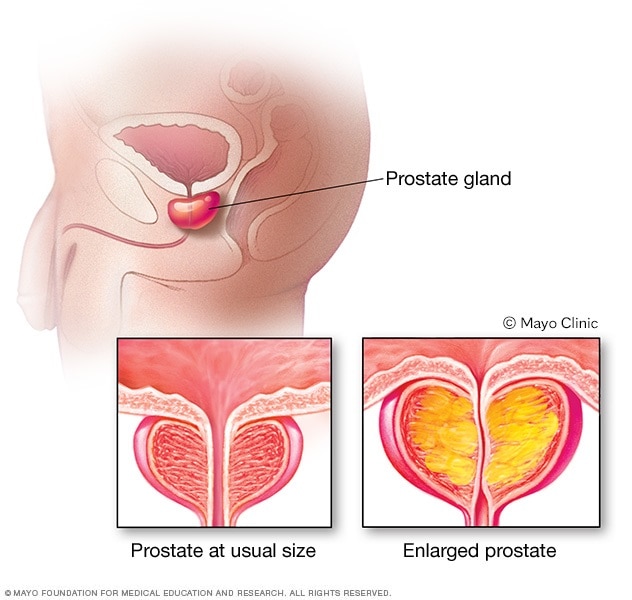
Enlarged prostate
Usually, the prostate gland is about the size and shape of a walnut or golf ball. When enlarged, the prostate may block the flow of urine from the bladder to the outside of the body.
Risk factors
Risk factors for an enlarged prostate include:
- Aging. An enlarged prostate gland rarely causes symptoms before age 40. After that, the chance of having an enlarged prostate and related symptoms starts to rise.
- Family history. Having a blood relative with prostate problems makes you more likely to have problems with your prostate.
- Diabetes and heart disease. Studies show that diabetes might raise the risk of BPH. So might heart disease.
- Lifestyle. Obesity raises the risk of BPH. Exercise can help lower the risk.
From Mayo Clinic to your inbox
Sign up for free and stay up to date on research advancements, health tips, current health topics, and expertise on managing health. Click here for an email preview.
Complications
Complications of an enlarged prostate can include:
- Not being able to pee. This also is called urinary retention. You might need to have a tube called a catheter placed into your bladder to drain the urine. Some people with an enlarged prostate need surgery to get relief.
- Urinary tract infections (UTIs). Not being able to fully empty the bladder can raise the risk of infection in the urinary tract. If you often get UTIs, you might need surgery to remove part of the prostate.
- Bladder stones. These are most often caused by being unable to fully empty the bladder. Bladder stones can cause illness, bladder irritation, blood in the urine and blocked urine flow.
- Bladder damage. A bladder that doesn't empty fully can stretch and weaken over time. As a result, the muscular wall of the bladder no longer squeezes properly to force urine out. And this makes it harder to fully empty the bladder.
- Kidney damage. Pressure in the bladder from not being able to pee can damage the kidneys or let bladder infections reach the kidneys.
Treatment for BPH lowers the risk of these complications. But urinary retention and kidney damage can be serious health threats.
Having an enlarged prostate is not thought to raise the risk of getting prostate cancer.

CON-20370065
Mayo Clinic does not endorse companies or products. Advertising revenue supports our not-for-profit mission.
Advertising & Sponsorship
Mayo Clinic Press
Check out these best-sellers and special offers on books and newsletters from Mayo Clinic Press.
