Descripción general
Glándula prostática
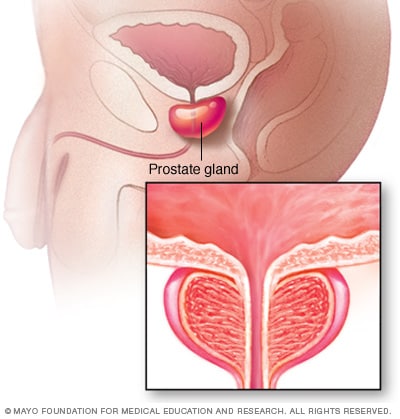
Glándula prostática
La glándula prostática se encuentra justo debajo de la vejiga. Rodea la parte superior del conducto que drena la orina desde la vejiga, llamado uretra. La función principal de la próstata es producir el líquido que transporta el esperma, llamado líquido seminal. La próstata es parte del sistema reproductor masculino.
La cirugía de próstata con láser de holmio, también llamada enucleación prostática con láser de holmio, es un tratamiento de invasión mínima para la hiperplasia prostática benigna. La hiperplasia prostática benigna es una afección que hace que la próstata crezca más de lo normal. Cuando la próstata se agranda demasiado, presiona la uretra, que es el conducto por el que se elimina la orina del cuerpo. Esto puede bloquear el flujo de orina.
La enucleación prostática con láser de holmio usa un láser que elimina tejido de la próstata para que la orina pueda fluir libremente. Luego, se usa otro instrumento para cortar el tejido prostático en trozos más pequeños que se puedan extraer fácilmente.
La enucleación prostática con láser de holmio y la cirugía tradicional de próstata tienen algunas similitudes, pero existen diferencias. En la cirugía tradicional de próstata se corta la piel, pero en la enucleación prostática con láser de holmio no es necesario hacerlo. La enucleación prostática con láser de holmio puede aliviar rápidamente los síntomas de la hiperplasia prostática benigna. El tejido extraído se puede analizar en el laboratorio para detectar otras afecciones, como el cáncer de próstata.
La enucleación prostática con láser de holmio permite que te recuperes y que los síntomas se alivien más rápidamente que con la cirugía tradicional de próstata. En raras ocasiones, se puede requerir un segundo procedimiento de enucleación prostática con láser de holmio.
Lee más acerca de la hiperplasia prostática benigna y la cirugía láser prostática.
Productos y servicios
Por qué se hace
La cirugía de próstata con láser de holmio se hace para tratar la hiperplasia prostática benigna. La cirugía también se llama enucleación prostática con láser de holmio. La enucleación prostática con láser de holmio a menudo se usa para mejorar los síntomas urinarios de la hiperplasia prostática benigna, como los siguientes:
- Necesidad de orinar con frecuencia.
- Dificultad para expulsar toda la orina.
- Chorro de orina lento.
- Infecciones de las vías urinarias.
- Micción frecuente durante la noche.
Tu profesional de atención médica puede recomendar este tratamiento si tienes la próstata agrandada, y además:
- No puedes expulsar toda la orina.
- Tienes cálculos en la vejiga.
- Tienes insuficiencia renal.
- Tienes sangre en la orina que no mejora con el tratamiento.
- Tienes infecciones frecuentes de las vías urinarias.
- Has tomado medicamentos para la hiperplasia prostática benigna, pero no mejoraste.
- Tienes ciertas afecciones de salud o tomas medicamentos que hacen que la cirugía tradicional de próstata sea riesgosa.
- Tienes un alto riesgo de sangrado.
Riesgos
Aunque la cirugía de próstata con láser de holmio es un procedimiento de invasión mínima, puede haber complicaciones. Algunos de los posibles riesgos del tratamiento incluyen:
- Sangrado, aunque el riesgo es menor que con la cirugía tradicional de próstata.
- Dificultad para orinar justo después del procedimiento, lo que suele mejorar con el tiempo.
- Incontinencia urinaria o pérdida del control de la vejiga.
- Infecciones, incluidas las de las vías urinarias.
- Eyaculación retrógrada, que es cuando el semen fluye hacia atrás y entra en la vejiga durante la eyaculación.
- Estenosis uretral, que es el estrechamiento del conducto que transporta la orina fuera del cuerpo.
Cómo prepararte
En las semanas previas a la cirugía de próstata con láser de holmio, es probable que el profesional de atención médica haga lo siguiente:
- Pedirte información sobre tu historial médico y los medicamentos que tomas. Tu profesional de atención médica puede recomendar que dejes de tomar ciertos medicamentos, como los anticoagulantes. Esto puede reducir el riesgo de sangrado durante la cirugía. Infórmale al equipo de atención médica sobre todos los medicamentos que tomas.
- Hacer un examen físico. Esto puede incluir un examen rectal para palpar la próstata. El examen rectal ayuda al profesional de atención médica a determinar el tamaño y la forma de tu próstata.
- Solicitar pruebas o imágenes. Puede que tengas que realizarte algunas pruebas antes del procedimiento, como análisis de sangre, análisis de orina u otras pruebas para revisar tu vejiga. Se pueden utilizar estudios por imágenes, como resonancia magnética, tomografía computarizada o ecografía. Los resultados de estas pruebas ayudan al profesional de atención médica a comprender mejor el tamaño, la forma y las características de tu próstata.
- Hablar sobre las opciones de anestesia. También puede que el profesional de atención médica converse contigo sobre las opciones de anestesia, como anestesia general o anestesia raquídea.
Qué esperar
La cirugía de próstata con láser de holmio puede requerir una hospitalización durante la noche. Incluso si vuelves a casa el mismo día, es importante que consigas transporte. No podrás conducir para volver a tu casa.
Antes del procedimiento
Puede que te indiquen que no comas ni bebas nada durante varias horas antes de la cirugía. Un miembro de tu equipo de atención médica te dará anestesia general o anestesia raquídea, según la recomendación de tu profesional de atención médica.
Con la anestesia general, estarás en un estado de somnolencia. No vas a ver, sentir ni oír nada durante el procedimiento. Con la anestesia raquídea, no sentirás nada en la parte inferior del cuerpo. Puede que estés parcialmente despierto, o puede que te administren medicamentos para inducir el sueño.
Durante el procedimiento
Durante el procedimiento, se inserta una sonda delgada con una luz y una cámara por la punta del pene hacia la uretra. Este dispositivo se llama rectoscopio. Luego, el láser de holmio pasa a través del rectoscopio. El calor del láser corta el tejido adicional de la próstata que está bloqueando el flujo de orina. El tejido eliminado cae dentro de la vejiga.
Luego, un instrumento especial divide los tejidos en trozos más pequeños, que se succionan para sacarlos de la vejiga. Si es necesario, se envía un trozo de tejido al laboratorio para analizarlo y detectar otras afecciones, como cáncer de próstata.
Después del procedimiento
Tal vez podrás volver a casa después del procedimiento. O quizá debas permanecer una noche en el hospital. Se te insertará un catéter en la vejiga para drenar la orina. El profesional de atención médica puede pasar líquido a través del catéter para eliminar restos de sangre. Por lo general, el catéter se retira uno o dos días después del procedimiento.
Puede que tengas síntomas urinarios después de la enucleación prostática con láser de holmio, como los siguientes:
- Dolor leve o ardor durante la micción.
- Sangre en la orina.
- Problemas para controlar la orina, como filtraciones.
Generalmente, estos síntomas son parte del proceso de cicatrización y mejoran a medida que te recuperas.
Habla con tu profesional de atención médica sobre cualquier síntoma que te moleste, que empeore o que no mejore con el tiempo. Si sientes aturdimiento, fiebre, escalofrío o sangrado lo suficientemente espeso como para bloquear el flujo de orina, busca ayuda médica de inmediato.
Resultados
Los resultados de la cirugía de próstata con láser de holmio son similares a los de la cirugía tradicional de próstata en la mejora de los síntomas de la hiperplasia prostática benigna. De hecho, algunas investigaciones muestras que la enucleación prostática con láser de holmio es mejor que la cirugía tradicional de próstata en cuanto a la mejora de los síntomas de la hiperplasia prostática benigna.
En comparación con las personas que se someten a una cirugía tradicional de próstata, las personas que se someten a la enucleación prostática con láser de holmio podrían:
- Pasar menos tiempo en el hospital.
- Quitarse el catéter antes.
- Tener menor complicaciones por sangrado después del procedimiento.
- Tener una mejoría más rápida de los síntomas.
Algunos síntomas de la hiperplasia prostática benigna pueden mejorar pronto después de la enucleación prostática con láser de holmio, mientras que otros pueden mejorar en algunas semanas o meses. A veces se requiere un segundo procedimiento de enucleación prostática con láser de holmio, pero esto es poco común. Consulta con tu profesional de atención médica si tus síntomas urinarios no mejoran.
Estudios clínicos
Explora los estudios de Mayo Clinic de pruebas y procedimientos para ayudar a prevenir, detectar, tratar o controlar las afecciones.
Dec. 16, 2025