
Overview
Hemochromatosis is a type of iron overload disease that's caused by a gene change passed down in families. Iron overload disease is any condition that causes the body to hold onto too much iron. Iron overload diseases include the following:
-
Hemochromatosis, also called primary or hereditary hemochromatosis, is the most common iron overload disease. It is a genetic condition that triggers the intestines to absorb too much iron from food. The excess iron is stored in the organs, especially the liver, heart and pancreas. Too much iron can damage the organs and lead to life-threatening conditions, such as liver disease, heart conditions and diabetes.
Families of Northern European descent have a higher genetic risk of hereditary hemochromatosis when both parents carry the gene change, also called a gene mutation. Only a few people who have the gene mutation ever develop serious complications.
- Secondary iron overload, sometimes called secondary hemochromatosis, is not passed on in families. It can be caused by another condition that causes the intestines to absorb too much iron, such as liver disease or too much alcohol. Or it can happen when you get too much iron, such as from too many blood transfusions. Over time, secondary iron overload can damage organs too.
Hemochromatosis is different from hemosiderosis. Hemosiderosis means iron has started to collect in body tissues but hasn't yet caused organ damage. These conditions also are different from simply having high iron. "High iron" is a term that usually refers to a blood test showing higher than typical iron levels. But that doesn't necessarily mean iron has built up in the organs.
Treatment for hemochromatosis usually includes removing blood from the body on a regular basis. This lowers iron levels because much of the body's iron is contained in red blood cells.
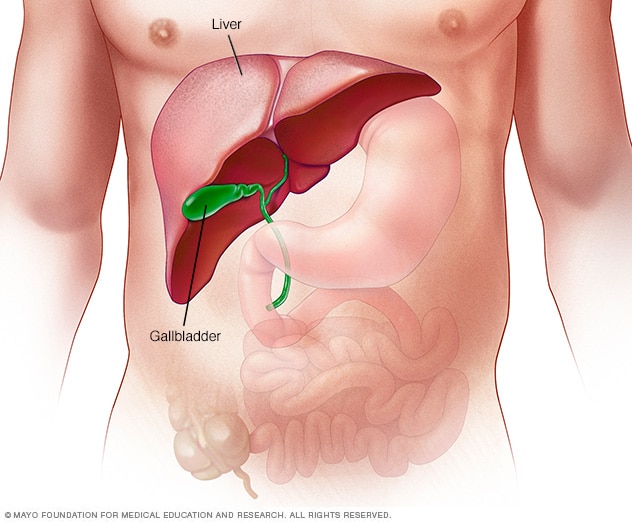
The liver
The largest organ inside the body, the liver is located mainly in the upper right portion of the abdomen, beneath the diaphragm and above the stomach.
Symptoms
Some people with hemochromatosis never have symptoms. They may be diagnosed based on a routine blood test, sometimes done because of family history of the condition.
Early signs and symptoms
Early signs and symptoms of iron overload, including symptoms of hereditary hemochromatosis, often overlap with those of other common conditions. They may include:
- Weakness.
- Tiredness.
- Joint pain.
- Belly pain.
These symptoms can happen to anyone with hemochromatosis. But there are some differences in symptoms based on sex assigned at birth.
Symptoms of hemochromatosis in males:
- Loss of sex drive.
- Not being able to get and keep an erection firm enough for sexual activity, also called impotence.
Symptoms of hemochromatosis in females:
- Missing menstrual periods.
- Symptoms usually appear later in life. This may happen because iron is lost through menstruation and pregnancy. So less iron is stored in the body. After menopause or hysterectomy, this changes.
Other signs and symptoms
Symptoms of iron overload, including symptoms of hereditary hemochromatosis, also can include:
- Diabetes.
- Heart problems and conditions, such as heart rhythm changes and heart failure.
- Liver failure.
- Visible skin changes, including bronze or gray skin color. The term "bronze diabetes" is sometimes used when a person has both type 2 diabetes and a bronze skin color.
- Eye changes that affect vision.
When symptoms typically appear
The most common type of hemochromatosis is present at birth. But most people don't have symptoms until later in life. For men, symptoms usually start after age 40. Women are more likely to have symptoms after menopause or after age 60.
When to see a doctor
See a healthcare professional if you have any of the symptoms of hemochromatosis. If you have a parent, sibling or child who has hemochromatosis, ask your healthcare team about genetic testing. Genetic testing can check if you have the gene that increases your risk of hemochromatosis.
Causes
Hemochromatosis, also called hereditary hemochromatosis, is a type of genetic iron overload disease caused by a gene change, also called a gene mutation. The gene change is passed down in families. This is by far the most common type of iron overload disease.
Other types of iron overload are not genetic. They may be called secondary iron overload or acquired iron overload.
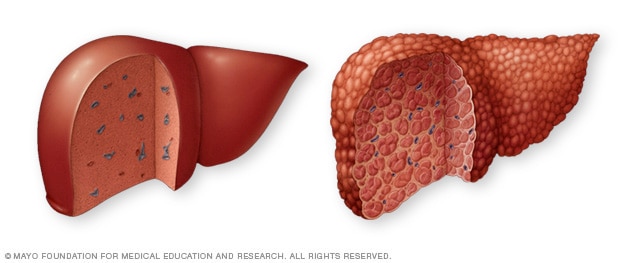
Typical liver vs. liver cirrhosis
A typical liver (left) shows no signs of scarring. In cirrhosis (right), scar tissue replaces healthy liver tissue.
Genetic causes of hemochromatosis
Hereditary hemochromatosis can be caused by mutations to different genes that control the amount of iron the body absorbs from food.
- HFE gene. A gene called HFE is most often the cause of hereditary hemochromatosis. This is the type of hemochromatosis that mostly affects adults in midlife. The HFE gene has two common mutations, C282Y and H63D.
- HJV, HAMP or TFR2 genes. A mutation in any of these genes can cause a type of hemochromatosis called juvenile hemochromatosis. Juvenile hemochromatosis affects young people. It causes the same symptoms that hereditary hemochromatosis causes adults. But iron buildup begins earlier, so symptoms usually appear between the ages of 15 and 30.
If you inherit one gene mutation from each parent, you may develop hemochromatosis. You also can pass the altered gene on to your children. But not everyone who inherits two mutated genes develops symptoms linked to the iron overload of hemochromatosis.
If you inherit a gene mutation from one parent, you're not likely to develop hemochromatosis. But you are considered a carrier and can pass the altered gene on to your children. Your children won't develop the disease unless they also inherited another altered gene from the other parent.
Causes of secondary or acquired iron overload
Some iron overload is not caused by a gene change passed on in families. Examples include the following:
- Neonatal hemochromatosis is a serious disease where iron builds up quickly in the liver of a baby while in the womb. It is thought to be an autoimmune disease, in which the body attacks itself.
- Secondary iron overload can be caused by another condition that causes the intestines to absorb too much iron, such as liver disease, or by too much alcohol. Or it can be caused by too much iron in the body, such as from too many blood transfusions to treat anemia or other conditions. Less often, secondary iron overload can happen from taking too much of an iron supplement.
Diet alone usually does not cause iron overload. But, rarely, some people of African and African American descent may be at increased risk from a diet too high in iron. This is likely due to a gene change passed down in families.
How iron overload affects the organs
Iron plays an important role in several body functions, including helping to produce blood. But too much iron is toxic.
A hormone secreted by the liver, called hepcidin, controls how iron is used and absorbed in the body. It also controls how excess iron is stored in various organs. In hemochromatosis, the role of hepcidin is affected, causing the body to absorb more iron than it needs.
In other iron overload disease, the body does not absorb too much iron from food. Instead, it usually happens from too many blood transfusions.
In hemochromatosis and other iron overload disease, excess iron is stored in major organs, especially the liver. Over a period of years, the stored iron can cause severe damage that may lead to organ failure. It also can lead to long-lasting diseases, such as cirrhosis, diabetes and heart failure. Many people have gene changes that cause hemochromatosis. However, not everyone develops iron overload to a degree that causes tissue and organ damage.
Risk factors
Factors that increase the risk of hemochromatosis include:
- Having two copies of an altered HFE gene. This is the greatest risk factor for hereditary hemochromatosis.
- Family history. Having a parent or sibling with hemochromatosis increases the likelihood of developing the disease.
- Ethnicity. People of Northern European descent are more prone to hereditary hemochromatosis than are people of other ethnic backgrounds.
- Sex assigned at birth. Males are more likely than females to have symptoms of hemochromatosis at an earlier age. Because females lose iron through menstruation and pregnancy, they tend to store less of the mineral. After menopause or a hysterectomy, the risk goes up for females.
Complications
Untreated, hemochromatosis and iron overload can lead to several complications. These complications especially affect the joints and organs where excess iron tends to be stored, such as the liver, pancreas and heart. Complications can include:
- Liver issues. Cirrhosis is permanent scarring of the liver. It is just one of the complications that may happen. Cirrhosis increases the risk of liver cancer and other life-threatening complications.
- Diabetes. Damage to the pancreas can lead to diabetes.
- Heart conditions. Excess iron in the heart affects the heart's ability to circulate enough blood for the body's needs. This is called congestive heart failure. Hemochromatosis also can cause irregular heart rhythms, called arrhythmias.
- Reproductive problems. Excess iron can lead to erectile dysfunction and loss of sex drive in males. It can cause an absence of the menstrual cycle in females.
- Skin color changes. Deposits of iron in skin cells can make the skin appear bronze or gray in color.